


Comparison of Ischemic and Hemorrhagic Stroke in the Medical Ward of Dessie Referral Hospital, Northeast Ethiopia: A Retrospective Study
- PMID: 34258063
- PMCID: PMC8257343
- DOI: 10.1155/2021/9996958
Comparison of Ischemic and Hemorrhagic Stroke in the Medical Ward of Dessie Referral Hospital, Northeast Ethiopia: A Retrospective Study
Abstract
Background: Distinguishing the category of stroke plays a vital role in planning patient care. Simple clinical findings help distinguish the type of stroke. However, there is a need for diagnostic imaging. In Ethiopia, stroke is the most common neurological condition in patients admitted to hospitals. Yet, there are limited data on comparisons of stroke subtypes. Thus, this study was designed to determine the prevalence of stroke and to compare ischemic and hemorrhagic strokes.
Methods: A retrospective cross-sectional study design was employed. Medical records containing complete information and confirmed diagnosis using imaging techniques were included. The data were entered into SPSS version 24.0 for analysis. Results with a P value of <0.05 were considered statistically significant.
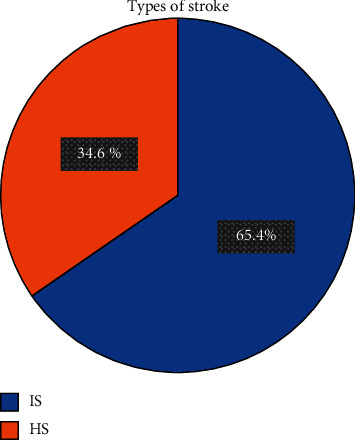
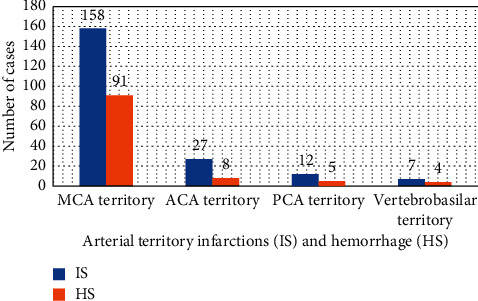
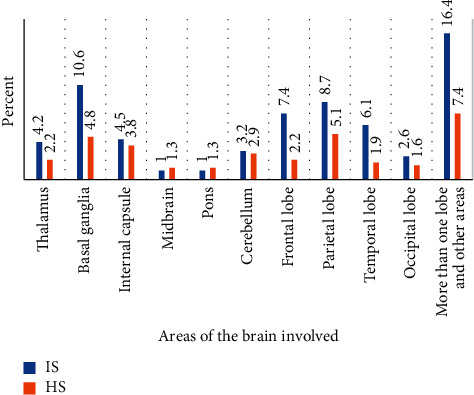
Results: From a total of 312 stroke patients, 204 (65.4%) patients were admitted due to ischemic stroke. More females, 59 (18.9%), were admitted for hemorrhagic stroke than males. In both ischemic, 175 (56.1%) and hemorrhagic, 91 (29.2%) stroke cases, most of the patients were 45 years and above. Middle cerebral artery territory was the most common site of arterial territory infarctions in ischemic stroke, 158 (50.7%). Middle cerebral artery territory also was the most common site of hematoma in hemorrhagic stroke, 91 (29.2%). Infarctions in more than one lobe of the cerebrum (16.4%) and intracerebral hemorrhage in multiple areas of the cerebrum (7.4%) were observed in ischemic as well as hemorrhagic stroke cases. Most of the ischemic, 124 (39.8%), and hemorrhagic, 39 (12.5%), stroke patients presented loss of sensation and weakness of body parts. Hypertension was observed in 124 (39.8%) ischemic and 73 (23.4%) hemorrhagic stroke patients. The mortality rate of ischemic stroke, 47 (15.3%), was two times higher than hemorrhagic stroke, 20 (6.5%). Hypertension was the most common predictor of death in both ischemic and hemorrhagic stroke cases.
Conclusions: Ischemic stroke is a common type of stroke in the medical ward of the study hospital. More females were affected by hemorrhagic stroke than males. Middle cerebral artery territory was the most affected area of the brain in both ischemic and hemorrhagic strokes. Most ischemic and hemorrhagic stroke patients were admitted due to loss of sensation and weakness of body parts. Hypertension was the most common risk factor of stroke as well as a predictor of stroke-related deaths. Identification of the stroke subtypes may be important in the management of stroke. Thus, health professionals, government officials, community leaders, and the population at large could be involved in creating awareness about antecedent risk factors and clinical presentations of stroke subtypes.
Copyright © 2021 Hussen Abdu et al.
Conflict of interest statement
The authors declare that they have no conflicts of interest.
Figures
References
-
- Patel A. Current, Future and Avoidable Costs of Stroke in the UK. Northampton, UK: Stroke Association; 2017.
-
- Tintinalli J. E., Krome R. L., Ruiz E. Emergency medicine: a comprehensive study guide. Advanced Emergency Nursing Journal. 1992;14(3):p. 74. doi: 10.7326/0003-4819-117-8-703_2. - DOI
LinkOut - more resources
Full Text Sources
