


Bridging the research to practice gap: a systematic scoping review of implementation of interventions for cancer-related fatigue management
- PMID: 34261438
- PMCID: PMC8278687
- DOI: 10.1186/s12885-021-08394-3
Bridging the research to practice gap: a systematic scoping review of implementation of interventions for cancer-related fatigue management
Erratum in
-
Correction to: Bridging the research to practice gap: a systematic scoping review of implementation of interventions for cancer-related fatigue management.BMC Cancer. 2021 Aug 2;21(1):882. doi: 10.1186/s12885-021-08619-5. BMC Cancer. 2021. PMID: 34340664 Free PMC article. No abstract available.
Abstract
Background: Cancer-related fatigue (CRF) is one of the most common and distressing symptoms in people with cancer. Although efficacy of interventions for CRF have been extensively investigated, less has been done to ensure successful translation into routine clinical practice. The aim of this systematic scoping review was to synthesise knowledge surrounding the implementation of CRF interventions, summarise the processes and outcomes of implementation strategies used, and identify opportunities for further research.
Methods: PubMed, Cochrane CENTRAL, EMBASE and CINAHL databases were searched (up to December 2020). The Cochrane Effective Practice and Organisation of Care (EPOC) Group taxonomy and the RE-AIM Framework were used to guide the evaluation of implementation strategies and outcomes, respectively.
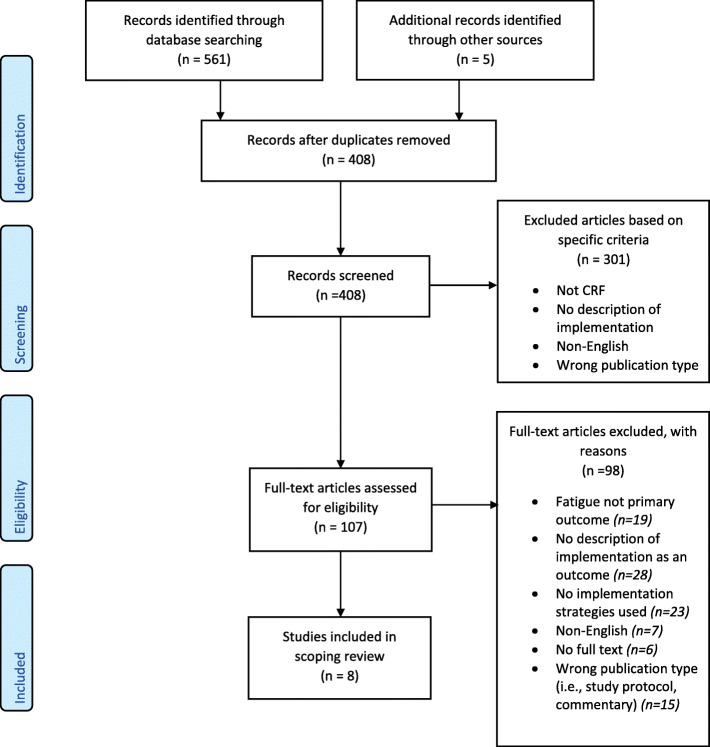
Results: Six studies were included. Three used an implementation framework (PARIHS, KTA, Cullens & Adams' Implementation Guide) to guide implementation. Overall, the implementation strategies used across all studies were reported to have directly resulted in immediate changes at the clinician level (e.g., increased clinician behaviours, self-efficacy, attitudes, knowledge of CRF management). No clear relationship was found between the use of implementation models and the number or type of implementation strategies used. For outcomes, Effectiveness and Implementation were the most highly reported RE-AIM measures followed by Reach then Maintenance. Adoption was the least reported.
Conclusions: Despite the high prevalence of CRF and evidence-based interventions for managing CRF, there is limited evidence informing the sustainable implementation of these interventions. This systematic scoping review emphasises the lack of quality CRF implementation studies presently available in the literature leading to a disconnect between effective CRF interventions, routine clinical care, and cancer survivors at present. This review highlights the need for robust study designs guided by established frameworks to methodically design and evaluate the implementation of CRF management interventions in the future.
Keywords: Cancer-related fatigue; Exercise; Implementation science; Oncology; Physical activity; Survivorship.
© 2021. The Author(s).
Conflict of interest statement
NHH is an editorial board member for BMC Cancer.
References
-
- Weis J, Horneber M. Definition and Prevalence of Cancer-Related Fatigue. In: Weis J, Horneber M, editors. Cancer-Related Fatigue. Tarporley: Springer Healthcare Ltd; 2015. pp. 1–10.
Publication types
MeSH terms
LinkOut - more resources
Full Text Sources
Medical
Miscellaneous
