


The safety and efficacy of fecal microbiota transplantation in a population with bipolar disorder during depressive episodes: study protocol for a pilot randomized controlled trial
- PMID: 34261526
- PMCID: PMC8278713
- DOI: 10.1186/s40814-021-00882-4
The safety and efficacy of fecal microbiota transplantation in a population with bipolar disorder during depressive episodes: study protocol for a pilot randomized controlled trial
Abstract
Background: Bipolar disorder (BD) is a chronic, debilitating illness with significant medical morbidity, often secondary to current treatments, and a high recurrence rate. This burden of disease reflects limitations in the tolerability and efficacy of current treatments. There is a compelling body of evidence linking the gut microbiota to mental illness, and while microbial manipulation via probiotic use has been studied as a therapeutic in BD, targeted trials of fecal microbiota transplantation (FMT) have not been conducted in this population.
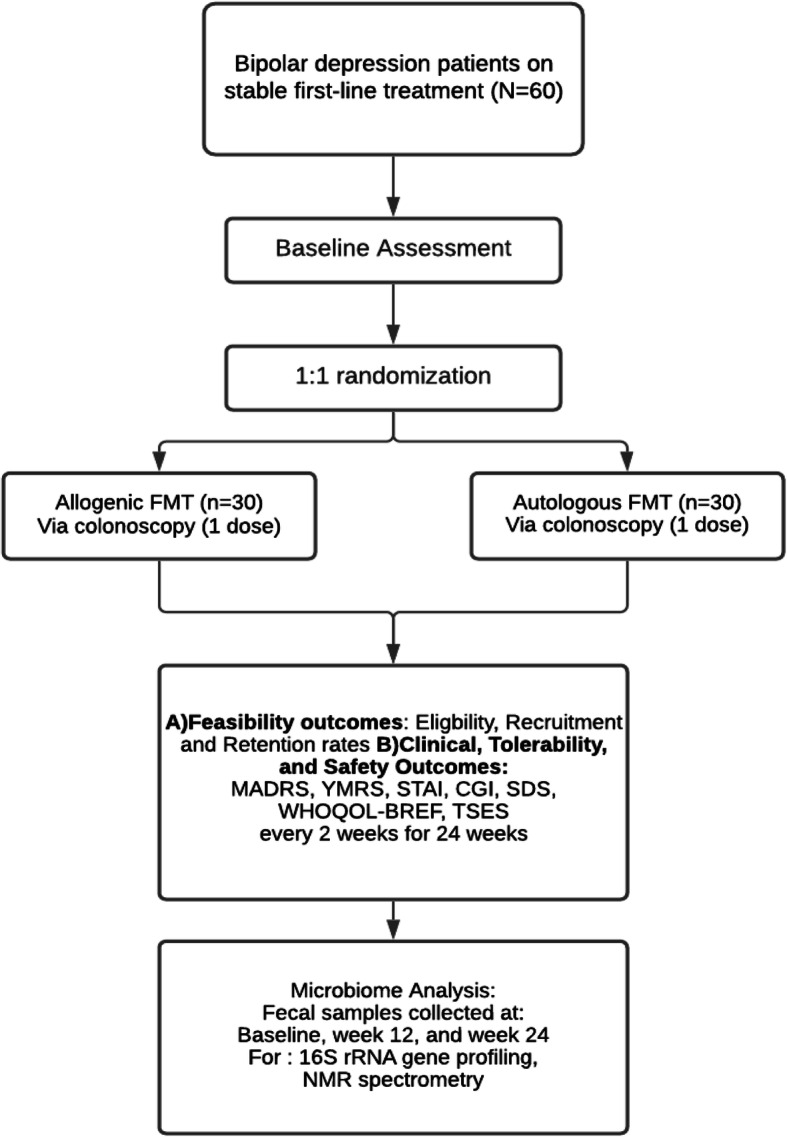
Methods and design: We describe a pilot randomized controlled trial of FMT in participants with BD depression to assess the feasibility, efficacy, safety, and tolerability of this intervention. Individuals between 18 and 65 years of age will be enrolled in the study if they meet diagnostic criteria for a major depressive episode of at least moderate severity in the context of a BD diagnosis and have not responded to treatment for BD. Participants will be randomized 1:1 to receive either screened and processed donor stool (allogenic FMT) or their own stool (autologous FMT) via colonoscopy and monitored for 24 weeks post intervention. Depressive and manic symptoms, treatment acceptability, and gastrointestinal and other side effects are assessed at baseline (prior to randomization) and weekly. Stool samples to assess microbiome composition are obtained at baseline and 3 and 6 months.
Discussion: Currently, FMT represents a novel therapeutic option for treating BD depression. This protocol allows for the assessment of the feasibility, efficacy, acceptability, and safety of an intervention aimed at changing the microbiome in those with BD. Results from this pilot study will guide the development of larger trials of FMT for BD depression and may give more insight into how the gut microbiome are altered in those with BD depression.
Trial registration: Clinical Trials Gov NCT03279224.
Keywords: Bipolar disorder; FMT; Microbiome; Mood.
© 2021. The Author(s).
Conflict of interest statement
The principal investigator and site investigators have no competing interests to declare. The funding agencies had no role in the conduct of the study.
Figures
References
-
- Butler M, Urosevic S, Desai P, Sponheim SR, Popp J, Nelson VA, Thao V, Sunderlin B. Treatment for Bipolar Disorder in Adults: A Systematic Review. Rockville (MD): Agency for Healthcare Research and Quality (US; 2018. AHRQ comparative effectiveness reviews. - PubMed
Associated data
Grants and funding
LinkOut - more resources
Full Text Sources
Other Literature Sources
Medical
