. 2021 Nov;11(11):2738-2747.
doi: 10.1158/2159-8290.CD-21-0331. Epub 2021 Jul 14.

Efficacy, Safety, and Biomarker Analysis of Combined PD-L1 (Atezolizumab) and VEGF (Bevacizumab) Blockade in Advanced Malignant Peritoneal Mesothelioma

Affiliations

Efficacy, Safety, and Biomarker Analysis of Combined PD-L1 (Atezolizumab) and VEGF (Bevacizumab) Blockade in Advanced Malignant Peritoneal Mesothelioma

Kanwal Raghav et al. Cancer Discov. 2021 Nov.

Abstract

Malignant peritoneal mesothelioma (MPeM) is a rare but aggressive malignancy with limited treatment options. VEGF inhibition enhances efficacy of immune-checkpoint inhibitors by reworking the immunosuppressive tumor milieu. Efficacy and safety of combined PD-L1 (atezolizumab) and VEGF (bevacizumab) blockade (AtezoBev) was assessed in 20 patients with advanced and unresectable MPeM with progression or intolerance to prior platinum-pemetrexed chemotherapy. The primary endpoint of confirmed objective response rate per RECISTv1.1 by independent radiology review was 40% [8/20; 95% confidence interval (CI), 19.1-64.0] with median response duration of 12.8 months. Six (75%) responses lasted for >10 months. Progression-free and overall survival at one year were 61% (95% CI, 35-80) and 85% (95% CI, 60-95), respectively. Responses occurred notwithstanding low tumor mutation burden and PD-L1 expression status. Baseline epithelial-mesenchymal transition gene expression correlated with therapeutic resistance/response (r = 0.80; P = 0.0010). AtezoBev showed promising and durable efficacy in patients with advanced MPeM with an acceptable safety profile, and these results address a grave unmet need for this orphan disease. SIGNIFICANCE: Efficacy of atezolizumab and bevacizumab vis-à-vis response rates and survival in advanced peritoneal mesothelioma previously treated with chemotherapy surpassed outcomes expected with conventional therapies. Biomarker analyses uncovered epithelial-mesenchymal transition phenotype as an important resistance mechanism and showcase the value and feasibility of performing translationally driven clinical trials in rare tumors.See related commentary by Aldea et al., p. 2674.This article is highlighted in the In This Issue feature, p. 2659.


Figures

Figure 1.
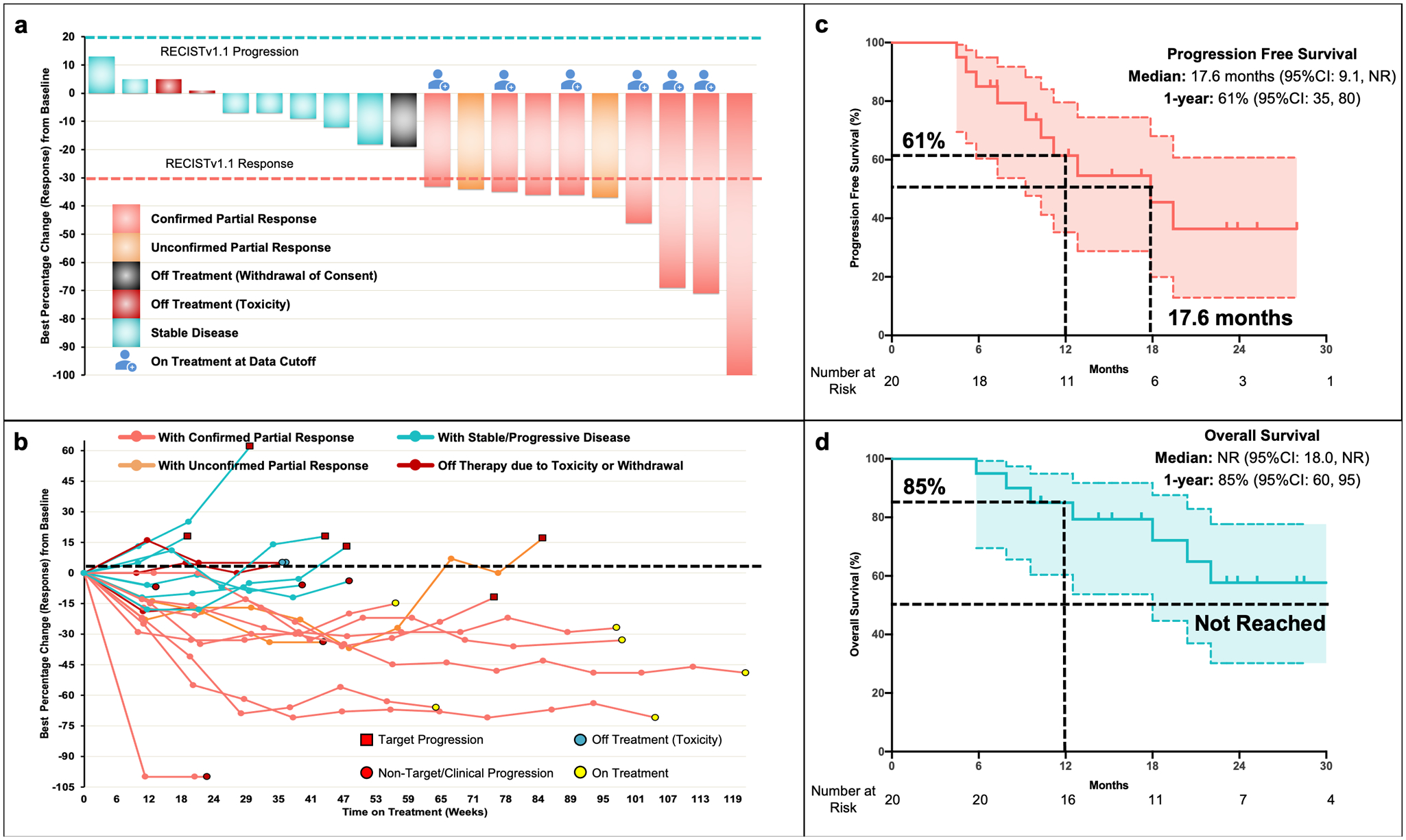
Figure 1.. Tumor Response and Survival Outcomes on Atezolizumab and Bevacizumab (AtezoBev) in Patients with Malignant Peritoneal Mesothelioma (MPeM).
Panel a (Waterfall-plot) shows the maximum percent change from baseline in the sum of the longest diameters (short axis in case of lymph nodes) of target lesions in 20 patients who were treated on the current study and underwent radiological evaluation. Tumor measurements and response assessments were performed by independent radiology review according to Response Evaluation Criteria in Solid Tumors - version 1.1 (RECISTv1.1). Partial response (PR) was defined by ≥ 30% decrease in sum of target lesions with the assumption of no new lesions and no progression in non-target lesions. PR was considered as confirmed only if PR was maintained and seen on 2 consecutive scans (in this study scans were done 9 weeks apart). Panel b (Spider plot) shows the change in sum of target lesion diameters over time. Durable responses were observed in patients. Non-target progression was seen in a notable subset of patients since ascites and non-measurable peritoneal disease is common in MPeM. Two patients had discontinuation of therapy due to toxicity (immune-mediated pancreatitis and thrombocytopenia). Panel c and d (KapIan-Meier curves) show progression-free survival and overall survival of patients with advanced previously treated malignant peritoneal mesothelioma who received AtezoBev on study at the time of data cutoff as assessed by independent central review. Progression-free and overall survival was measured from study initiation to disease progression/death and death, respectively. Abbreviations: 95%CI, 95% confidence interval; NR, not reached
Figure 2.
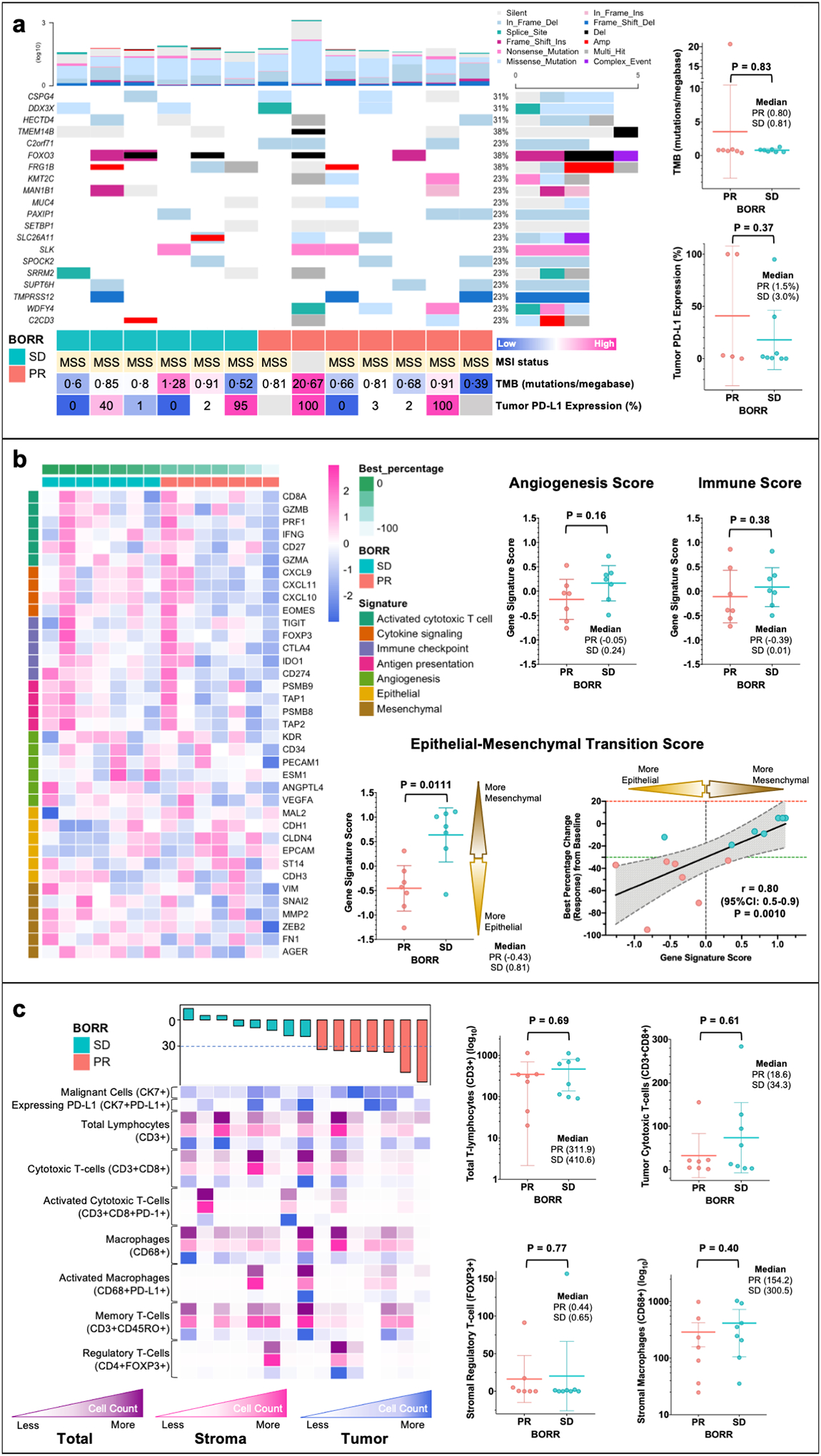
Figure 2.. Exploratory Biomarker Analyses of Pre-treatment Tumor Tissue Samples for Patients with Malignant Peritoneal Mesothelioma (MPeM) Treated with Atezolizumab and Bevacizumab (AtezoBev) on Study.
Tissue samples underwent immunohistochemistry (IHC), whole-exome (WES) and RNA sequencing (RNAseq) and multiplex immunofluorescence (mIF) with rigorous quality check. Mechanistically relevant biomarkers were evaluated and compared between responders (PR) and non-responders (SD) using heatmaps (columns representing patients and rows representing gene/cell type) and scatter dot plots (all plots show each patient with line at mean and whiskers at 95%CI). Panel a shows oncoplot with 20 most common genes altered in patients on trial. Patients are arranged in order of best percentage change (response) in tumor measurements from baseline (from left to right: increase to decrease) as per RECISTv1.1 (Response Evaluation Criteria in Solid Tumors - version 1.1). The color bar at bottom shows response for each patient (PR [responder] and SD [non-responder with stable disease]). The barplot on top and right show number of mutations (log) for each patient and frequency of mutations for each gene in all patients, respectively. Panel b shows pre-treatment tumor gene signature analyses as per gene signatures defining immune biology, angiogenesis and epithelial-mesenchymal transition (EMT). The figure panel also shows strong correlation between EMT gene signature score and degree of response to AtezoBev per RECISTv1.1. Panel c illustrates the immune milieu (tumor, stroma, and total) of tumors sections at baseline using multiplex immunofluorescence. No specific cell types (key cell types shown in figure) prior to treatment were found to be associated response with AtezoBev.

Comment in

References

    1. Rodriguez D, Cheung MC, Housri N, Koniaris LG. Malignant abdominal mesothelioma: defining the role of surgery. J Surg Oncol 2009;99(1):51–7 doi 10.1002/jso.21167. - DOI - PubMed
    1. DeSantis CE, Kramer JL, Jemal A. The burden of rare cancers in the United States. CA: a cancer journal for clinicians 2017;67(4):261–72 doi 10.3322/caac.21400. - DOI - PubMed
    1. Consonni D, Calvi C, De Matteis S, Mirabelli D, Landi MT, Caporaso NE, et al. Peritoneal mesothelioma and asbestos exposure: a population-based case-control study in Lombardy, Italy. Occupational and environmental medicine 2019;76(8):545–53 doi 10.1136/oemed-2019-105826. - DOI - PMC - PubMed
    1. Borczuk AC, Pei J, Taub RN, Levy B, Nahum O, Chen J, et al. Genome-wide analysis of abdominal and pleural malignant mesothelioma with DNA arrays reveals both common and distinct regions of copy number alteration. Cancer Biol Ther 2016;17(3):328–35 doi 10.1080/15384047.2016.1145850. - DOI - PMC - PubMed
    1. Takeda M, Kasai T, Enomoto Y, Takano M, Morita K, Nakai T, et al. Comparison of genomic abnormality in malignant mesothelioma by the site of origin. J Clin Pathol 2014;67(12):1038–43 doi 10.1136/jclinpath-2014-202465. - DOI - PubMed

Publication types

MeSH terms