Knowledge gaps in the epidemiology of severe dengue impede vaccine evaluation
- PMID: 34265259
- PMCID: PMC11379041
- DOI: 10.1016/S1473-3099(20)30871-9
Knowledge gaps in the epidemiology of severe dengue impede vaccine evaluation
Abstract
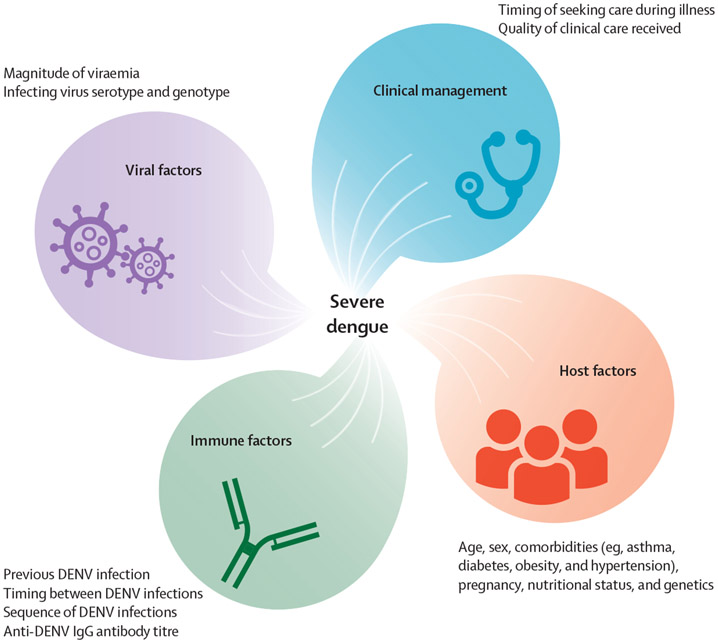
The most severe consequences of dengue virus infection include shock, haemorrhage, and major organ failure; however, the frequency of these manifestations varies, and the relative contribution of pre-existing anti-dengue virus antibodies, virus characteristics, and host factors (including age and comorbidities) are not well understood. Reliable characterisation of the epidemiology of severe dengue first depends on the use of consistent definitions of disease severity. As vaccine trials have shown, severe dengue is a crucial interventional endpoint, yet the infrequency of its occurrence necessitates the inclusion of thousands of study participants to appropriately compare its frequency among participants who have and have not been vaccinated. Hospital admission is frequently used as a proxy for severe dengue; however, lack of specificity and variability in clinical practices limit the reliability of this approach. Although previous infection with a dengue virus is the best characterised risk factor for developing severe dengue, the influence of the timing between dengue virus infections and the sequence of dengue virus infections on disease severity is only beginning to be elucidated. To improve our understanding of the diverse factors that shape the clinical spectrum of disease resulting from dengue virus infection, prospective, community-based and clinic-based immunological, virological, genetic, and clinical studies across a range of ages and geographical regions are needed.
Copyright © 2022 Elsevier Ltd. All rights reserved.
Conflict of interest statement
Declaration of interests KBA reports serving as a consultant for Emergent Biosolutions and Eli Lilly, outside of the submitted work. EH reports grants from the National Institute of Allergy and Infectious Diseases (National Institutes of Health), during the conduct of this Personal View. LCK reports grants from the National Institutes of Health, during the conduct of this Personal View. ACM reports grants from the National Institutes of Health, during the conduct of this Personal View. All other authors declare no competing interests.
Figures
References
-
- Shepard DS, Undurraga EA, Halasa YA, Stanaway JD. The global economic burden of dengue: a systematic analysis. Lancet Infect Dis 2016; 16: 935–41. - PubMed
-
- Cattarino L, Rodriguez-Barraquer I, Imai N, Cummings DAT, Ferguson NM. Mapping global variation in dengue transmission intensity. Sci Transl Med 2020; 12: eaax4144. - PubMed
Publication types
MeSH terms
Substances
Grants and funding
LinkOut - more resources
Full Text Sources
Medical
Research Materials