


The Impact of the COVID-19 Pandemic on the Number of Adolescents/Young Adults Seeking Eating Disorder-Related Care
- PMID: 34266715
- PMCID: PMC8415773
- DOI: 10.1016/j.jadohealth.2021.05.019
The Impact of the COVID-19 Pandemic on the Number of Adolescents/Young Adults Seeking Eating Disorder-Related Care
Abstract
Purpose: The COVID-19 pandemic has led to the development and worsening of eating disorder (ED) symptoms in adolescents and young adults. In order to examine COVID-19-related trends in ED care-seeking at our institution.
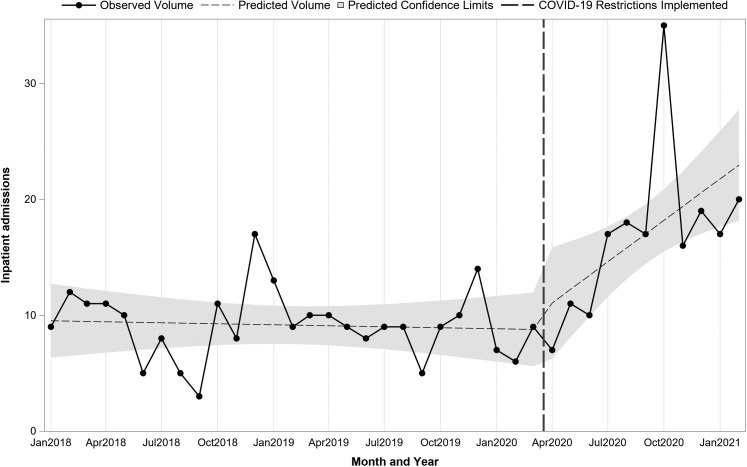
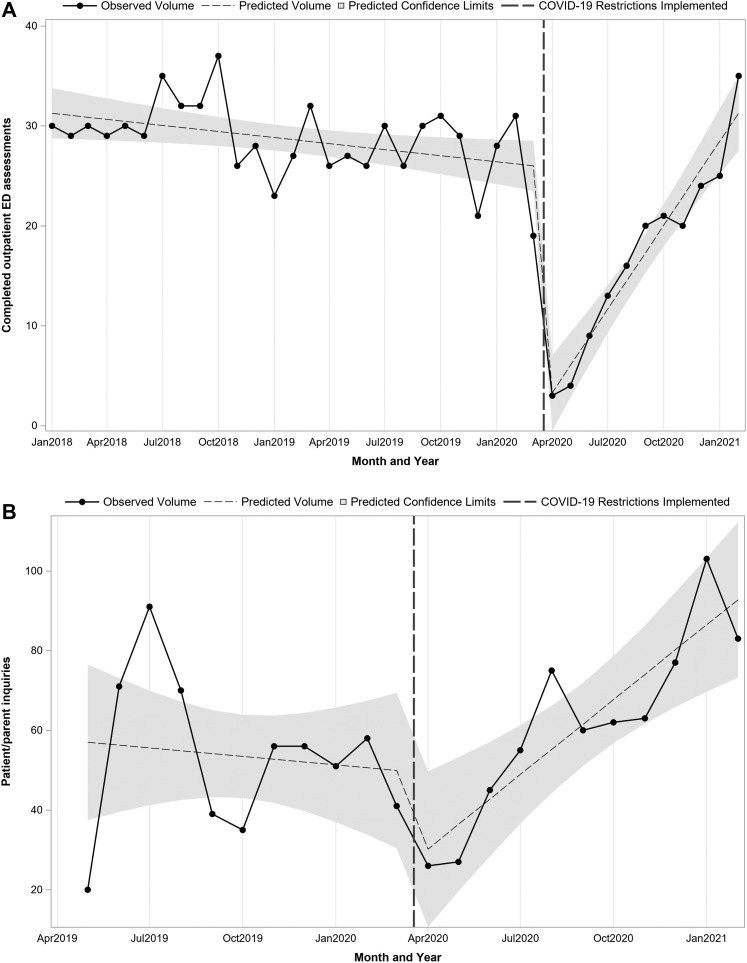
Methods: We used interrupted time series regression to examine pre- and postpandemic monthly summary data of the following: (1) ED-related inpatient admissions for medical stabilization; (2) ED-related hospital bed-days; (3) completed outpatient ED assessments; and (4) ED outpatient care-related inquiries at a children's hospital in Boston, MA.
Results: Inpatient admissions, hospital bed-days, and outpatient care-related inquiries increased on average over time postpandemic compared to stable volume over time prepandemic (p < .01). Outpatient assessments decreased precipitously initially following COVID-19-related limitations, and rose quickly back to baseline.
Conclusion: These results indicate increased need for ED-related care during the pandemic. Bolstering resources to meet the needs of these vulnerable patients is critical as the effects of the pandemic continue to be felt.
Keywords: Adolescents; COVID-19; Eating disorders; Young adults.
Copyright © 2021 Society for Adolescent Health and Medicine. Published by Elsevier Inc. All rights reserved.
Figures
Comment in
-
The COVID-19 Pandemic and Eating Disorders: A Wake-Up Call for the Future of Eating Disorders Among Adolescents and Young Adults.J Adolesc Health. 2021 Oct;69(4):535-537. doi: 10.1016/j.jadohealth.2021.07.014. J Adolesc Health. 2021. PMID: 34489056 Free PMC article. No abstract available.
References
-
- Pfefferbaum B., North C.S. Mental health and the Covid-19 pandemic. N Engl J Med. 2020;383:510–512. - PubMed
-
- Herpertz-Dahlmann B. Adolescent eating disorders: Update on definitions, symptomatology, epidemiology, and comorbidity. Child Adolesc Psychiatr Clin N Am. 2015;24:177–196. - PubMed
-
- Arcelus J., Mitchell A.J., Wales J., Nielsen S. Mortality rates in patients with anorexia nervosa and other eating disorders. Arch Gen Psychiatry. 2011;68:724. - PubMed
Publication types
MeSH terms
Grants and funding
LinkOut - more resources
Full Text Sources
Medical
