


Takotsubo Syndrome: Uncovering Myths and Misconceptions
- PMID: 34268666
- PMCID: PMC8282560
- DOI: 10.1007/s11883-021-00946-z
Takotsubo Syndrome: Uncovering Myths and Misconceptions
Abstract
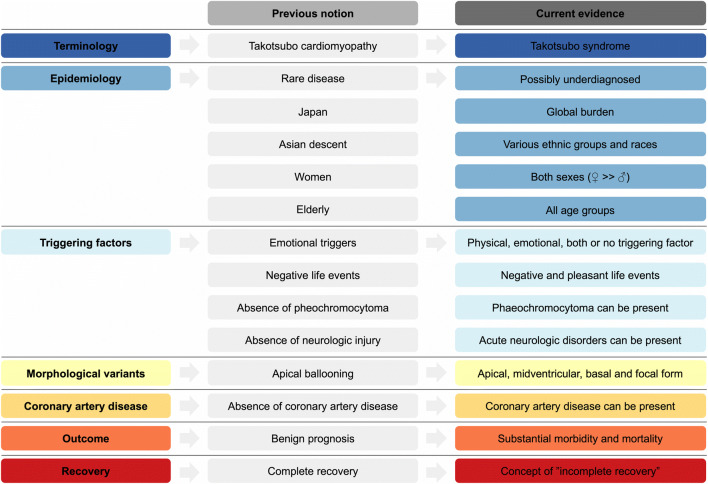
Purpose of review: Takotsubo syndrome (TTS) was described in Japan 3 decades ago to affect predominately postmenopausal women after emotional stress. This history is the basis of commonly held beliefs which may contribute to the underdiagnosis and misperception of TTS.
Recent findings: TTS affects not only women, but can be present in both sexes, and can appear in children as well as in the elderly. TTS is characterized by unique clinical characteristics with morphological variants, and incurs a substantial risk for recurrent events and adverse outcomes. Physical triggers are more common than emotional triggers and are major disease determinants. TTS seems not to be completely transient as patients report ongoing chest pain, dyspnea, or fatigue even after months of the acute event. Knowledge of the clinical features and outcomes of TTS patients has evolved substantially over the past decades. The heterogeneous appearance of TTS needs to be recognized in all medical disciplines to maximize therapy and improve outcomes.
Keywords: Broken heart syndrome; International Takotsubo Registry; Outcome; Risk stratification; Takotsubo syndrome.
© 2021. The Author(s).
Conflict of interest statement
Dr. Templin reports personal fees from Microport, Biotronic, Schnell Medical, and Amgen, outside the submitted work. The other authors declare that they have no conflict of interest.
Figures
References
-
- Dote K, Sato H, Tateishi H, Uchida T, Ishihara M. Myocardial stunning due to simultaneous multivessel coronary spasms: a review of 5 cases. J Cardiol. 1991;21(2):203–214. - PubMed
-
- Sato H. Tako-tsubo-like left ventricular dysfunction due to multivessel coronary spasm. Clinical aspect of myocardial injury: from ischemia to heart failure Kodama K, Haze K, Hori M, Eds Kagakuhyoronsha Publishing Co, Tokyo. 1990:56-64 (Article in Japanese).
Publication types
MeSH terms
LinkOut - more resources
Full Text Sources
Research Materials
Miscellaneous
