


One hundred years of zoonoses research in the Horn of Africa: A scoping review
- PMID: 34270551
- PMCID: PMC8318308
- DOI: 10.1371/journal.pntd.0009607
One hundred years of zoonoses research in the Horn of Africa: A scoping review
Abstract
Background: One Health is particularly relevant to the Horn of Africa where many people's livelihoods are highly dependent on livestock and their shared environment. In this context, zoonoses may have a dramatic impact on both human and animal health, but also on country economies. This scoping review aimed to characterise and evaluate the nature of zoonotic disease research in the Horn region. Specifically, it addressed the following questions: (i) what specific zoonotic diseases have been prioritised for research, (ii) what data have been reported (human, animal or environment), (iii) what methods have been applied, and (iv) who has been doing the research?
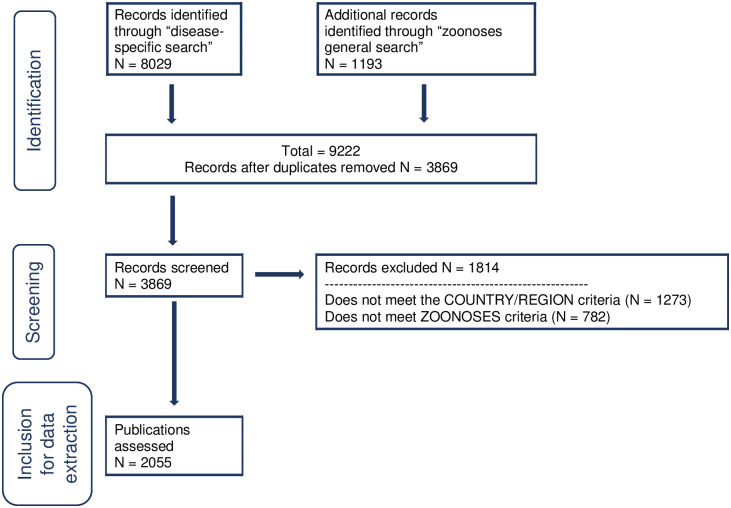
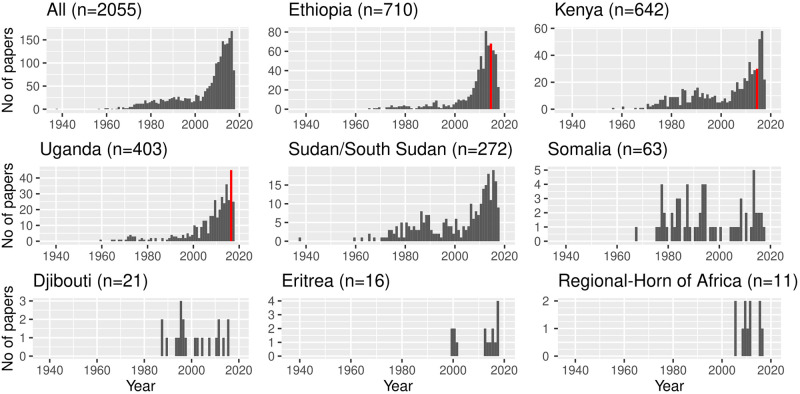
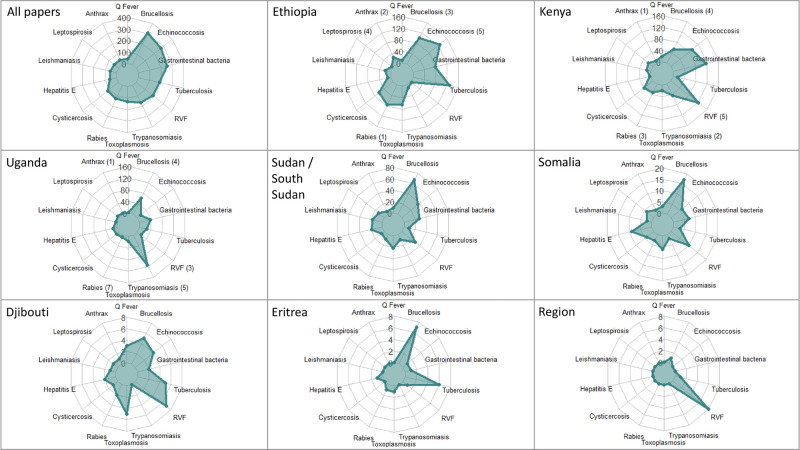
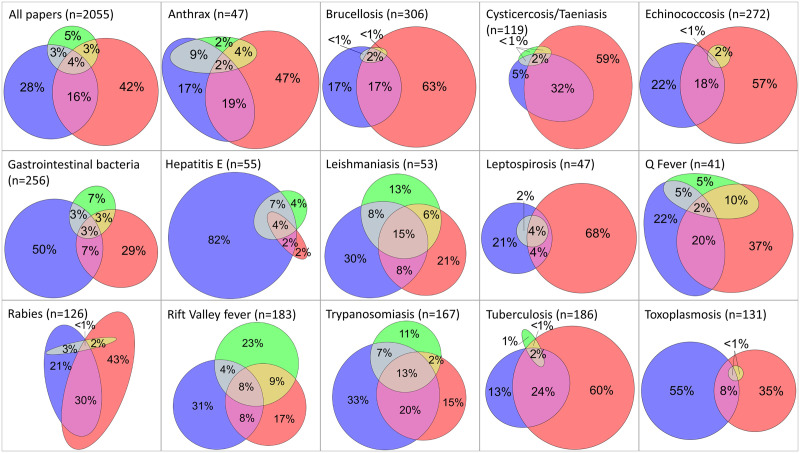
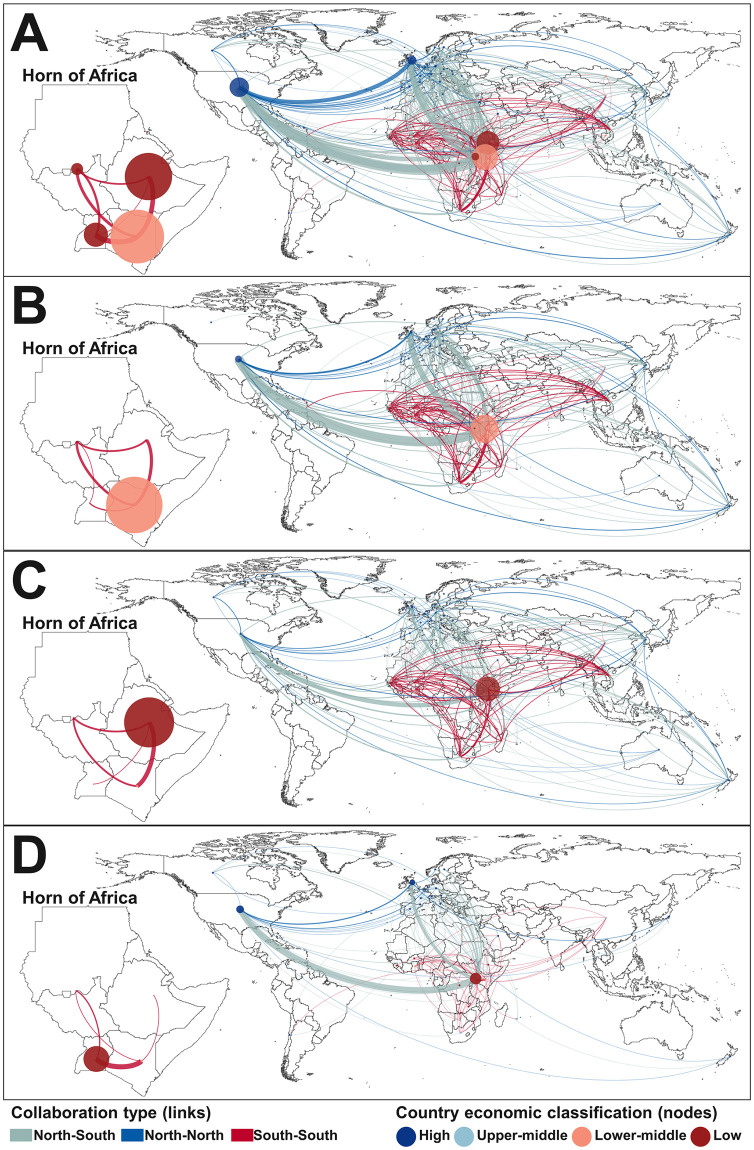
Methodology/principal findings: We used keyword combinations to search online databases for peer-reviewed papers and theses. Screening and data extraction (disease, country, domain and method) was performed using DistillerSR. A total of 2055 studies focusing on seven countries and over 60 zoonoses were included. Brucellosis attracted the highest attention in terms of research while anthrax, Q fever and leptospirosis have been comparatively under-studied. Research efforts did not always align with zoonoses priorities identified at national levels. Despite zoonoses being a clear target for 'One Health' research, a very limited proportion of studies report data on the three domains of human, animal and environment. Descriptive and observational epidemiological studies were dominant and only a low proportion of publications were multidisciplinary. Finally, we found that a minority of international collaborations were between Global South countries with a high proportion of authors having affiliations from outside the Horn of Africa.
Conclusions/significance: There is a growing interest in zoonoses research in the Horn of Africa. Recommendations arising from this scoping review include: (i) ensuring zoonoses research aligns with national and global research agendas; (ii) encouraging researchers to adopt a holistic, transdisciplinary One Health approach following high quality reporting standards (COHERE, PRISMA, etc.); and (iii) empowering local researchers supported by regional and international partnerships to engage in zoonoses research.
Conflict of interest statement
The authors have declared that no competing interests exist.
Figures
References
-
- United Nations, Department of Economic and Social Affairs, Population Division. World Population Prospects—Population Division—United Nations. In: World Population Prospects 2019, custom data acquired via website [Internet]. 2019 [cited 23 Sep 2020]. https://population.un.org/wpp/DataQuery/
-
- FAO. FAOSTAT. 2018 [cited 23 Sep 2020]. http://www.fao.org/faostat/en/#data/QA
-
- Knips V. Review of the Livestock Sector in the Horn of Africa (IGAD countries). FAO; 2004 Sep p. 39. http://www.fao.org/ag/againfo/resources/en/publications/sector_reports/l...
-
- Babikir O, Muchina S, Sebsibe A, Bika A, Kwai A, Agosa C, et al. Agricultural Systems in IGAD Region—A Socio-Economic Review. Agroecology. IntechOpen; 2015. https://www.intechopen.com/books/agroecology/agricultural-systems-in-iga...
-
- Holleman C. The Socio-economic Implications of the Livestock Ban in Somaliland. Nairobi: USAID; 2002 Dec. /paper/The-Socio-economic-Implications-of-the-Livestock-in-Holleman/8c5bfb691bd74884ffd83742903a000c9f5df635
Publication types
MeSH terms
Grants and funding
LinkOut - more resources
Full Text Sources
Medical
