


A global dataset of inland fisheries expert knowledge
- PMID: 34272376
- PMCID: PMC8285391
- DOI: 10.1038/s41597-021-00949-0
A global dataset of inland fisheries expert knowledge
Abstract
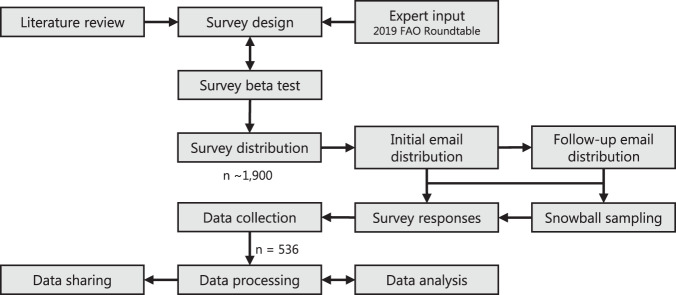
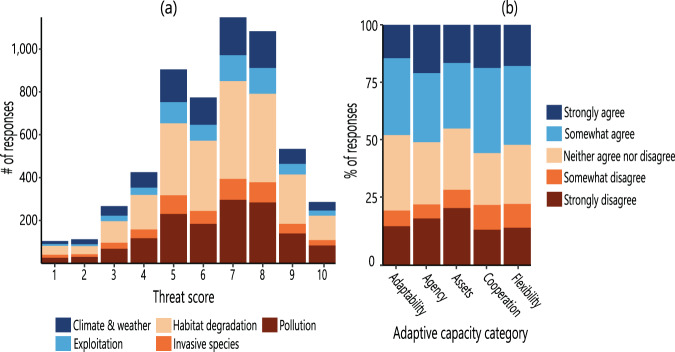
Inland fisheries and their freshwater habitats face intensifying effects from multiple natural and anthropogenic pressures. Fish harvest and biodiversity data remain largely disparate and severely deficient in many areas, which makes assessing and managing inland fisheries difficult. Expert knowledge is increasingly used to improve and inform biological or vulnerability assessments, especially in data-poor areas. Integrating expert knowledge on the distribution, intensity, and relative influence of human activities can guide natural resource management strategies and institutional resource allocation and prioritization. This paper introduces a dataset summarizing the expert-perceived state of inland fisheries at the basin (fishery) level. An electronic survey distributed to professional networks (June-September 2020) captured expert perceptions (n = 536) of threats, successes, and adaptive capacity to fisheries across 93 hydrological basins, 79 countries, and all major freshwater habitat types. This dataset can be used to address research questions with conservation relevance, including: demographic influences on perceptions of threat, adaptive capacities for climate change, external factors driving multi-stressor interactions, and geospatial threat assessments.
© 2021. The Author(s).
Conflict of interest statement
The authors declare no competing interests.
Figures

References
-
- WWF. Living Planet Report 2018: Aiming Higher (eds. Grooten, M. & Almond, R. E. A.) (WWF, 2018).
-
- International Union for Conservation of Nature (IUCN). The IUCN Red List of Threatened Species. Report No. 2019-1 (IUCN, 2019).
-
- Carrizo SF, Smith KG, Darwall WRT. Progress towards a global assessment of the status of freshwater fishes (Pisces) for the IUCN Red List: application to conservation programmes in zoos and aquariums. Int. Zoo Yearb. 2013;47:46–64. doi: 10.1111/izy.12019. - DOI
Publication types
MeSH terms
Grants and funding
LinkOut - more resources
Full Text Sources
