


Long-term clinical follow-up of patients suffering from moderate-to-severe COVID-19 infection: a monocentric prospective observational cohort study
- PMID: 34273510
- PMCID: PMC8278829
- DOI: 10.1016/j.ijid.2021.07.016
Long-term clinical follow-up of patients suffering from moderate-to-severe COVID-19 infection: a monocentric prospective observational cohort study
Abstract
Objectives: Various symptoms and considerable organ dysfunction persist following infection with severe acute respiratory syndrome coronavirus-2 (SARS-CoV-2). Uncertainty remains about the potential mid- and long-term health sequelae. This prospective study of patients hospitalized with coronavirus disease 2019 (COVID-19) in Liège University Hospital, Belgium aimed to determine the persistent consequences of COVID-19.
Methods: Patients admitted to the University Hospital of Liège with moderate-to-severe confirmed COVID-19, discharged between 2 March and 1 October 2020, were recruited prospectively. Follow-up at 3 and 6 months after hospital discharge included demographic and clinical data, biological data, pulmonary function tests (PFTs) and high-resolution computed tomography (CT) scans of the chest.
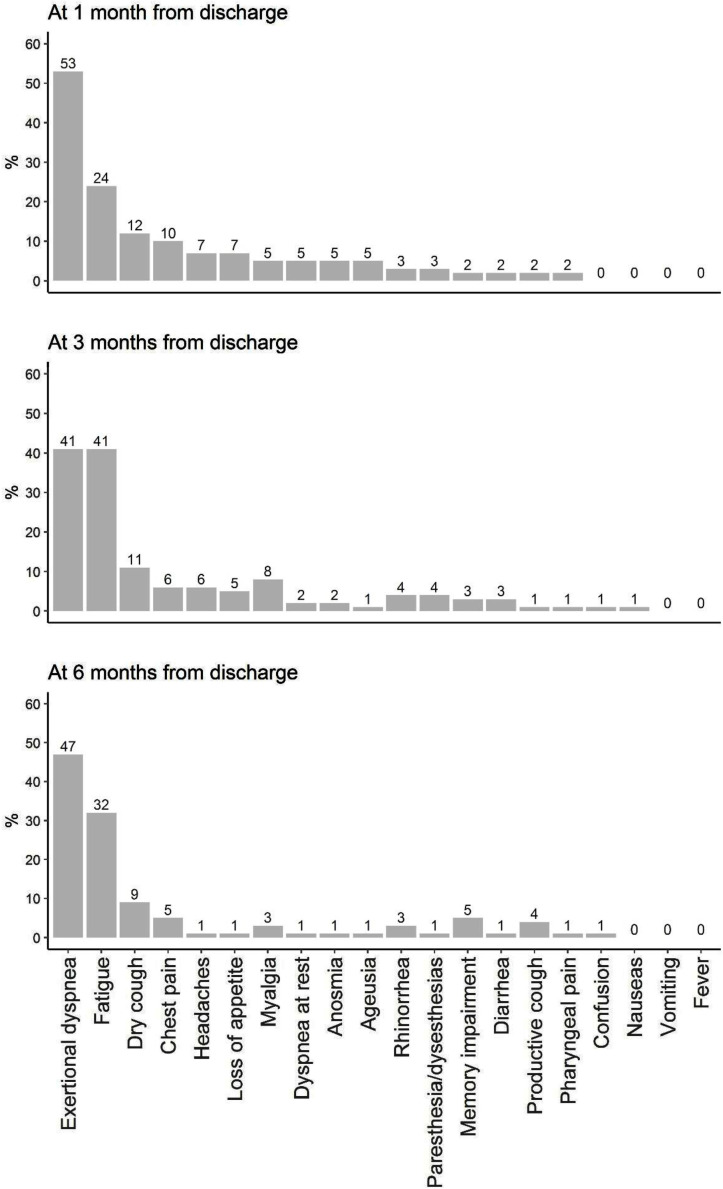
Results: In total, 199 individuals were included in the analysis. Most patients received oxygen supplementation (80.4%). Six months after discharge, 47% and 32% of patients still had exertional dyspnoea and fatigue. PFTs at 3-month follow-up revealed a reduced diffusion capacity of carbon monoxide (mean 71.6 ± 18.6%), and this increased significantly at 6-month follow-up (P<0.0001). Chest CT scans showed a high prevalence (68.9% of the cohort) of persistent abnormalities, mainly ground glass opacities. Duration of hospitalization, intensive care unit admission and mechanical ventilation were not associated with the persistence of symptoms 3 months after discharge.
Conclusion: The prevalence of persistent symptoms following hospitalization with COVID-19 is high and stable for up to 6 months after discharge. However, biological, functional and iconographic abnormalities improved significantly over time.
Keywords: COVID-19; long COVID; post-COVID; post-acute COVID-19; sequelae.
Copyright © 2021 The Author(s). Published by Elsevier Ltd.. All rights reserved.
Conflict of interest statement
Conflict of interest statement None declared.
References
-
- Al-Aly Z, Xie Y, Bowe B. High-dimensional characterization of post-acute sequalae of COVID-19. Nature. 2021;594:259–264. - PubMed
Publication types
MeSH terms
LinkOut - more resources
Full Text Sources
Medical
Miscellaneous
