


Report of the Largest Chinese Cohort With SLC19A3 Gene Defect and Literature Review
- PMID: 34276785
- PMCID: PMC8281341
- DOI: 10.3389/fgene.2021.683255
Report of the Largest Chinese Cohort With SLC19A3 Gene Defect and Literature Review
Abstract
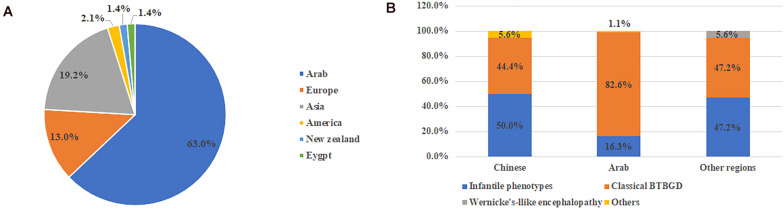
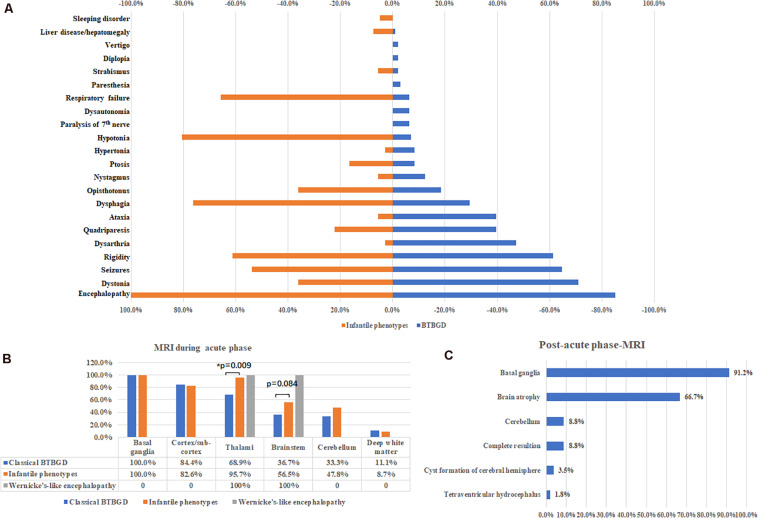
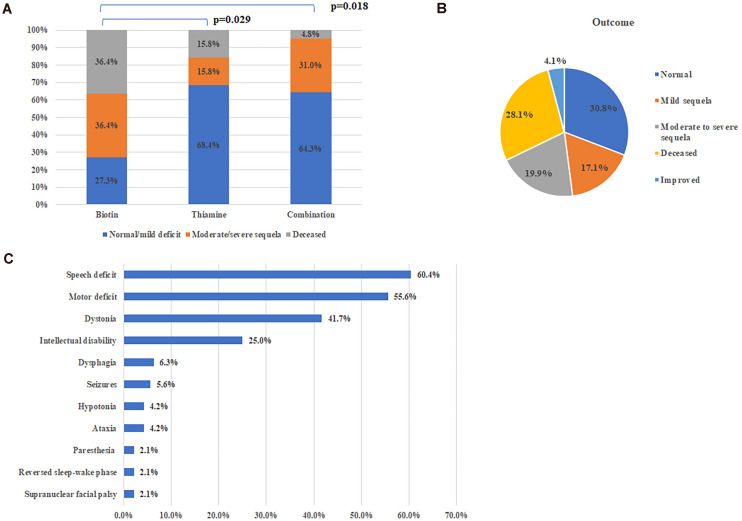
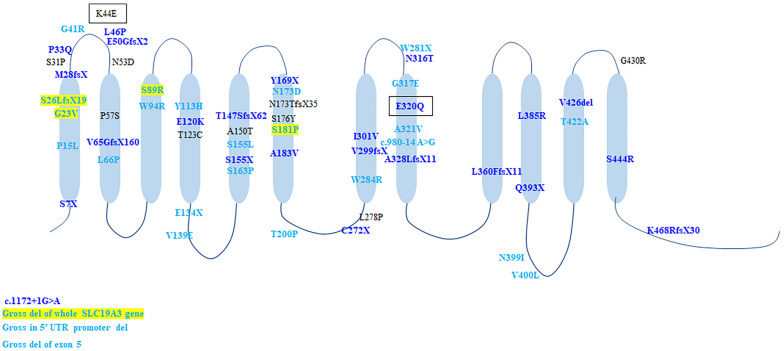
Thiamine metabolism dysfunction syndrome 2 (THMD2) is a rare metabolic disorder caused by SLC19A3 mutations, inherited in autosomal recessive pattern. As a treatable disease, early diagnosis and therapy with vitamin supplementation is important to improve the prognosis. So far, the reported cases were mainly from Saudi Arab regions, and presented with relatively simple clinical course because of the hot spot mutation (T422A). Rare Chinese cases were described until now. In this study, we investigated 18 Chinese THMD2 patients with variable phenotypes, and identified 23 novel SLC19A3 mutations, which expanded the genetic and clinical spectrum of the disorder. Meanwhile, we reviewed all 146 reported patients from different countries. Approximately 2/3 of patients presented with classical BTBGD, while 1/3 of patients manifested as much earlier onset and poor prognosis, including infantile Leigh-like syndrome, infantile spasms, neonatal lactic acidosis and infantile BTBGD. Literature review showed that elevated lactate in blood and CSF, as well as abnormal OXPHOS activities of muscle or skin usually correlated with infantile phenotypes, which indicated poor outcome. Brainstem involvement on MRI was more common in deceased cases. Thiamine supplementation is indispensable in the treatment of THMD2, whereas combination of biotin and thiamine is not superior to thiamine alone. But biotin supplementation does work in some patients. Genotypic-phenotypic correlation remains unclear which needs further investigation, and biallelic truncated mutations usually led to more severe phenotype.
Keywords: Chinese cohort; SLC19A3; biotin-thiamine responsive basal ganglia disease; literature review; outcome predictors.
Copyright © 2021 Wang, Wang, Han, Liu, Ma, Chen, Zhang, Sun, Xu, Liu, Zhang, Wen, Bao, Chen and Fang.
Conflict of interest statement
The authors declare that the research was conducted in the absence of any commercial or financial relationships that could be construed as a potential conflict of interest.
Figures
References
-
- Adhisivam B., Mahto D., Mahadevan S. (2007). Biotin responsive limb weakness. Indian Pediatr. 44 228–230. - PubMed
-
- Alfadhel M., Almuntashri M., Jadah R. H., Bashiri F. A., Al Rifai M. T., Al Shalaan H., et al. (2013). Biotin-responsive basal ganglia disease should be renamed biotin-thiamine-responsive basal ganglia disease: a retrospective review of the clinical, radiological and molecular findings of 18 new cases. Orphanet J. Rare Dis. 8:83. 10.1186/1750-1172-8-83 - DOI - PMC - PubMed
Publication types
LinkOut - more resources
Full Text Sources
Research Materials
