. 2021 Aug 20;16(8):1401-1412.
doi: 10.1021/acschembio.1c00192. Epub 2021 Jul 19.

A Gut-Restricted Lithocholic Acid Analog as an Inhibitor of Gut Bacterial Bile Salt Hydrolases

Affiliations

A Gut-Restricted Lithocholic Acid Analog as an Inhibitor of Gut Bacterial Bile Salt Hydrolases

Arijit A Adhikari et al. ACS Chem Biol. .

Abstract

Bile acids play crucial roles in host physiology by acting both as detergents that aid in digestion and as signaling molecules that bind to host receptors. Gut bacterial bile salt hydrolase (BSH) enzymes perform the gateway reaction leading to the conversion of host-produced primary bile acids into bacterially modified secondary bile acids. Small molecule probes that target BSHs will help elucidate the causal roles of these metabolites in host physiology. We previously reported the development of a covalent BSH inhibitor with low gut permeability. Here, we build on our previous findings and describe the development of a second-generation gut-restricted BSH inhibitor with enhanced potency, reduced off-target effects, and durable in vivo efficacy. Structure-activity relationship (SAR) studies focused on the bile acid core identified a compound, AAA-10, containing a C3-sulfonated lithocholic acid scaffold and an alpha-fluoromethyl ketone warhead as a potent pan-BSH inhibitor. This compound inhibits BSH activity in mouse and human fecal slurry, bacterial cultures, and purified BSH proteins and displays reduced toxicity against mammalian cells compared to first generation compounds. Oral administration of AAA-10 to wild-type mice for 5 days resulted in a decrease in the abundance of the secondary bile acids deoxycholic acid (DCA) and lithocholic acid (LCA) in the mouse GI tract with low systemic exposure of AAA-10, demonstrating that AAA-10 is an effective tool for inhibiting BSH activity and modulating bile acid pool composition in vivo.


Conflict of interest statement

The authors declare the following competing financial interest(s): A. Sloan Devlin is an ad hoc consultant for Takeda Pharmaceuticals and Axial Therapeutics. The other authors declare that no competing interests exist.

Figures
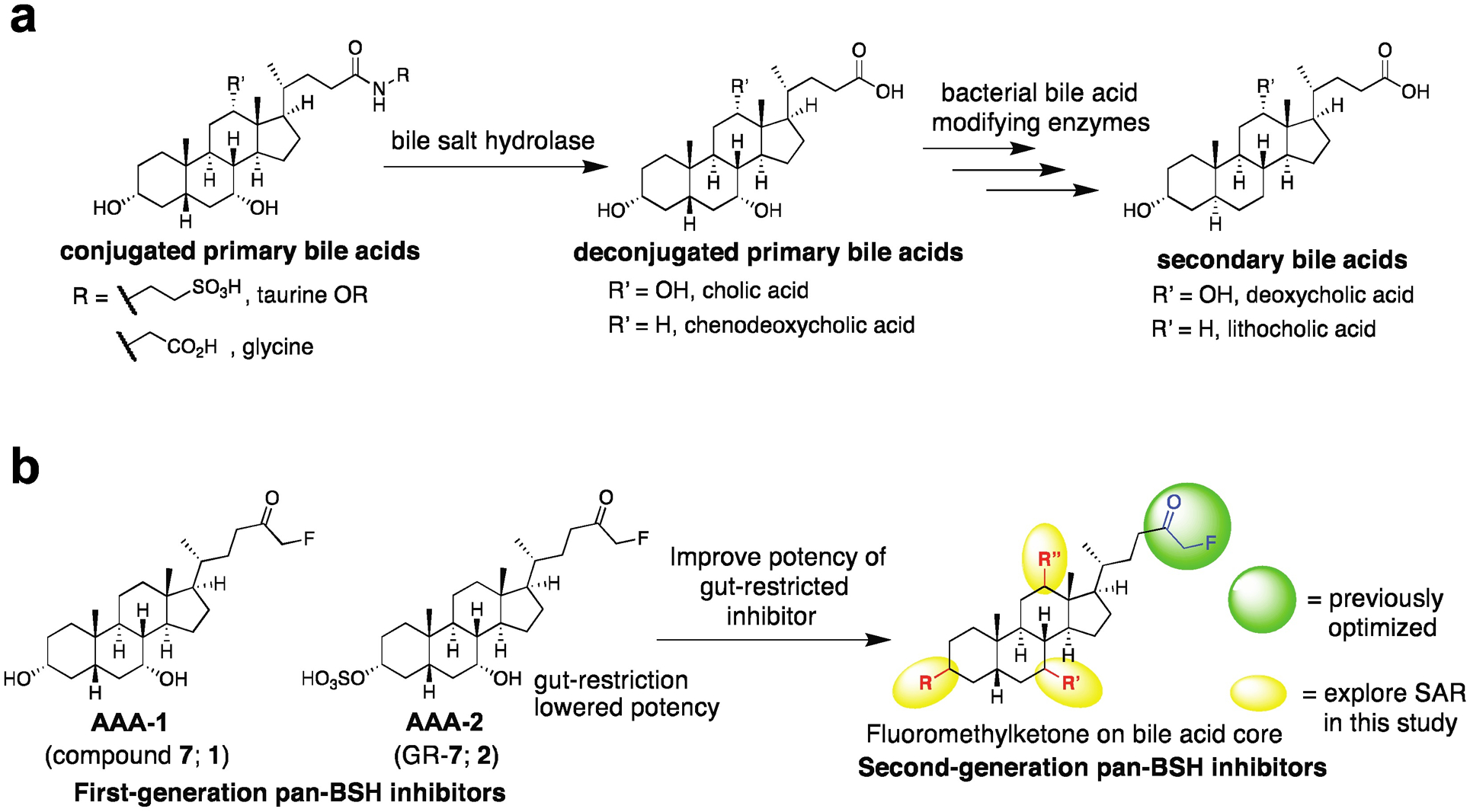
Figure 1.
Figure 1.. Targeting gut bacterial BSHs.
a, Bacterial bile salt hydrolases (BSHs) perform the gateway reaction leading from host-produced conjugated primary bile acids to bacterially modified secondary bile acids. b, Development of second-generation BSH inhibitors starting from previously reported covalent pan-BSH inhibitors. Sulfonation of AAA-1 at the C3-OH position previously resulted in an inhibitor with low systemic exposure but decreased potency (AAA-2). Here, SAR studies focusing on the bile acid core were performed with the goal of yielding a second-generation pan-BSH inhibitor with improved potency.
Figure 2.
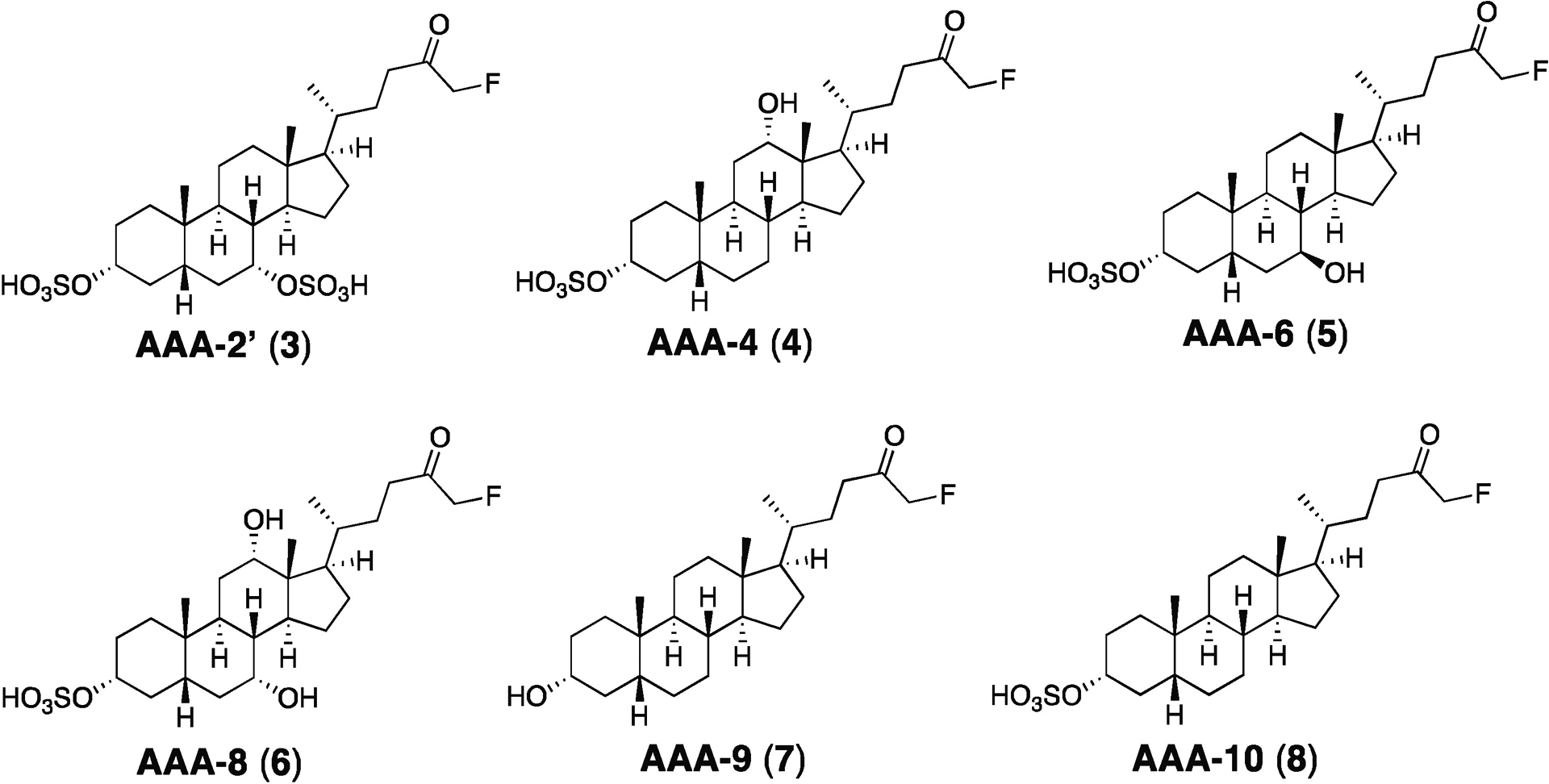
Figure 2.. Library of sulfonated inhibitors.
A small library of inhibitors was generated with SAR focused on incorporating the cores of naturally occurring bile acids found in both mouse and humans while maintaining an α-fluoromethyl ketone electrophile.
Figure 3.
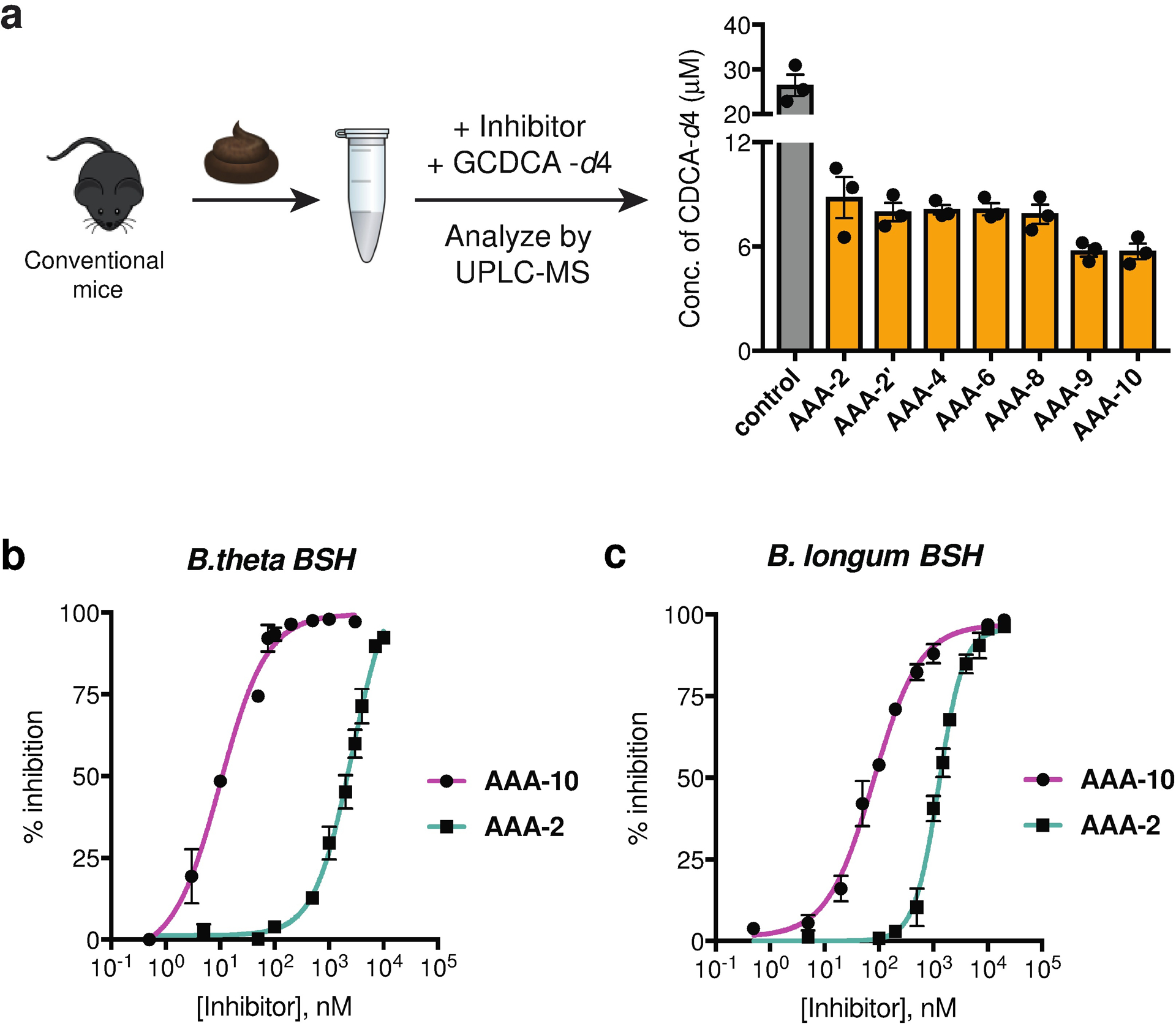
Figure 3.. Identification of AAA-10 as a second-generation pan-BSH inhibitor.
a, Assay design for screening the inhibitor library. Screening in fresh mouse feces identified AAA-10 as a potent second-generation pan-inhibitor of BSHs. Inhibitors were tested at a concentration of 10 μM. Sulfonation did not reduce the potency of AAA-10 compared to AAA-9. Assay was performed three times independently with similar results. Figure shows representative results from one assay. b and c, AAA-10 is more potent than AAA-2 against recombinant BSHs. Comparison of AAA-10 and AAA-2 dose-response curves against Bacteroides thetaiotaomicron (B. theta, accession number AA077193.1) and Bifidobacterium longum (B. longum, accession number AAF67801.1) BSHs using tauro-ursodeoxycholic acid (TUDCA) and tauro-deoxycholic acid (TDCA) as the respective substrates. See Table S1 for comparison of IC50 values of AAA-1, AAA-2 and AAA-10. For b and c, Graphpad was used to fit IC50 curves. All assays were performed in biological triplicate, and data are presented as mean ± s.e.m.
Figure 4.
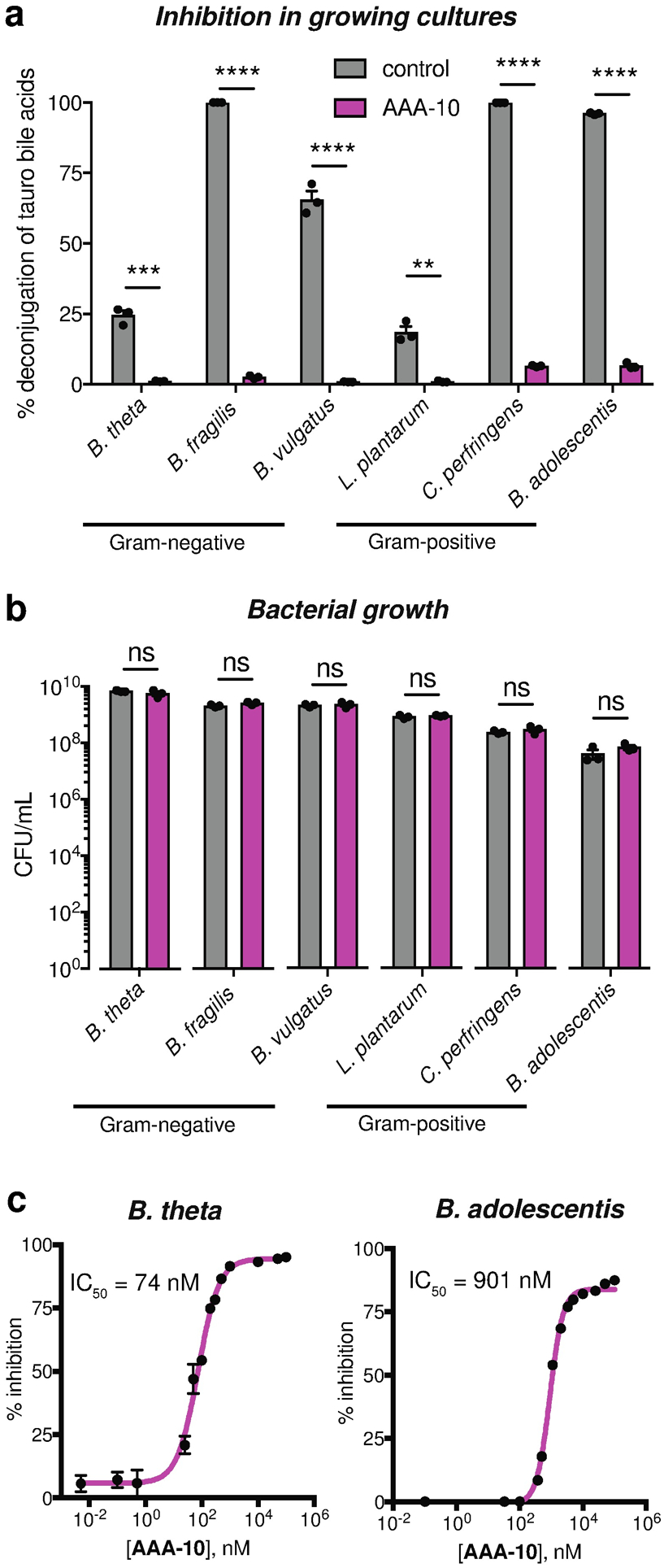
Figure 4.. AAA-10 inhibits BSH activity in bacterial cultures without exhibiting antibacterial effects.
a, AAA-10 inhibits bacterial BSH activity. The BSH inhibitory activity of AAA-10 (100 μM) against three Gram-negative (B. theta VPI-5482, Bacteroides fragilis ATCC 25285, and Bacteroides vulgatus ATCC 8482) and three Gram-positive (Lactobacillus plantarum WCFS1, Clostridium perfringens ATCC 13124, and Bifidobacterium adolescentis L2–32) human gut bacteria using 100 μM taurine-conjugated bile acids (TβMCA, TCA, TUDCA and TDCA, 25 μM each) as substrates was evaluated. BSH activity was quantified as percent deconjugation of tauro-conjugated bile acids at 24 h as determined by UPLC–MS (for absolute concentrations of substrates and products recovered, see Figure S2). b, AAA-10 did not affect bacterial cell viability. At the end of the assay in (a), the bacteria were plated to determine cell viability. c, AAA-10 is a nanomolar inhibitor of bacterial BSHs. Dose-response curves of AAA-10 against B. theta and B. adolescentis cultures were generated using tauro-ursodeoxycholic acid (TUDCA) and tauro-deoxycholic acid (TDCA) as substrates, respectively. For a, and b, two-tailed Student’s t-test were performed. For c, Graphpad was used to fit IC50 curves. *p<0.05, **p<0.01, ***p<0.001, ****p<0.0001, ns = not significant. All assays were performed in biological triplicate, and data are presented as mean ± s.e.m.
Figure 5.
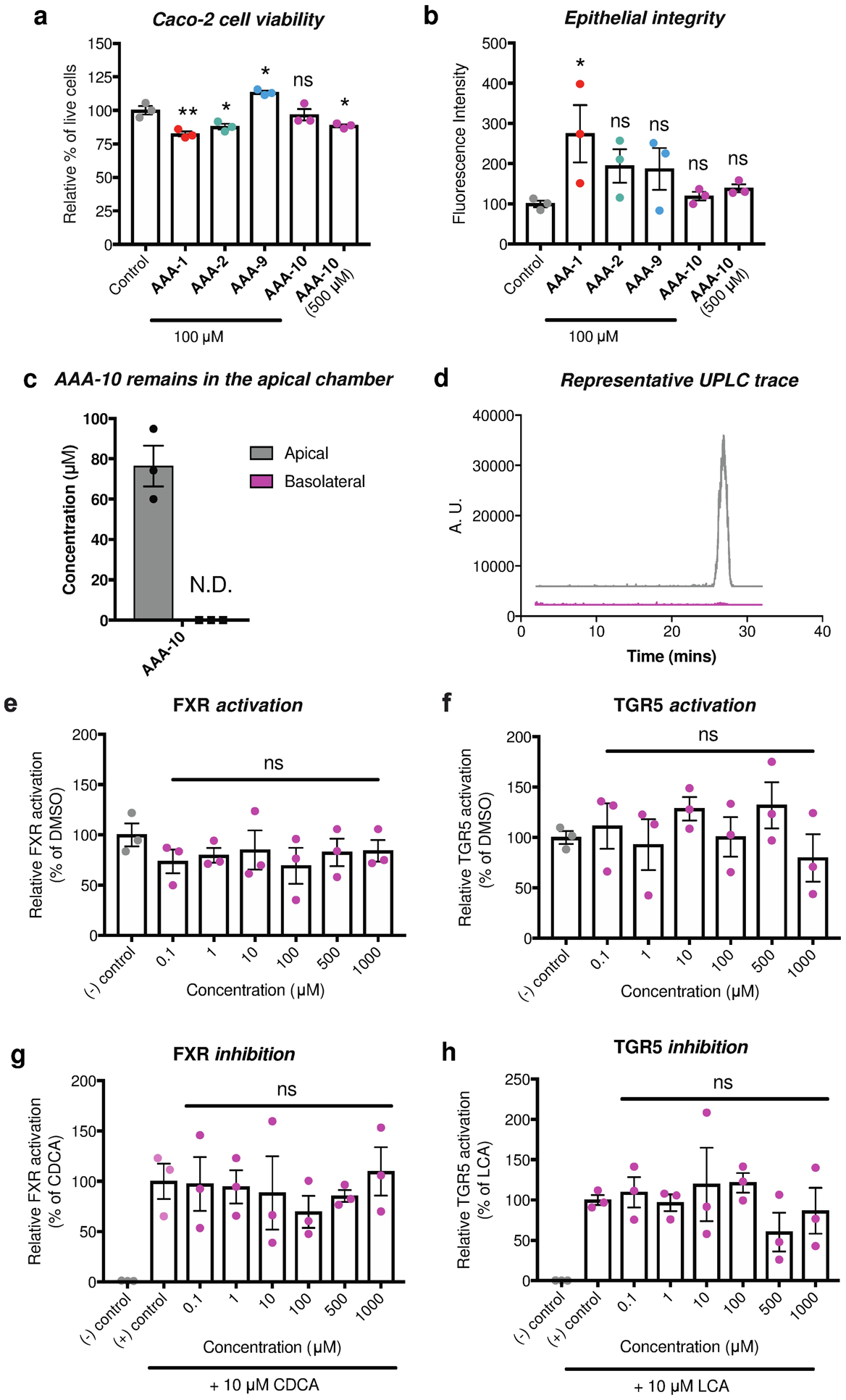
Figure 5.. AAA-10 is not toxic to mammalian cells and not a ligand for FXR or TGR5.
a, Incubation of differentiated Caco-2 cells with AAA-10 (100 μM) did not result in toxicity, while incubation with an equivalent concentration of AAA-1 and AAA-2 resulted in decreased cell viability. b, AAA-10 did not damage epithelial tight junctions at 100 μM or 500 μM, while treatment with AAA-1 resulted in loss of epithelial integrity. Epithelial junction integrity was determined by measuring the transport of 4 kDa FITC-dextran from the apical to the basolateral chamber. c, AAA-10 did not pass through an epithelial monolayer in an in vitro transwell assay (for assay setup see Figure S3a). Passage of the molecule from apical chamber to basolateral chamber was quantified by UPLC-MS. d, Representative UPLC-MS extracted ion chromatogram (EIC) traces of apical and basolateral chamber showing that no AAA-10 was detected in the basolateral chamber. e and f, FXR and TGR5 agonist activity was measured by incubating Caco-2 cells with varying concentrations of AAA-10 overnight. g and h, FXR and TGR5 antagonist activity was measured by incubating Caco-2 cells with varying concentrations of AAA-10 overnight in the presence of 10 μM of the FXR agonist chenodeoxycholic acid (CDCA) or 10 μM of the TGR5 agonist lithocholic acid (LCA), respectively. For a-b and e-h, one-way ANOVA followed by Dunnett’s multiple comparisons test. *p<0.05, **p<0.01, ***p<0.001, ****p<0.0001, ns = not significant. All assays were performed in biological triplicate, and data are presented as mean ± s.e.m.
Figure 6.
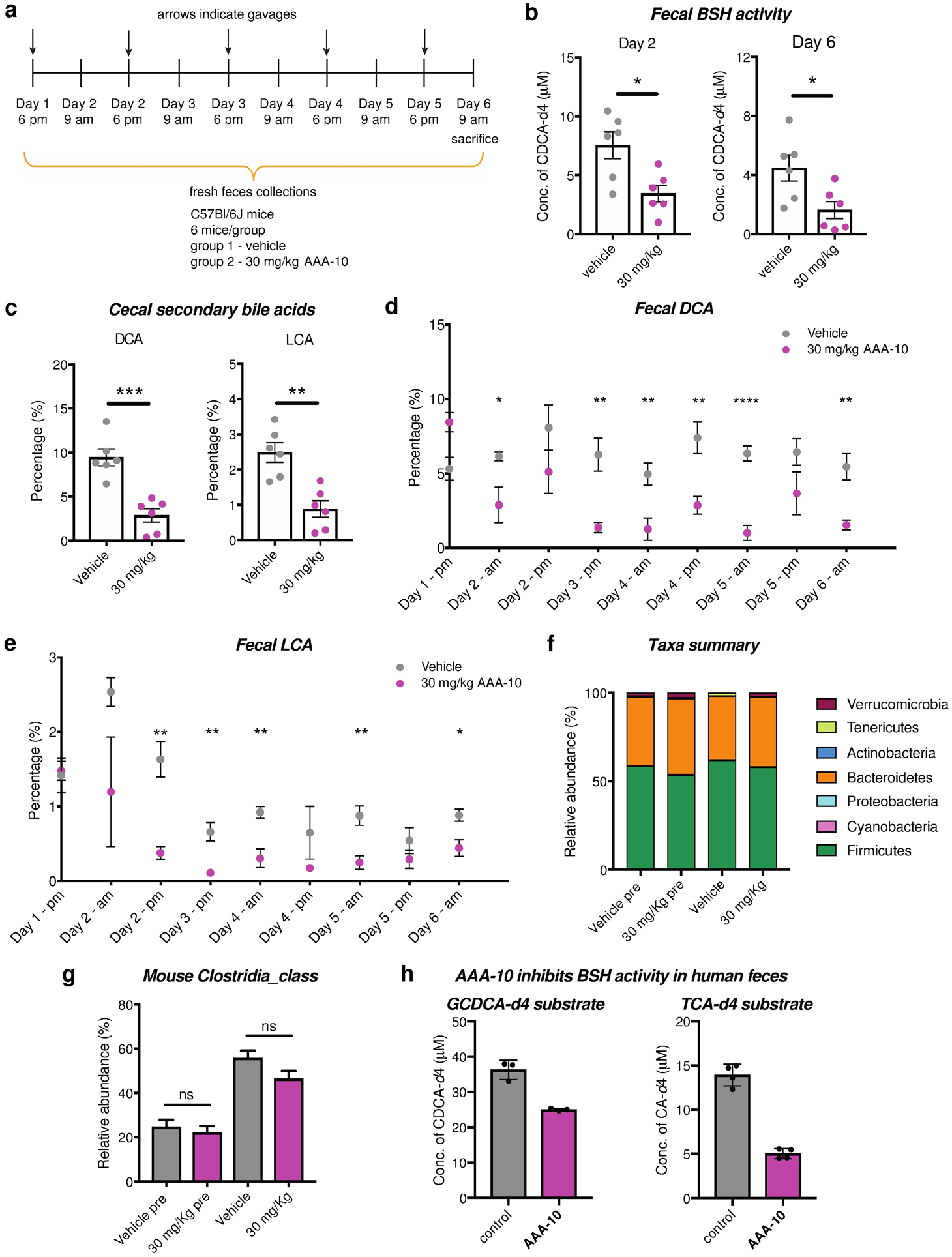
Figure 6.. AAA-10 reduces secondary bile acid abundance in vivo and inhibits BSH activity in human feces.
a, In vivo study design. C57Bl/6J mice fed ad libitum were orally gavaged with AAA-10 (30 mg/kg) once daily for 5 days. Feces were collected daily and utilized to evaluate bile acid changes and BSH activity. Mice were sacrificed 15h after the final gavage. b, AAA-10-treated mice exhibited decreased BSH activity compared to vehicle-treated mice in fresh feces collected on days 2 and 6. c, Percentages of the secondary bile acids deoxycholic acid (DCA) and lithocholic acid (LCA) were reduced in cecal contents of mice treated with AAA-10. d and e, Analysis of fecal bile acid contents over the period of the study showed that abundances of the two secondary bile acids DCA and LCA were consistently decreased throughout the experiment. f, Stacked bar plot showing mean relative abundances of phylum-level taxa in mouse samples. g, Relative abundance of class Clostridia in samples. n=6 per group, Vehicle pre and AAA-10 pre are pretreatment mouse fecal samples; Vehicle and AAA-10 are post-treatment mouse cecal samples. h, AAA-10 inhibited BSH activity in human fecal slurry over a period of 2 h (n ≥ 3). For b-e, n=6 mice/group, two-tailed Welch’s t test was performed. *p<0.05, **p<0.01, ***p<0.001, ****p<0.0001, ns = not significant. For g, ns=not significant, one-way ANOVA followed by Tukey’s multiple comparisons test). All data are presented as mean ± s.e.m.

References

    1. Donia MS, and Fischbach MA (2015) Small molecules from the human microbiota. Science 349, 1254766. - PMC - PubMed
    1. Wallace BD, Wang H, Lane KT, Scott JE, Orans J, Koo JS, Venkatesh M, Jobin C, Yeh L-A, Mani S, and Redinbo MR (2010) Alleviating cancer drug toxicity by inhibiting a bacterial enzyme. Science 330, 831–835. - PMC - PubMed
    1. Roberts AB, Gu X, Buffa JA, Hurd AG, Wang Z, Zhu W, Gupta N, Skye SM, Cody DB, Levison BS, Barrington WT, Russell MW, Reed JM, Duzan A, Lang JM, Fu X, Li L, Myers AJ, Rachakonda S, DiDonato JA, Brown JM, Gogonea V, Lusis AJ, Garcia-Garcia JC, and Hazen SL (2018) Development of a gut microbe-targeted nonlethal therapeutic to inhibit thrombosis potential. Nat. Med 24, 1407–1417. - PMC - PubMed
    1. Maini Rekdal V, Bess EN, Bisanz JE, Turnbaugh PJ, and Balskus EP (2019) Discovery and inhibition of an interspecies gut bacterial pathway for Levodopa metabolism. Science 364, eaau6323. - PMC - PubMed
    1. Ridlon JM, Kang D-J, and Hylemon PB (2006) Bile salt biotransformations by human intestinal bacteria. J. Lipid Res 47, 241–259. - PubMed

Publication types

MeSH terms

LinkOut - more resources