


Long-term high fat diet consumption reversibly alters feeding behavior via a dopamine-associated mechanism in mice
- PMID: 34280463
- PMCID: PMC8380739
- DOI: 10.1016/j.bbr.2021.113470
Long-term high fat diet consumption reversibly alters feeding behavior via a dopamine-associated mechanism in mice
Abstract
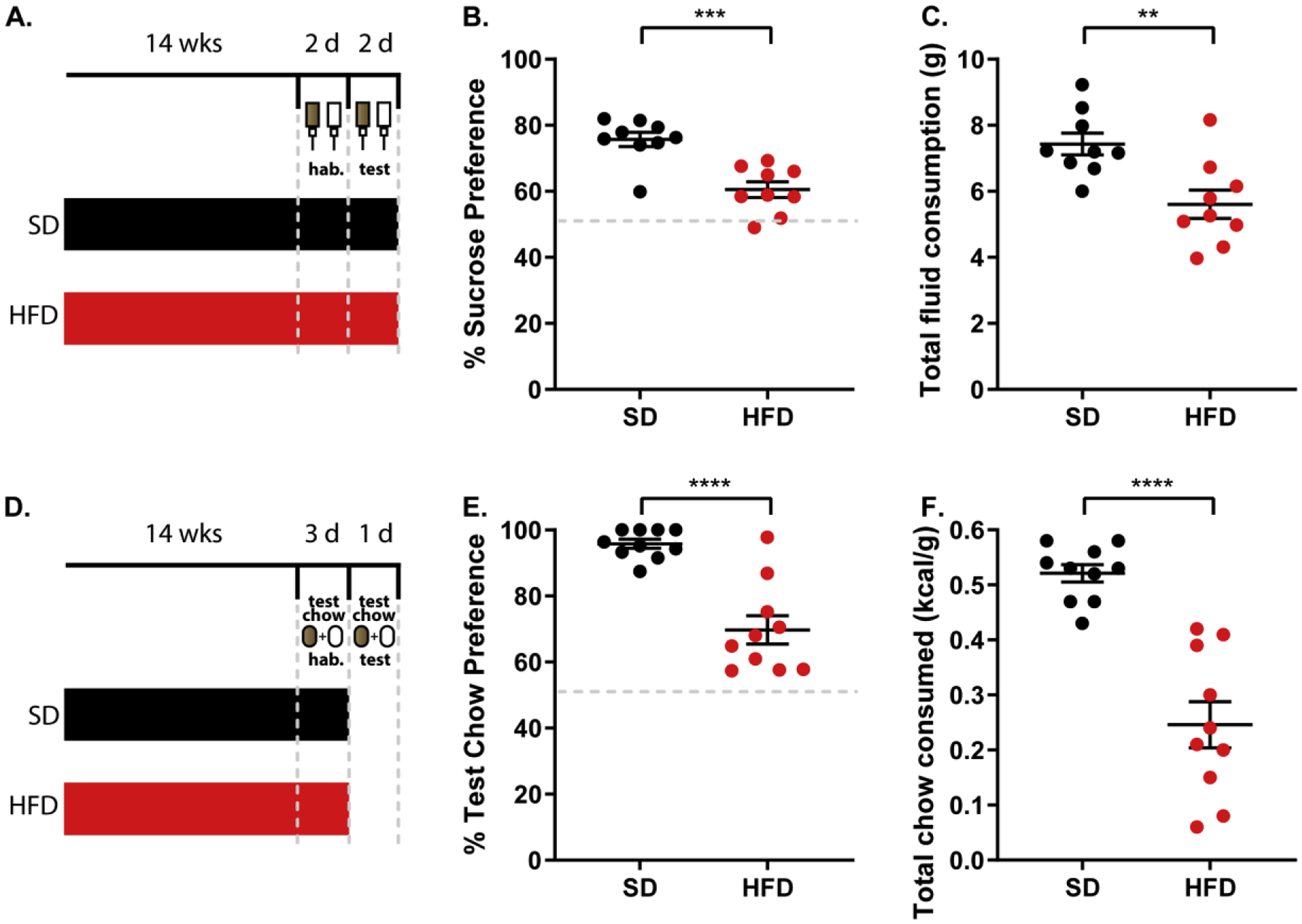
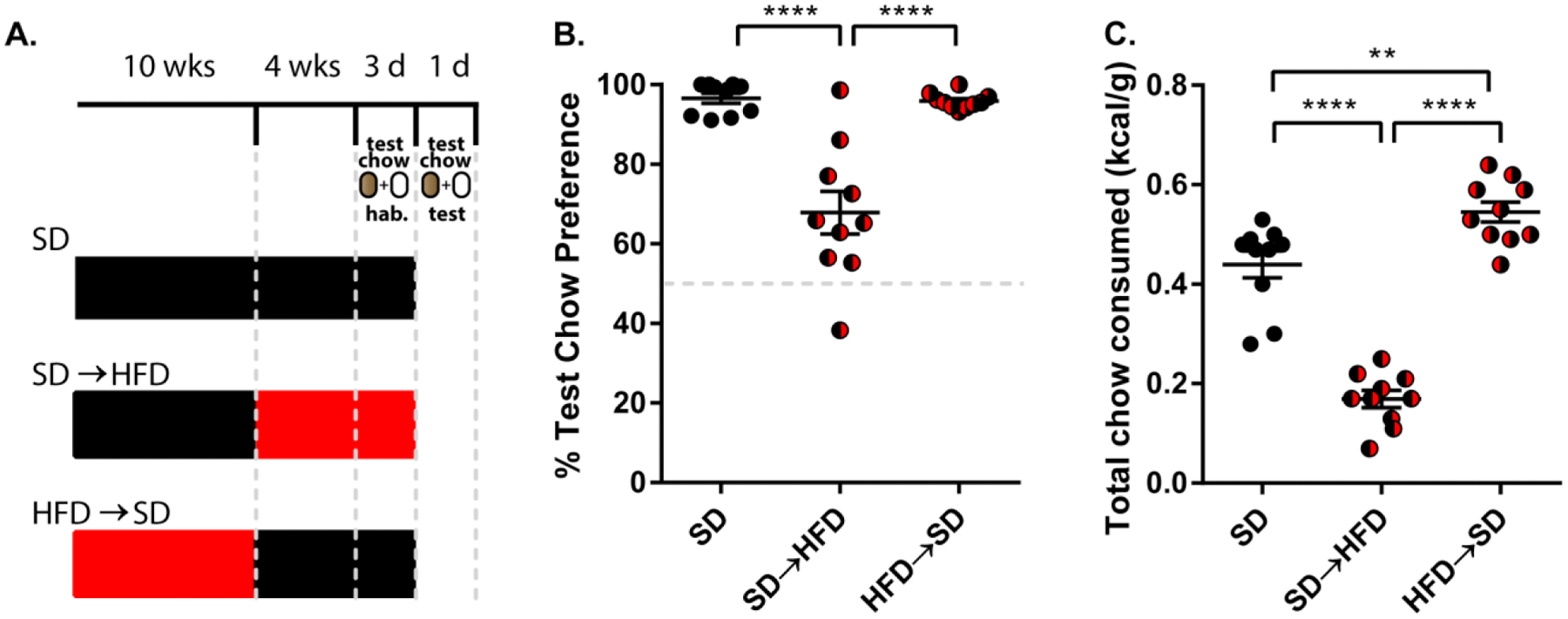
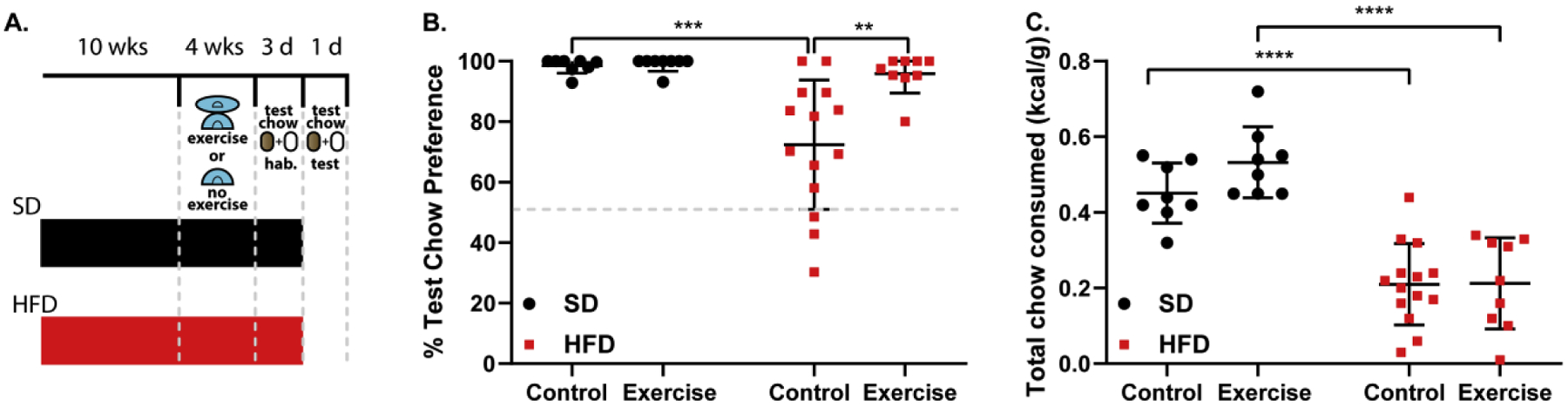
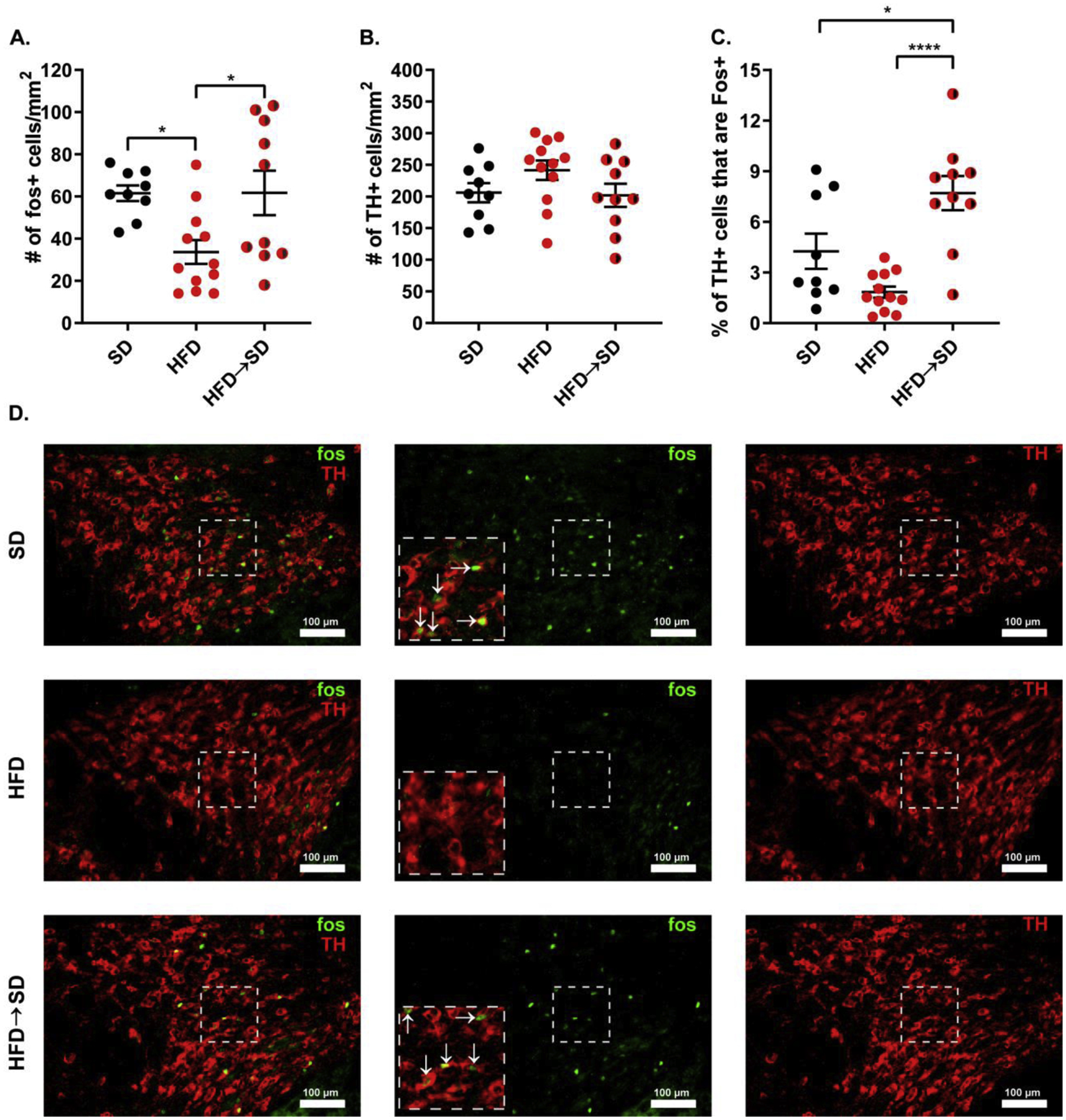
Obesity is a costly, global epidemic that is perpetuated by an unhealthy diet. A significant factor in the initial consumption and maintenance of an unhealthy diet is the abundance of highly palatable, calorically dense foods. The aim of the present study is to better understand the effects of high fat diet (HFD) consumption on food valuation and preference, and to elucidate the neurobiological mechanisms mediating these effects. By using a novel food preference assay, we found that prolonged consumption of a HFD diminishes preference for and consumption of the more calorically dense food choice when two lab diets are presented. Additionally, we demonstrated that prolonged HFD consumption dampens ventral tegmental c-fos induction during hedonic feeding, implicating the mesolimbic dopamine signaling pathway as a target of HFD. Notably, both the changes in food preference and this reduced c-fos induction were reversed during withdrawal from HFD. Further, HFD-induced alterations in food preference were attenuated by exercise. Our findings suggest that prolonged HFD consumption leads to anhedonia and altered feeding choices, and this is associated with changes in mesolimbic dopamine signaling.
Keywords: Dopamine; Exercise; Feeding behavior; Food preference; Nucleus accumbens; Ventral tegmental area.
Copyright © 2021 Elsevier B.V. All rights reserved.
Conflict of interest statement
Declarations of interest: none
Figures
References
Publication types
MeSH terms
Substances
Grants and funding
LinkOut - more resources
Full Text Sources
Miscellaneous
