


Frequency and phenotype of headache in covid-19: a study of 2194 patients
- PMID: 34282206
- PMCID: PMC8290038
- DOI: 10.1038/s41598-021-94220-6
Frequency and phenotype of headache in covid-19: a study of 2194 patients
Abstract
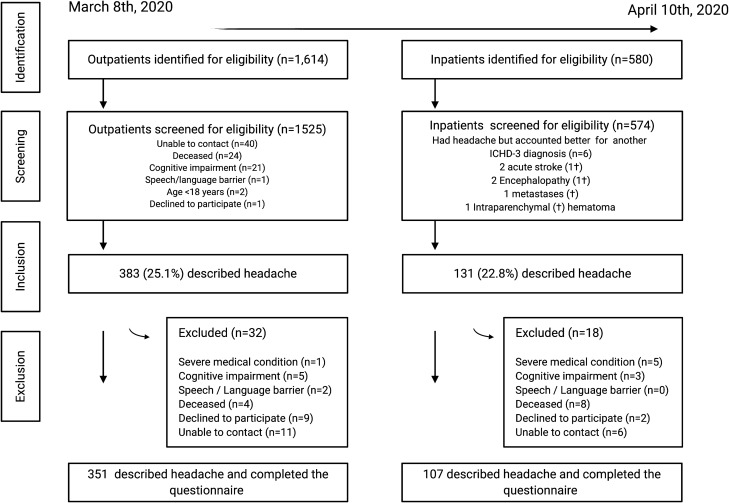
To estimate the frequency of headache in patients with confirmed COVID-19 and characterize the phenotype of headache attributed to COVID-19, comparing patients depending on the need of hospitalization and sex, an observational study was done. We systematically screened all eligible patients from a reference population of 261,431 between March 8 (first case) and April 11, 2020. A physician administered a survey assessing demographic and clinical data and the phenotype of the headache. During the study period, 2194 patients out of the population at risk were diagnosed with COVID-19. Headache was described by 514/2194 patients (23.4%, 95% CI 21.7-25.3%), including 383/1614 (23.7%) outpatients and 131/580 (22.6%) inpatients. The headache phenotype was studied in detail in 458 patients (mean age, 51 years; 72% female; prior history of headache, 49%). Headache was the most frequent first symptom of COVID-19. Median headache onset was within 24 h, median duration was 7 days and persisted after 1 month in 13% of patients. Pain was bilateral (80%), predominantly frontal (71%), with pressing quality (75%), of severe intensity. Systemic symptoms were present in 98% of patients. Headache frequency and phenotype was similar in patients with and without need for hospitalization and when comparing male and female patients, being more intense in females.Trial registration: This study was supported by the Institute of Health Carlos III (ISCIII), code 07.04.467804.74011 and Regional Health Administration, Gerencia Regional de Salud, Castilla y Leon (GRS: 2289/A/2020).
© 2021. The Author(s).
Conflict of interest statement
The authors declare no competing interests.
Figures

References
Publication types
MeSH terms
LinkOut - more resources
Full Text Sources
Medical
Miscellaneous
