


Clinical Characteristics and Treatment Response in Microscopic Colitis Based on Age at Diagnosis: A Multicenter Retrospective Study
- PMID: 34283360
- PMCID: PMC9236988
- DOI: 10.1007/s10620-021-07162-4
Clinical Characteristics and Treatment Response in Microscopic Colitis Based on Age at Diagnosis: A Multicenter Retrospective Study
Abstract
Background: Microscopic colitis (MC) primarily affects older adults; thus, data in younger patients are scarce.
Aims: To compare clinical characteristics and treatment response by age at diagnosis.
Methods: This retrospective cohort study was performed at Mayo Clinic and Massachusetts General Hospital. Patients were chosen consecutively using established databases. Patients were 'younger' if age at diagnosis was ≤ 50 years and 'older' if age > 50 years. Treatment outcomes were captured for induction (12 ± 4 weeks), based on the total number of daily stools, and defined as remission (complete resolution), response (≥ 50% improvement), non-response (< 50% improvement), and intolerance. Patients were considered 'responders' if they had remission or response and 'non-responders' if they had non-response or intolerance.
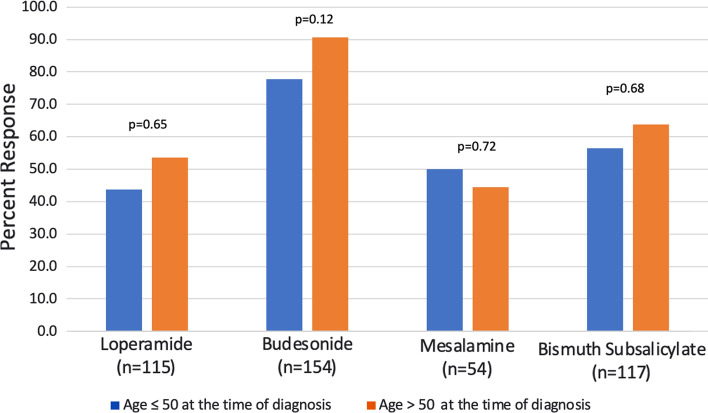
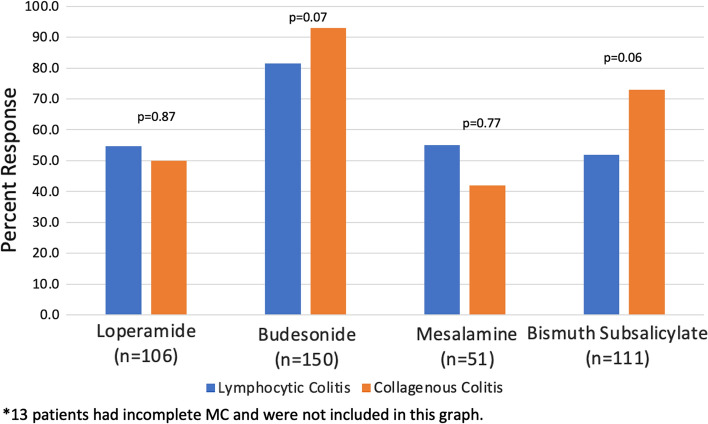
Results: We included 295 patients (52 younger, 243 older). There were no differences in sex, race, MC subtype, and diarrhea severity between groups (all P > 0.05). Younger patients were more likely to have celiac disease (17.3% vs. 5.8%, P = 0.01), while older patients had higher BMI (mean 25.0 vs. 23.8 kg/m2, P = 0.04) were more likely smokers (53.9% vs. 34.6%, P = 0.01) and use NSAIDs (48.6% vs. 15.4%, P < 0.01) and statins (22.6% vs. 3.8%, P < 0.01). Overall treatment response was highest for budesonide (88.3%) and did not differ when comparing older to younger patients (90.6% vs. 77.8%, P = 0.12) or by MC subtype (LC, 81.5% vs. CC, 92.9%, P = 0.07).
Conclusions: There are no significant differences in MC treatment response based on age or disease subtype. These findings support treating patients with MC based on symptom severity rather than age.
Keywords: Bismuth subsalicylate; Budesonide; Collagenous colitis; Diarrhea; Loperamide; Lymphocytic colitis; Mesalamine; Microscopic colitis.
© 2021. The Author(s).
Conflict of interest statement
The authors have no conflicts of interest to report.
Figures
References
-
- Zylberberg HM, Kamboj AK, De Cuir N, et al. Medication use and microscopic colitis: a multicentre retrospective cohort study. Aliment Pharmacol Ther. 2021;53:1209–1215. - PubMed
Publication types
MeSH terms
Substances
Grants and funding
LinkOut - more resources
Full Text Sources
