


Effect of 12-weeks elastic band resistance training on MyomiRs and osteoporosis markers in elderly women with Osteosarcopenic obesity: a randomized controlled trial
- PMID: 34284726
- PMCID: PMC8290586
- DOI: 10.1186/s12877-021-02374-9
Effect of 12-weeks elastic band resistance training on MyomiRs and osteoporosis markers in elderly women with Osteosarcopenic obesity: a randomized controlled trial
Abstract
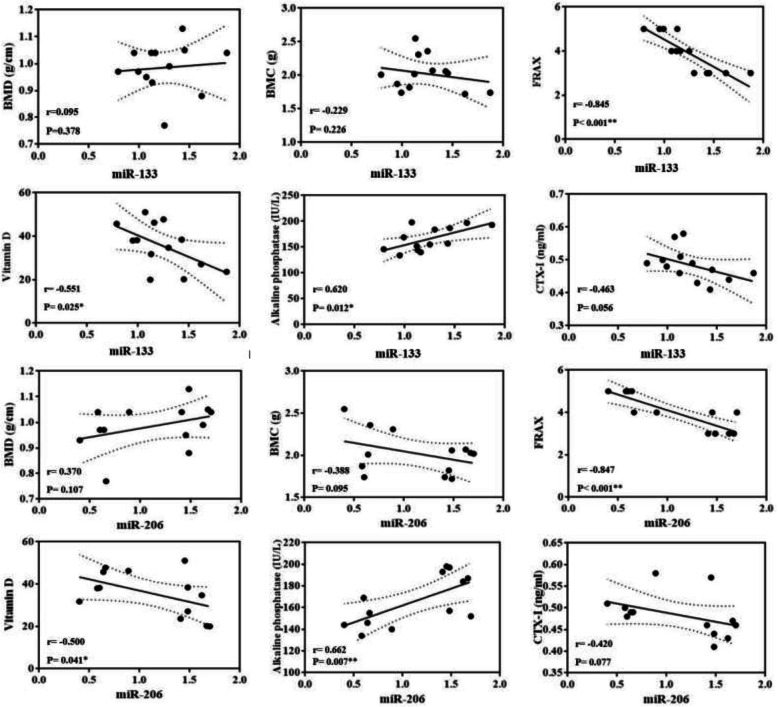
Background: Interorgan communication networks established during exercise in several different tissues can be mediated by several exercise-induced factors. Therefore, the present study aimed to investigate the effects of resistance-type training using elastic band-induced changes of myomiRs (i.e., miR-206 and miR-133), vitamin D, CTX-I, ALP, and FRAX® score in elderly women with osteosarcopenic obesity (OSO).
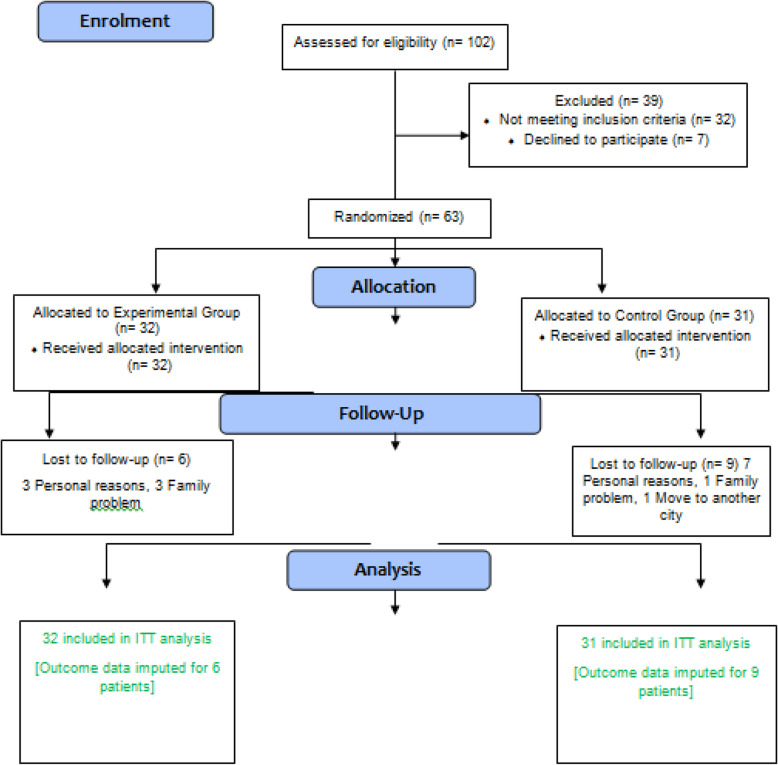
Methods: In this randomized controlled trial, 63 women (aged 65-80 years) with Osteosarcopenic Obesity were recruited and assessed, using a dual-energy X-ray absorptiometry instrument. The resistance-type training via elastic bands was further designed three times per week for 12-weeks. The main outcomes were Fracture Risk Assessment Tool score, bone mineral content, bone mineral density, vitamin D, alkaline phosphatase, C-terminal telopeptides of type I collagen, expression of miR-206 and miR-133.
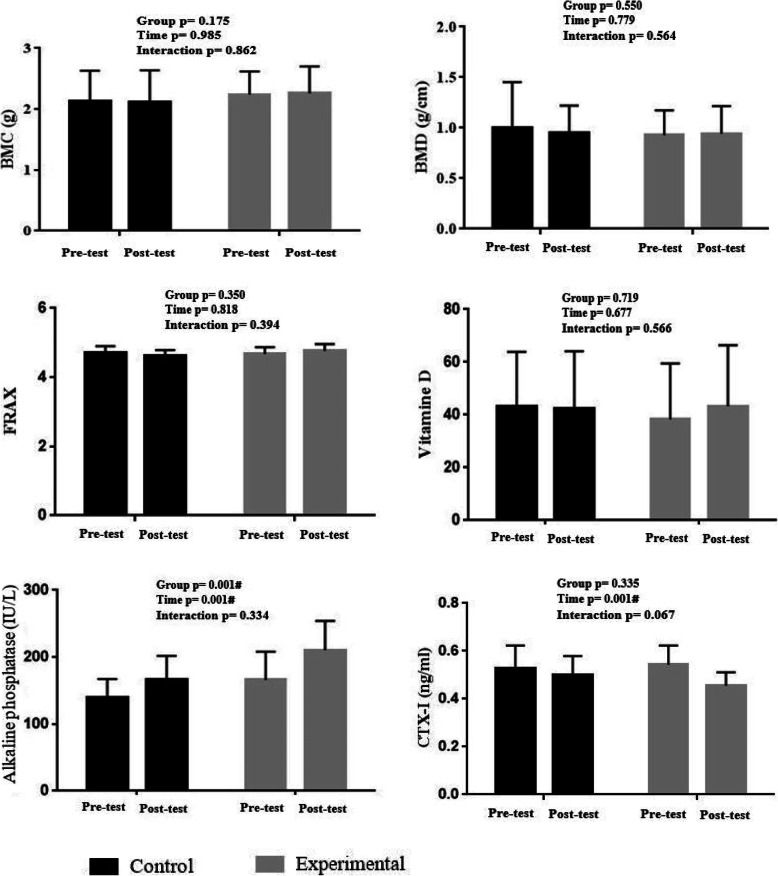
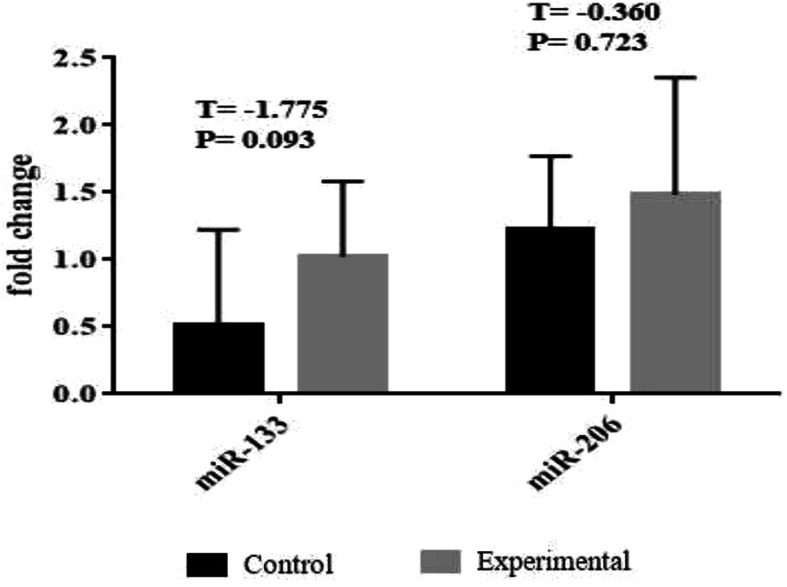
Results: There was no significant difference between the study groups in terms of the Fracture Risk Assessment Tool score (p = 0.067), vitamin D (p = 0.566), alkaline phosphatase (p = 0.334), C-terminal telopeptides of type I collagen (p = 0.067), microR-133 (p = 0.093) and miR-206 (p = 0.723).
Conclusion: Overall, the results of this study illustrated 12-weeks of elastic band resistance training causes a slight and insignificant improvement in osteoporosis markers in women affected with Osteosarcopenic Obesity.
Trial registration: Randomized controlled trial (RCT) (Iranian Registry of Clinical Trials, trial registration number: IRCT20180627040260N1 . Date of registration: 27/11/2018.
Keywords: MyomiRs; Osteoporosis markers; Osteosarcopenic obesity; Resistance training.
© 2021. The Author(s).
Conflict of interest statement
The authors declare that they have no conflict of interest.
Figures
References
Publication types
MeSH terms
Substances
LinkOut - more resources
Full Text Sources
Medical
