


Chronic Pain is Associated With Reduced Sympathetic Nervous System Reactivity During Simple and Complex Walking Tasks: Potential Cerebral Mechanisms
- PMID: 34286166
- PMCID: PMC8267022
- DOI: 10.1177/24705470211030273
Chronic Pain is Associated With Reduced Sympathetic Nervous System Reactivity During Simple and Complex Walking Tasks: Potential Cerebral Mechanisms
Abstract
Background: Autonomic dysregulation may lead to blunted sympathetic reactivity in chronic pain states. Autonomic responses are controlled by the central autonomic network (CAN). Little research has examined sympathetic reactivity and associations with brain CAN structures in the presence of chronic pain; thus, the present study aims to investigate how chronic pain influences sympathetic reactivity and associations with CAN brain region volumes.
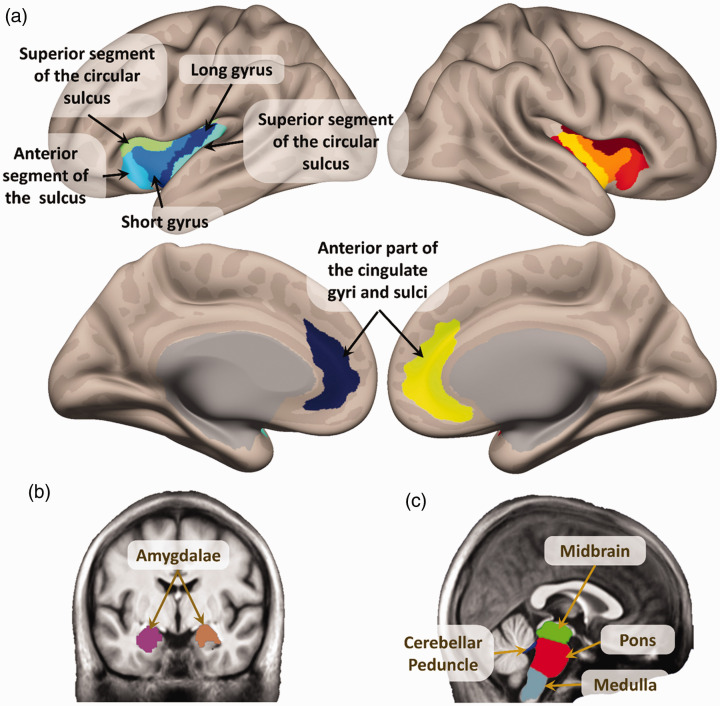
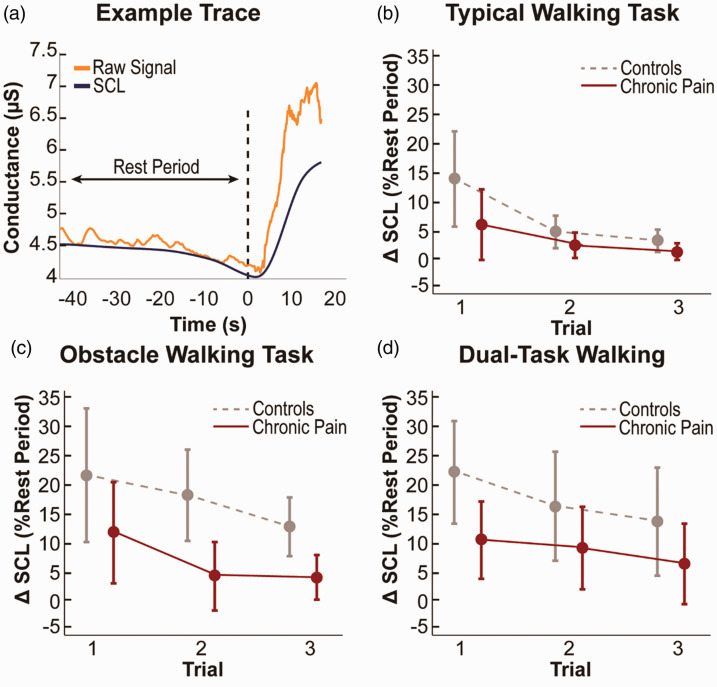
Methods: Sympathetic reactivity was measured as change in skin conductance level (ΔSCL) between a resting reference period and walking periods for typical and complex walking tasks (obstacle and dual-task). Participants included 31 people with (n = 19) and without (n = 12) chronic musculoskeletal pain. Structural 3 T MRI was used to determine gray matter volume associations with ΔSCL in regions of the CAN (i.e., brainstem, amygdala, insula, and anterior cingulate cortex).
Results: ΔSCL varied across walking tasks (main effect p = 0.036), with lower ΔSCL in chronic pain participants compared to controls across trials 2 and 3 under the obstacle walking condition. ΔSCL during typical walking was associated with multiple CAN gray matter volumes, including brainstem, bilateral insula, amygdala, and right caudal anterior cingulate cortex (p's < 0.05). The difference in ΔSCL from typical-to-obstacle walking were associated with volumes of the midbrain segment of the brainstem and anterior segment of the circular sulcus of the insula (p's < 0.05), with no other significant associations. The difference in ΔSCL from typical-to-dual task walking was associated with the bilateral caudal anterior cingulate cortex, and left rostral cingulate cortex (p's < 0.05).
Conclusions: Sympathetic reactivity is blunted during typical and complex walking tasks in persons with chronic pain. Additionally, blunted sympathetic reactivity is associated with CAN brain structure, with direction of association dependent on brain region. These results support the idea that chronic pain may negatively impact typical autonomic responses needed for walking performance via its potential impact on the brain.
Keywords: central autonomic network; chronic pain; mobility; neuroimaging; sympathetic nervous system.
© The Author(s) 2021.
Conflict of interest statement
Declaration of Conflicting Interests: The author(s) declared no potential conflicts of interest with respect to the research, authorship, and/or publication of this article.
Figures
References
-
- Pfeifer GM. Transforming pain care: an IOM report. Am J Nurs. 2011; 111(9): 18. - PubMed
-
- Reyes del Paso GA, Garrido S, Pulgar Á.and Duschele, S. Autonomic cardiovascular control and responses to experimental pain stimulation in fibromyalgia syndrome. J Psychosom Res. 2011; 70(2): 125–134. - PubMed
-
- Tousignant-Laflamme Y, Goffaux P, Bourgault P.and Marchand, S. Different autonomic responses to experimental pain in IBS patients and healthy controls. J Clin Gastroenterol. 2006; 40(9): 814–820. - PubMed
-
- El-Badawy MA, El Mikkawy DME. Sympathetic dysfunction in patients with chronic low back pain and failed back surgery syndrome. Clin J Pain. 2016; 32(3): 226–231. - PubMed
Grants and funding
LinkOut - more resources
Full Text Sources
