


The evaluation of global cognitive and emotional status of older patients with chronic tinnitus
- PMID: 34288570
- PMCID: PMC8413806
- DOI: 10.1002/brb3.2074
The evaluation of global cognitive and emotional status of older patients with chronic tinnitus
Abstract
Objectives: Tinnitus is a common symptom largely impactful on quality of life, especially in the elderly. Our aim was to evaluate the efficacy of self-administered screening tests to correlate the severity of subjective perception of tinnitus with emotional disorders and the overall cognitive status.
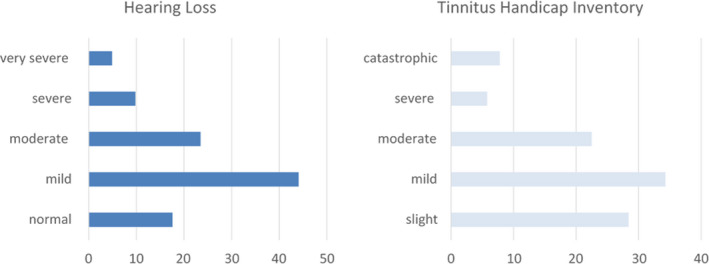
Methods: Patients aged ≥ 55 years with chronic tinnitus were recruited and submitted to a complete audiological evaluation; Tinnitus Handicap inventory (THI); Hospital Anxiety and Depression Scale (HADS-A and HADS-D) and Mini-Mental State Examination (MMSE). Demographic and audiological features of patients with and without cognitive impairment (MMSE score cut-off of 24/30) were analyzed in order to reveal the relationship among tinnitus, emotional disorders, and cognitive dysfunction.
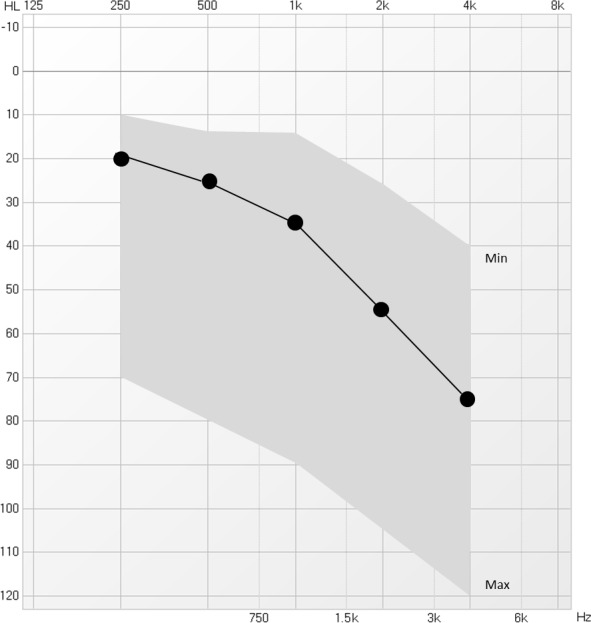
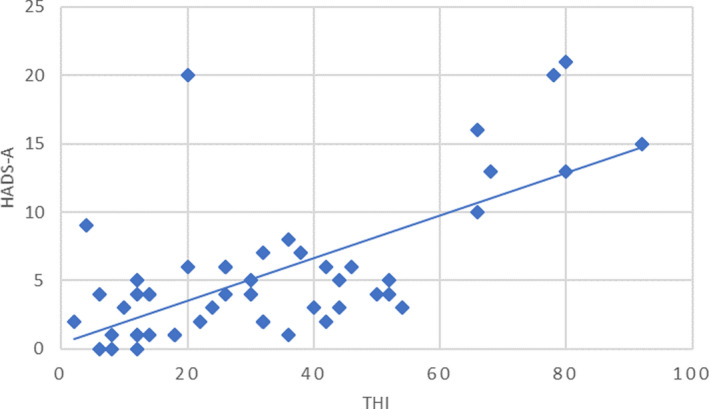
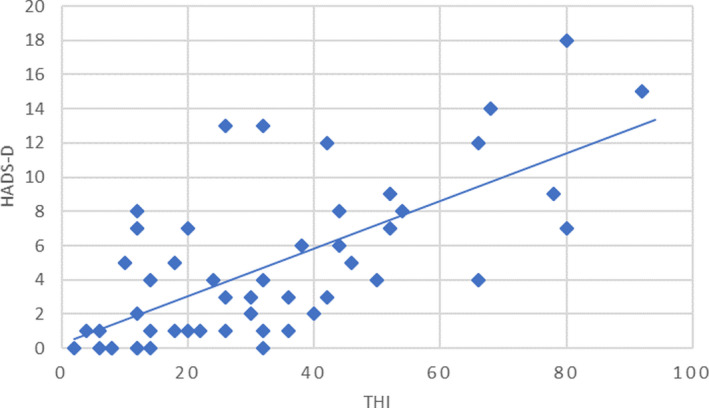
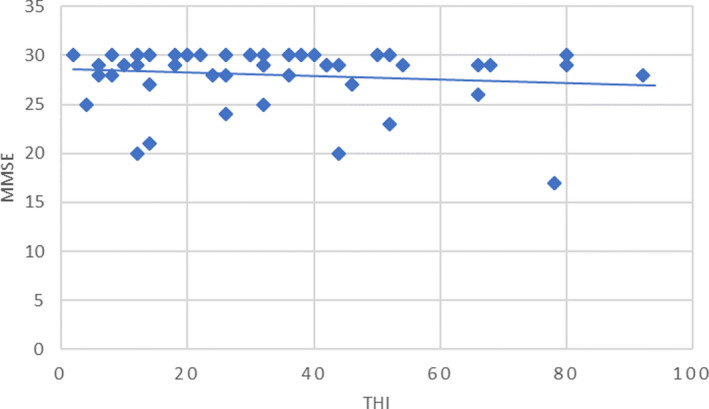
Results: 102 patients were recruited (mean age: 70.4 ± 9.6). THI score was directly related to HADS-A score (r = .63) HADS-D score (r = .66), whereas there was no relationship between tinnitus severity and MMSE (r = .13). CI and n-CI groups did not differ in the characteristics of tinnitus (p > .05), however, hearing threshold (p = .049) and anxious depressive traits measured with HADS-A (p = .044) and HADS-D (p = .016) were significantly higher in the group with cognitive impairment. Furthermore, age ≥ 75 years (p = .002, OR = 13.8), female sex (p = .032; OR = 6.5), severe hearing loss (p = .036; OR = 2.3), and anxiety (p = .029; OR = 9.2) resulted risk factors for CI. Therefore, in CI group MMSE score was inversely related to age (r = -.84).
Conclusions: Cognitive impairment and psychiatric discomfort should be considered in tinnitus patients, related to increasing age, female sex, and severe hearing loss. Thus, self-administered questionnaires can be useful in addressing clinical approach.
Keywords: cognitive impairment; older patients; psychiatric disorders; tinnitus.
© 2021 The Authors. Brain and Behavior published by Wiley Periodicals LLC.
Conflict of interest statement
Authors have not received any funds from any kind of organization; the study is entirely the result of our work. We deny any kind of conflict of interest.
Figures
References
-
- Anzivino, R., Conti, G., Di Nardo, W., Fetoni, A. R., Picciotti, P. M., Marra, C., Guglielmi, V., Fortunato, S., Forli, F., Paludetti, G., & Berrettini, S. (2019). Prospective evaluation of cognitive functions after rehabilitation with cochlear implant or hearing aids: Preliminary results of a multicentric study on elderly patients. American Journal of Audiology, 28, 762–774. 10.1044/2019_AJA-HEAL18-18-0176 - DOI - PubMed
-
- Bigelow, R. T., Reed, N. S., Brewster, K. K., Huang, A., Rebok, G., Rutherford, B. R., & Lin, F. R. (2020). Association of hearing loss with psychological distress and utilization of mental health services among adults in the United States. JAMA Netw Open, 3, e2010986. 10.1001/jamanetworkopen.2020.10986 - DOI - PMC - PubMed
MeSH terms
LinkOut - more resources
Full Text Sources
Medical
