. 2021 Nov 15;149(10):1817-1827.
doi: 10.1002/ijc.33745. Epub 2021 Aug 4.

Role of calcium in hormone-independent and -resistant breast cancer

Affiliations

Role of calcium in hormone-independent and -resistant breast cancer

Kedra Cyrus et al. Int J Cancer. .

Abstract

Approximately one-third of estrogen receptor (ER) positive breast tumors fail to respond to or become resistant to hormonal therapy. Although the mechanisms responsible for hormone resistance are not completely understood, resistance is associated with alterations in ERα; overexpression of proteins that interact with the receptor; and hormone-independent activation of the receptor by growth factor signal transduction pathways. Our previous studies show that in estrogen dependent breast cancer cells, activation of the epidermal growth factor signaling pathway increases intracellular calcium which binds to and activates ERα through sites in the ligand-binding domain of the receptor and that treatment with extracellular calcium increases the concentration of intracellular calcium which activates ERα and induces hormone-independent cell growth. The present study asked whether overexpression of calcium channels contributes to the hormone-independent and -resistant phenotype of breast cancer cells and whether clinically used calcium channel blockers reverse hormone independence and resistance. The results show that hormone-independent and -resistant cells overexpress calcium channels, have high concentrations of intracellular calcium, overexpress estrogen responsive genes and, as expected, grow in the absence of estradiol and that treatment with calcium channel blockers decreased the concentration of intracellular calcium, the expression of estrogen responsive genes and cell growth. More importantly, in hormone-resistant cells, treatment that combined a calcium channel blocker with an antiestrogen reversed resistance to the antiestrogen.

Keywords: breast cancer; calcium; calcium channels; hormone resistance.


Conflict of interest statement

Conflict of interest

The authors do not report any conflicts of interest.

Figures
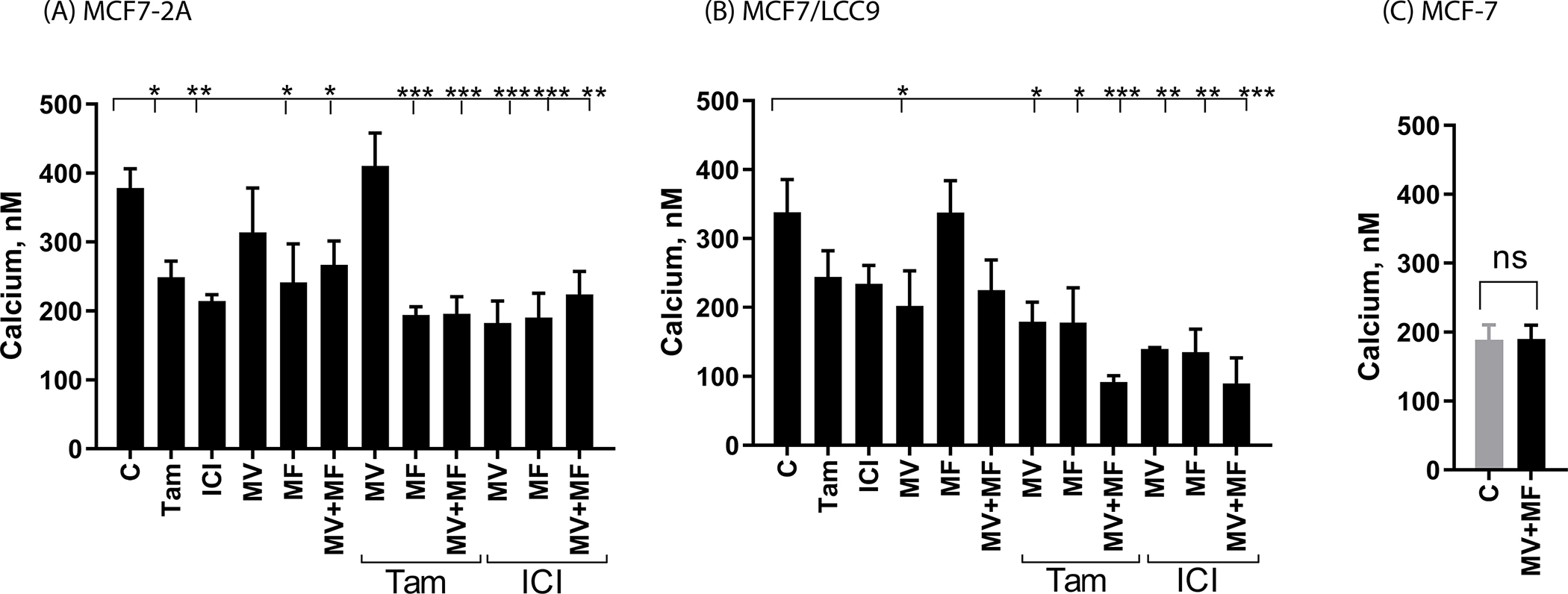
Figure 1.
Figure 1.
Effects of calcium channel blockers on the concentration of intracellular calcium MCF7-2A and MCF7/LCC9 cells were grown in phenol red free IMEM supplemented with 5% CFBS. MCF-7 cells were grown in phenol red containing IMEM supplemented with 10% fetal bovine serum; prior to treatment, the media of MCF-7 cells was changed to phenol red free IMEM containing 5% CCS for 48 hours. Cells were treated for 72 hours with methoxyverapamil (MV; 75 μM) and/or mibefradil (MF; 5 μM) in the absence and presence of 17β-estradiol (E2; 1 nM), 4-hydroxy tamoxifen (TAM; 1 μM), or ICI-182,780 (ICI; 100 nM). To quantify the concentration of intracellular calcium, the cells were trypsinized and incubated for 20 minutes with 5 uM Fluo-4-AM. The emission at 516 nm was determined using an excitation wavelength of 494 nm and the concentration of intracellular calcium was calculated using the equation: [Cain 2+] = Kd × ([F − Fmin])/ ([Fmax −F]) where Kd is the affinity of the dye for calcium. Data are the mean ± SEM (n ≥ 3). *, p≤0.05; **, p≤0.01; ***, p≤0.001; ****, p≤0.0001. panel A, MCF7-2A cells; panel B, MCF7/LCC9 cells; panel C, MCF-7 cells.
Figure 2.
Figure 2.
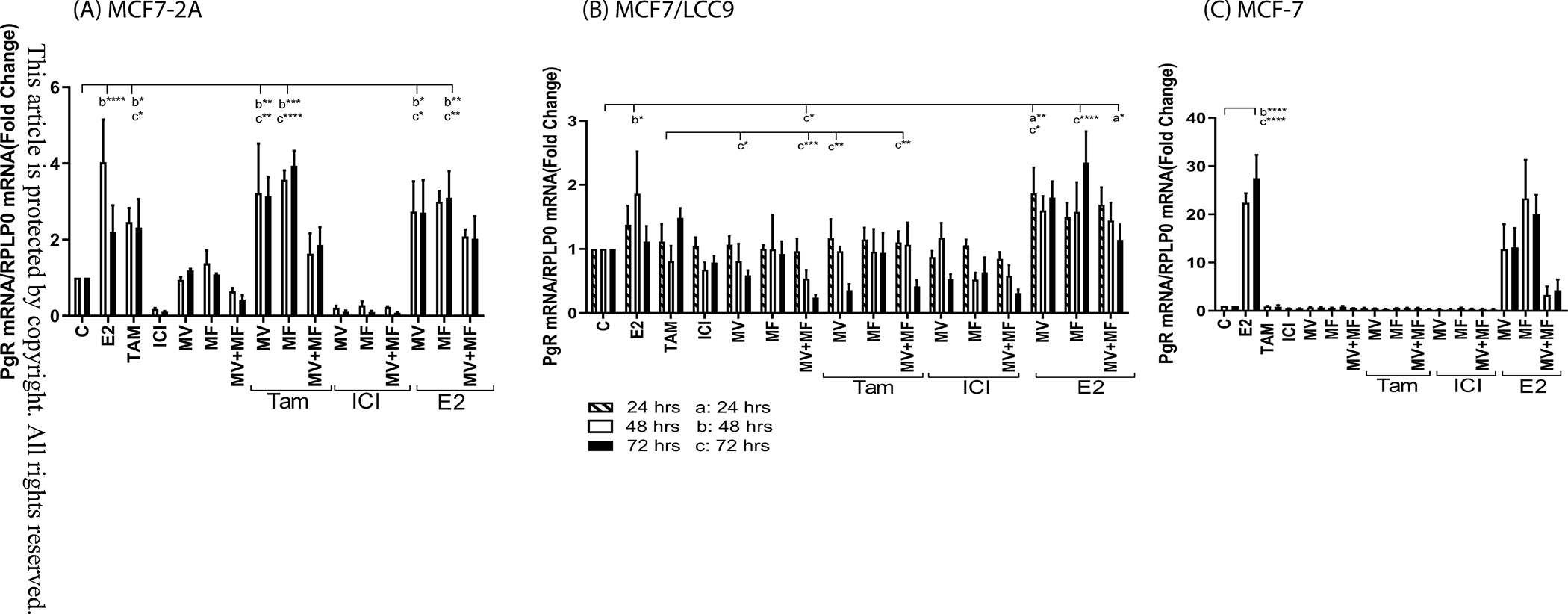
Effects of calcium channel blockers on the expression of progesterone receptor MCF7-2A and MCF7/LCC9 cells were grown in phenol red free IMEM supplemented with 5% CFBS. MCF-7 cells were grown in phenol red containing IMEM supplemented with 10% fetal bovine serum; prior to treatment, the media of MCF-7 cells was changed to phenol red free IMEM containing 5% CCS for 48 hours. The cells were treated for 24, 48 or 72 hours with methoxyverapamil (MV; 75 μM) and/or mibefradil (MF; 5 μM) in the absence and presence of 17β-estradiol (E2; 1 nM), 4-hydroxy tamoxifen (TAM; 1 μM), or ICI-182,780 (ICI; 100 nM). RNA was isolated. The amount of PgR mRNA was measured using a quantitative real time-PCR assay and normalized to the expression of ribosomal large protein P0 (RPLP0) mRNA using the 2−ΔΔCt method. Data are presented as fold change compared to control. (mean ± SEM; n ≥ 3; *, p≤0.05; **, p≤0.01; ***, p≤0.001; ****, p≤0.0001; a, 24 hours; b, 48 hours; c, 72 hours). panel A, MCF7-2A cells; panel B, MCF7/LCC9 cells; panel C, MCF-7 cells.
Figure 3.
Figure 3.
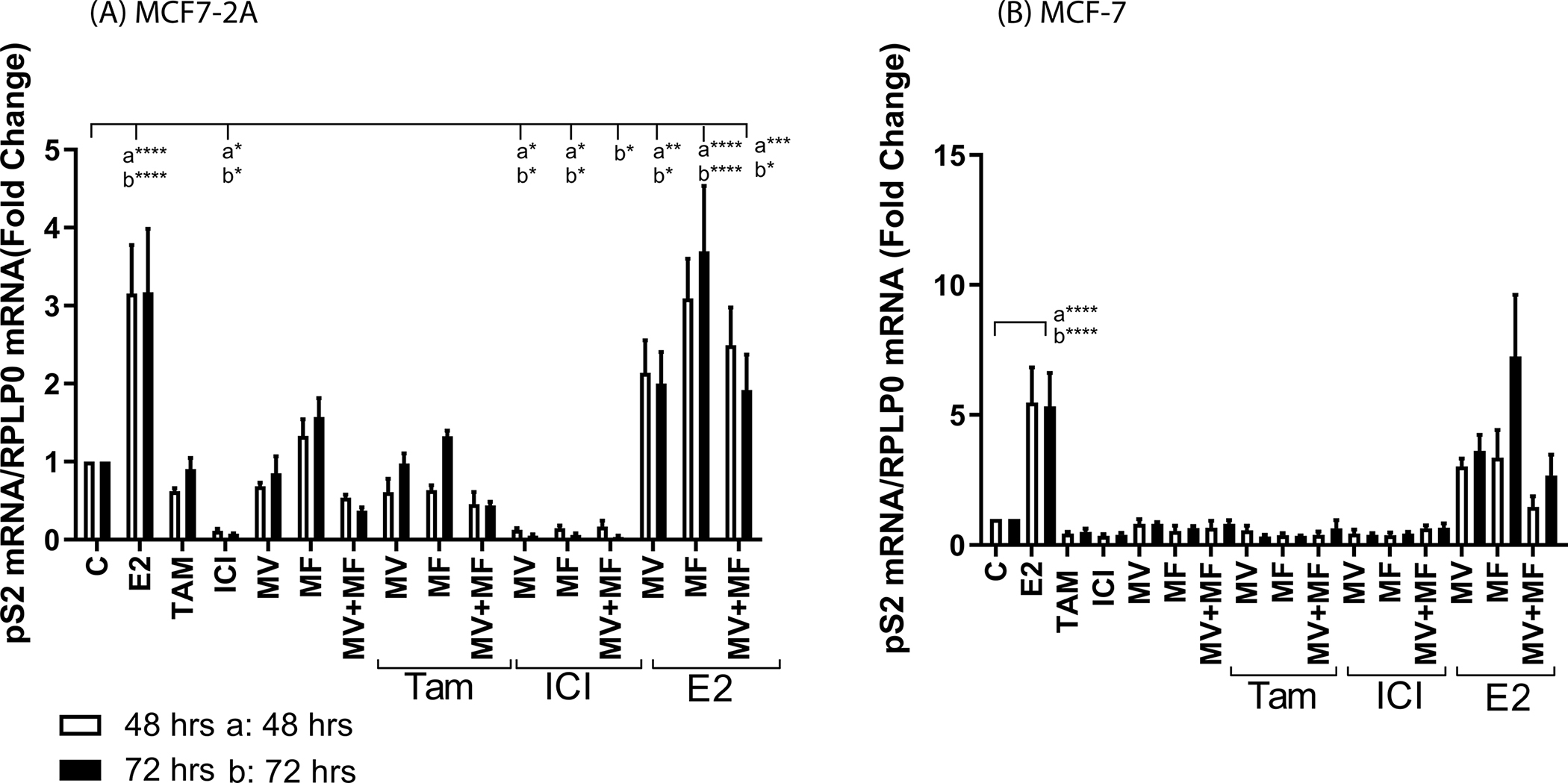
Effects of calcium channel blockers on the expression of pS2 MCF7-2A cells were grown in phenol red free IMEM supplemented with 5% CFBS. MCF-7 cells were grown in phenol red containing IMEM supplemented with 10% fetal bovine serum; prior to treatment, the media of MCF-7 cells was changed to phenol red free IMEM containing 5% CCS for 48 hours. The cells were treated for 48 or 72 hours with methoxyverapamil (MV; 75 μM) and/or mibefradil (MF; 5 μM) in the absence and presence of 17β-estradiol (E2; 1 nM), 4-hydroxy tamoxifen (TAM; 1 μM), or ICI-182,780 (ICI; 100 nM). RNA was isolated. The amount of pS2 mRNA was measured using a quantitative real time-PCR assay and normalized to the expression of ribosomal large protein P0 (RPLP0) mRNA using the 2−ΔΔCt method. Data are presented as fold change compared to control. (mean ± SEM; n ≥ 3; a, 48 hours; b, 72 hours; *, p≤0.05; **, p≤0.01; ***, p≤0.001; ****, p≤0.0001). panel A, MCF7-2A cells; panel B, MCF-7 cells.
Figure 4.
Figure 4.
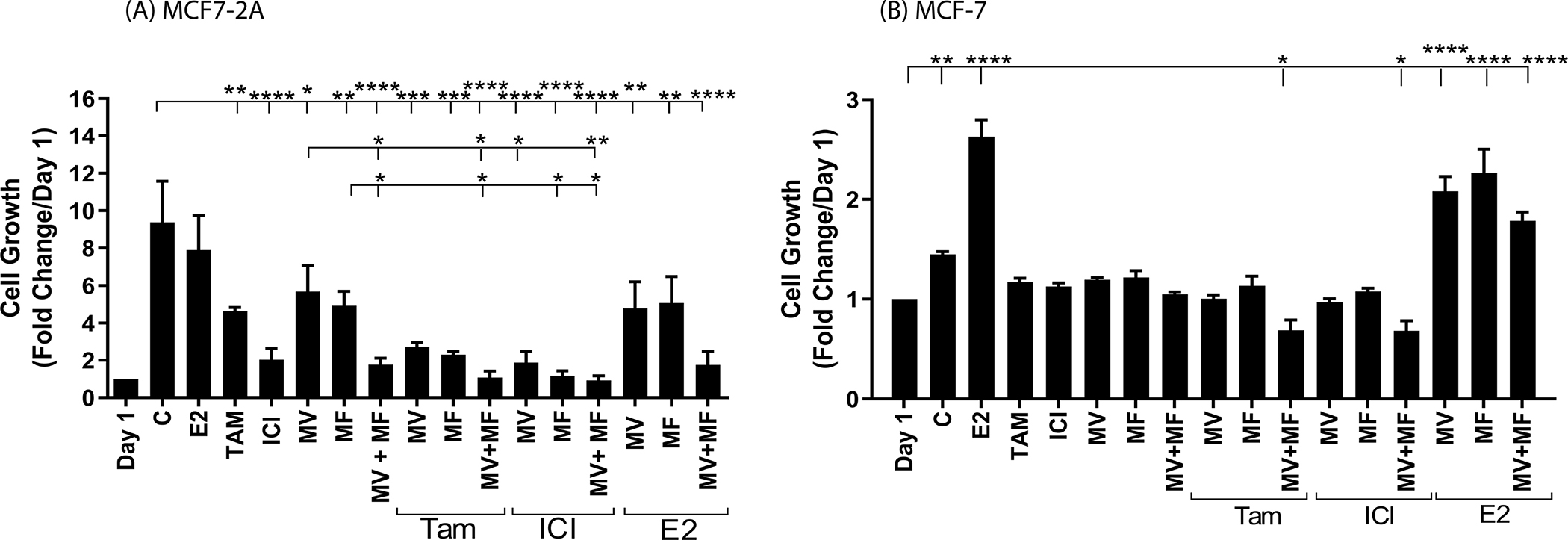
Effects of calcium channel blockers on the growth of MCF7-2A and MCF-7 cells MCF7-2A cells were grown in phenol red free IMEM supplemented with 5% CFBS. MCF-7 cells were grown in phenol red containing IMEM supplemented with 10% FBS; the media of MCF-7 cells was changed to phenol red free IMEM containing 5% CCS for 48 hours prior to treatment. The cells were not treated (control; C) or treated with methoxyverapamil (MV; 75 μM) and/or mibefradil (MF; 5 μM) in the absence and presence of 17β-estradiol (E2; 1 nM), 4-hydroxy tamoxifen (TAM; 1 μM), or ICI-182,780 (ICI; 100 nM) for four days beginning on day 1. The number of cells was determined using a coulter counter. Data are presented as fold change compared to day 1. (mean ± SEM, n ≥ 3; *, p≤0.05; **, p≤0.01; ***, p≤0.001; ****, p≤0.0001). panel (A), MCF7-2A; panel B, MCF-7 cells.
Figure 5.
Figure 5.
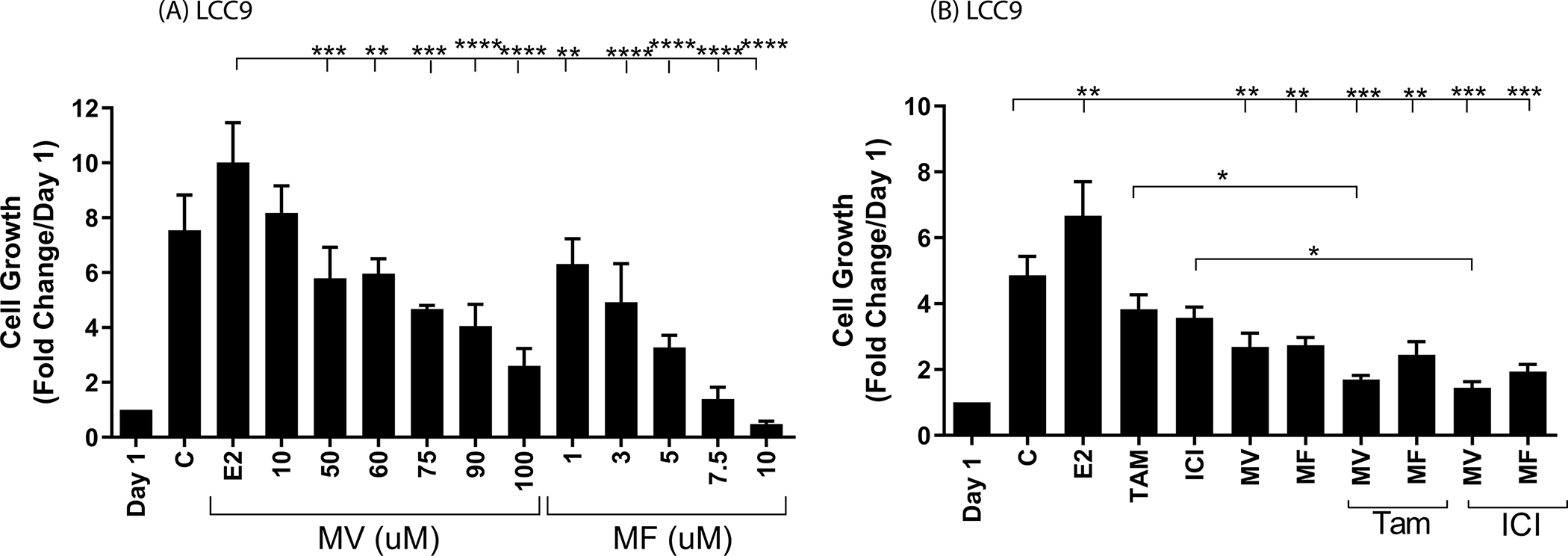
Effects of calcium channel blockers on the growth of MCF7/LCC9 cells MCF7/LCC9 cells were grown in phenol red free IMEM supplemented with 5% CFBS. The cells were not treated (control; C) or treated with methoxyverapamil (MV; 10–100 μM) or mibefradil (MF; 1–10 μM) (panel A) or with methoxyverapamil (MV; 75 μM) and/or mibefradil (MF; 5 μM) in the absence and presence of 17β-estradiol (E2; 1 nM), 4-hydroxy tamoxifen (TAM; 1 μM), or ICI-182,780 (ICI; 100 nM) (panel B) for four days beginning on day 1. The number of cells was determined and the data are presented as fold change compared to day 1. (mean ± SEM, n ≥ 3; *, p≤0.05; **, p≤0.01; ***, p≤0.001; ****, p≤0.0001)

References

    1. Musgrove EA, Sutherland RL. Biological determinants of endocrine resistance in breast cancer. Nat Rev Cancer. 2009;9(9):631–643. - PubMed
    1. Ignar-Trowbridge DM, Nelson KG, Bidwell MC, Curtis SW, Washburn TF, McLachlan JA, Korach KS. Coupling of dual signaling pathways: epidermal growth factor action involves the estrogen receptor. Proc Natl Acad Sci U S A. 1992;89(10):4658–4662. - PMC - PubMed
    1. Kato S, Endoh H, Masuhiro Y, Kitamoto T, Uchiyama S, Sasaki H, Masushige S, Gotoh Y, Nishida E, Kawashima H, Metzger D, Chambon P. Activation of the estrogen receptor through phosphorylation by mitogen-activated protein kinase. Science. 1995;270(5241):1491–1494. - PubMed
    1. Power RF, Mani SK, Codina J, Conneely OM, O’Malley BW. Dopaminergic and ligand-independent activation of steroid hormone receptors. Science. 1991;254(5038):1636–1639. - PubMed
    1. Joukov V, De Nicolo A. Aurora-PLK1 cascades as key signaling modules in the regulation of mitosis. Sci Signal. 2018;11(543). - PubMed

Publication types

MeSH terms