Review
. 2021 Aug 3;33(8):1519-1545.
doi: 10.1016/j.cmet.2021.07.001. Epub 2021 Jul 21.

Cardiovascular disease in diabetes, beyond glucose

Affiliations
Review

Cardiovascular disease in diabetes, beyond glucose

Robert H Eckel et al. Cell Metab. .

Abstract

Despite the decades-old knowledge that diabetes mellitus is a major risk factor for cardiovascular disease, the reasons for this association are only partially understood. While this association is true for both type 1 and type 2 diabetes, different pathophysiological processes may be responsible. Lipids and other risk factors are indeed important, whereas the role of glucose is less clear. This lack of clarity stems from clinical trials that do not unambiguously show that intensive glycemic control reduces cardiovascular events. Animal models have provided mechanisms that link diabetes to increased atherosclerosis, and evidence consistent with the importance of factors beyond hyperglycemia has emerged. We review clinical, pathological, and animal studies exploring the pathogenesis of atherosclerosis in humans living with diabetes and in mouse models of diabetes. An increased effort to identify risk factors beyond glucose is now needed to prevent the increased cardiovascular disease risk associated with diabetes.


Conflict of interest statement

Declaration of interests R.H.E. serves as a consultant for Kowa Corp. and Novo Nordisk. K.E.B. has received research support from Novo Nordisk A/S. I.J.G. has served as a consultant for Arrowhead, Akcea, and Esperion and received research support for pre-clinical studies from Arrowhead Pharma.

Figures
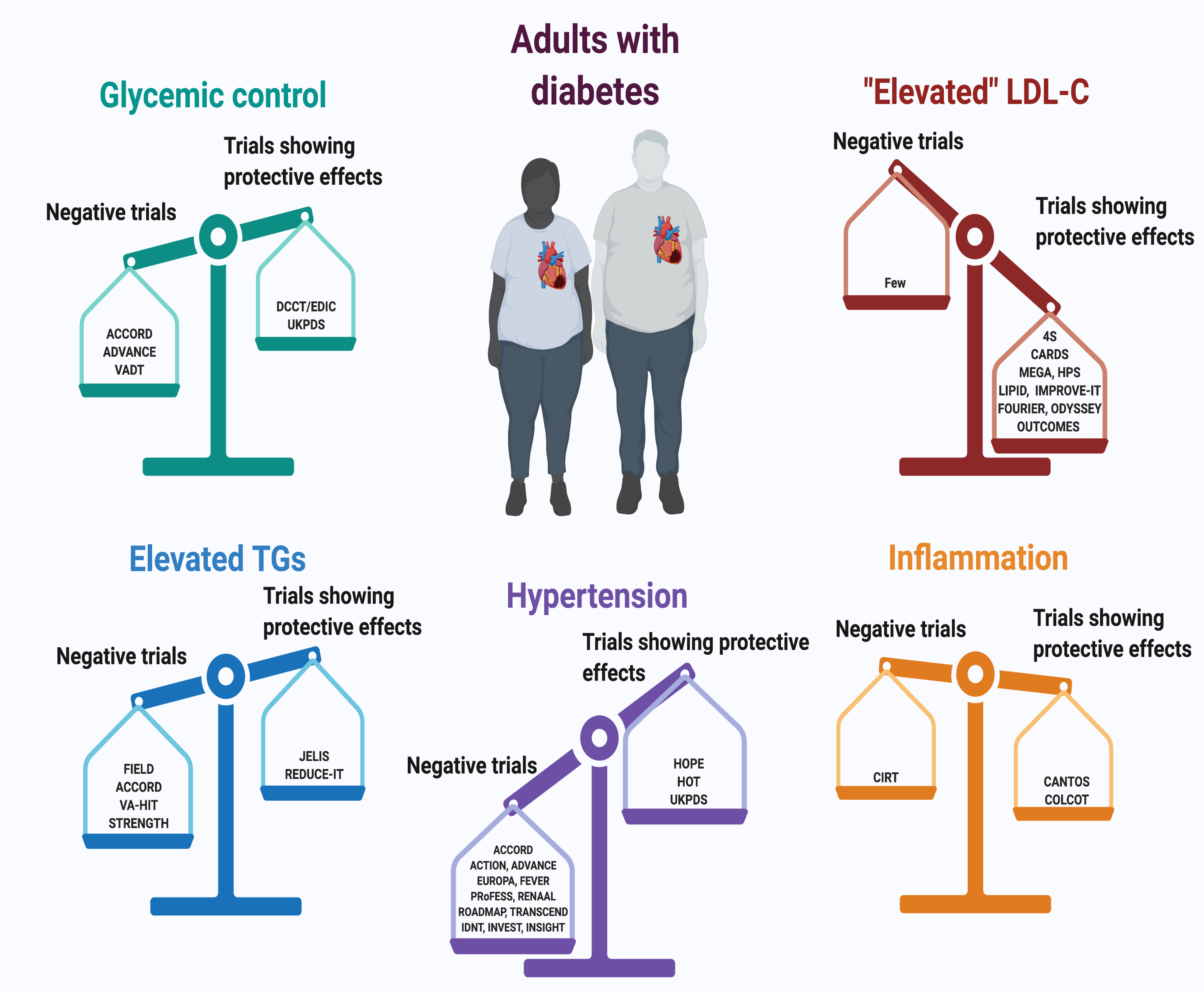
Figure 1.
Figure 1.. Cardiovascular outcome trials (CVOTs) and relative risk modification by changes in CVD risk factors in patients with T1DM or T2DM.
This review will consider in more depth four factors associated with diabetes and CVD risk: glucose reduction (upper left), LDL-cholesterol reduction (upper right), triglycerides (lower left) and inflammatory factors (lower right). Major clinical trials are indicated: Glycemic control: ACCORD (Gerstein et al., 2011); ADVANCE (Ninomiya et al., 2009); VADT (Duckworth et al., 2009); DCCT/EDIC; (Diabetes Control Complications Trial/Epidemiology of Diabetes, 2016)UKPDS, (Holman et al., 2008); “Elevated” LDL-C: 4S (Pyörälä et al., 2004); CARDS (Colhoun et al., 2004); MEGA (Tajima et al., 2008); HPS (Heart Protection Study Collaborative Group, 2002); LIPID (Keech et al., 2003); IMPROVE-IT (Giugliano et al., 2018); FOURIER (Sabatine et al., 2017); ODYSSEY OUTCOMES (Ray et al., 2019); Elevated TGs: FIELD (Scott et al., 2009); ACCORD (Ginsberg et al., 2010); VA-HIT, (Rubins et al., 1999); STRENGTH (Nicholls et al., 2020); JELIS (Yokoyama et al., 2007); REDUCE-IT (Bhatt et al., 2019); Inflammation: CIRT (Ridker et al., 2019); CANTOS (Everett et al., 2018); COLCOT (Nidorf et al., 2020). Hypertension: HOPE (Heart Outcomes Prevention Evaluation Study Investigators, 2000); HOT (Zanchetti et al., 2003); UKPDS (UK Prospective Diabetes Study Group, 1998b); ACCORD (Accord Study Group et al., 2010); ACTION (Elliott et al., 2011); ADVANCE (Patel et al., 2007); EUROPA (Daly et al., 2005); FEVER (Zhang et al., 2011); PRoFESS (Yusuf et al., 2008); RENAAL (Brenner et al., 2001); ROADMAP (Haller et al., 2011); TRANSCEND (Telmisartan Randomised AssessmeNt Study in ACE iNtolerant subjects with cardiovascular Disease Investigators et al., 2008); IDNT (Lewis et al., 2001); INVEST (Bakris et al., 2004); INSIGHT (Mancia et al., 2003). Created with BioRender.com.
Figure 2.
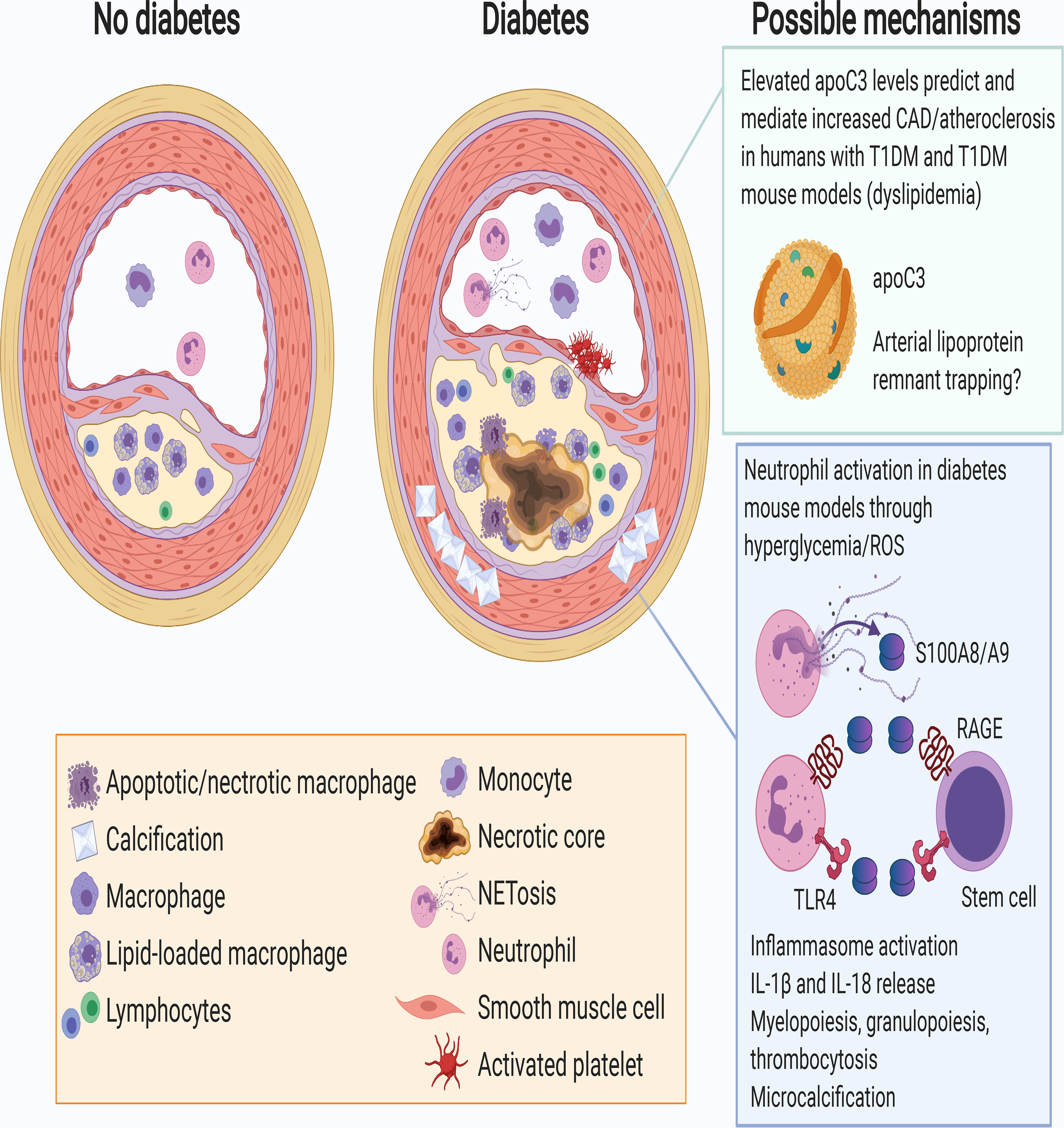
Figure 2.. Morphological features of lesions of atherosclerosis are similar in the presence and absence of diabetes, but diabetes enhances lesion progression and slows regression.
This schematic representation shows an intermediate lesion in the absence of diabetes (left) and a more advanced lesion in the presence of diabetes (right). The more advanced lesion in the setting of diabetes is characterized by an increased abundance of macrophages and lymphocytes (T cells), and an increased prevalence of necrotic cores, which can make the lesion more unstable and prone to rupturing or fissuring, and subsequent platelet activation and thrombus formation. The increased inflammatory state of the lesion in diabetes has been attributed, in part, to monocytosis and neutrophilia, leading to increased levels of monocytes and neutrophils in circulation and in the lesion, as well as activation of neutrophils and release of the damage-associated molecular pattern proteins S100A8 and S100A9 and neutrophil extracellular traps (NETs) through NETosis. Moreover, T2DM is often associated with increased medial calcification. The boxes on the right show mechanisms of worsened atherosclerosis and impaired lesion regression based on data from mouse models of diabetes. These mechanisms, which may include increased trapping of remnant lipoproteins in the artery wall (top) and increased neutrophil activation, toll-like receptor 4 and RAGE activation (bottom), are discussed in the text. Created with BioRender.com.
Figure 3.
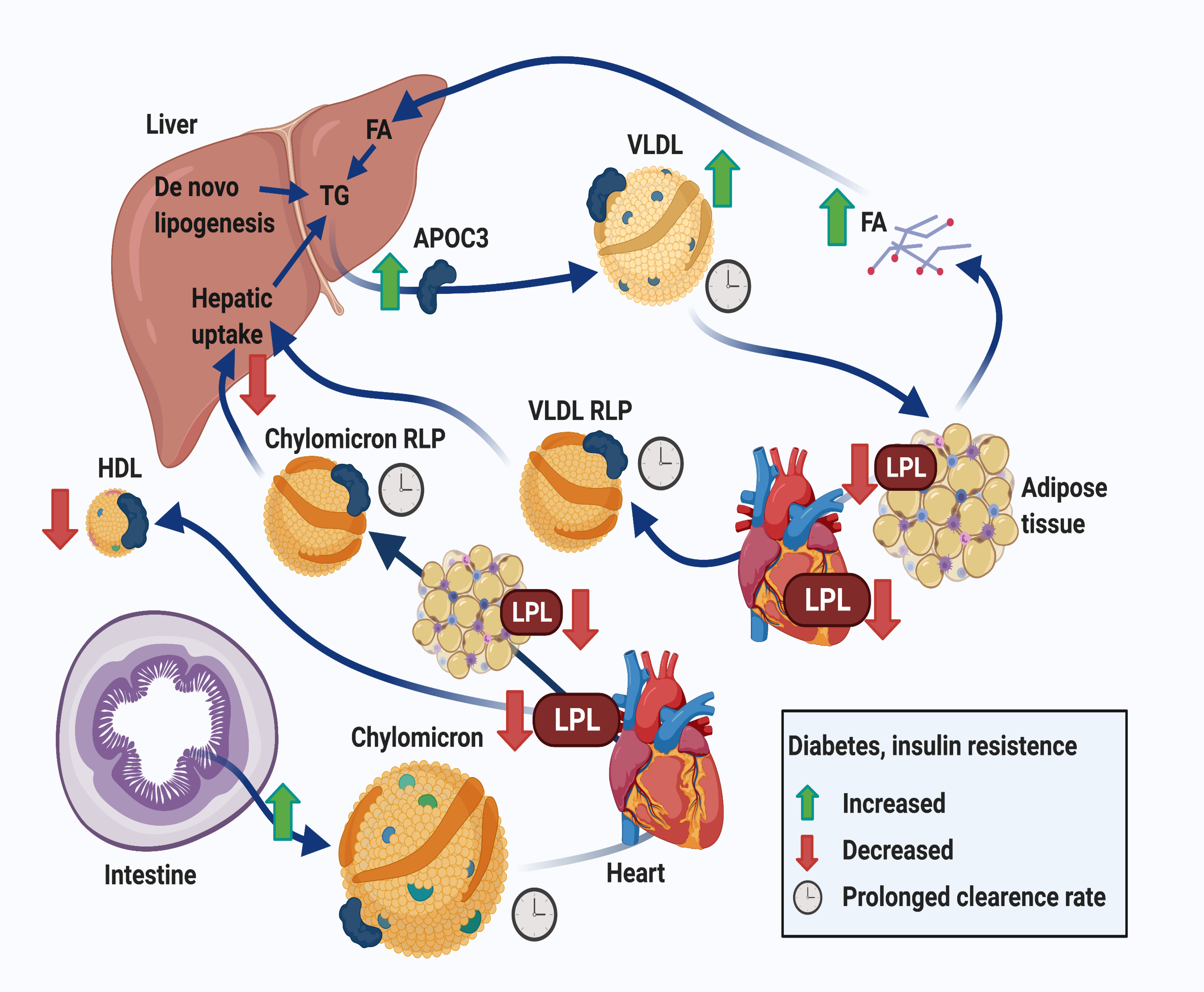
Figure 3.. Effects of diabetes on lipoprotein metabolism.
Insufficient insulin action in adipose tissue results in increased adipose tissue lipolysis and reduced fatty acid uptake, which in turn increases fatty acid delivery to the liver and hepatic VLDL production. Hepatic uptake of remnants as well as de novo lipogenesis also contribute to increased hepatic TG levels and VLDL production. Insufficient hepatic insulin action causes an elevation of APOC3 levels, which reduce lipolysis and hepatic clearance of VLDL and chylomicrons, derived from the intestine after a meal, and their remnant lipoprotein particles (RLPs). Together, these effects result in a reduced clearance rate of triglyceride-rich lipoproteins (VLDL and chylomicrons) and RLPs, including their cholesterol content (indicated by a clock). Furthermore, diabetes is associated with reduced lipoprotein lipase (LPL) activity, primarily in adipose tissue and heart, further contributing to the slowed clearance of triglyceride-rich lipoproteins. When LPL activity is severely inhibited, which is observed primarily in T2DM, HDL levels are reduced as a result. Moreover, human studies demonstrate that chylomicron secretion is increased in T2DM. Together, the overproduction and reduced clearance of triglyceride-rich lipoproteins and their remnants are features of both T2DM and poorly controlled T1DM, although the relative extent of these processes differ with glycemic control and type of diabetes. Created with BioRender.com.

References

    1. Accord Study Group, Cushman WC, Evans GW, Byington RP, Goff DC Jr., Grimm RH Jr., Cutler JA, Simons-Morton DG, Basile JN, Corson MA, et al. (2010). Effects of intensive blood-pressure control in type 2 diabetes mellitus. N Engl J Med 362, 1575–1585. - PMC - PubMed
    1. Adler AI, Stratton IM, Neil HA, Yudkin JS, Matthews DR, Cull CA, Wright AD, Turner RC, and Holman RR (2000). Association of systolic blood pressure with macrovascular and microvascular complications of type 2 diabetes (UKPDS 36): prospective observational study. Bmj 321, 412–419. - PMC - PubMed
    1. Advance Collaborative Group, Patel A, MacMahon S, Chalmers J, Neal B, Billot L, Woodward M, Marre M, Cooper M, Glasziou P, et al. (2008). Intensive blood glucose control and vascular outcomes in patients with type 2 diabetes. N Engl J Med 358, 2560–2572. - PubMed
    1. Aguayo-Mazzucato C, Diaque P, Hernandez S, Rosas S, Kostic A, and Caballero AE (2019). Understanding the growing epidemic of type 2 diabetes in the Hispanic population living in the United States. Diabetes Metab Res Rev 35, e3097. - PMC - PubMed
    1. Al-Mashhadi RH, Bjørklund MM, Mortensen MB, Christoffersen C, Larsen T, Falk E, and Bentzon JF (2015). Diabetes with poor glycaemic control does not promote atherosclerosis in genetically modified hypercholesterolaemic minipigs. Diabetologia 58, 1926–1936. - PubMed

Publication types