


Sarcopenia associates with SNAP-25 SNPs and a miRNAs profile which is modulated by structured rehabilitation treatment
- PMID: 34289870
- PMCID: PMC8296538
- DOI: 10.1186/s12967-021-02989-x
Sarcopenia associates with SNAP-25 SNPs and a miRNAs profile which is modulated by structured rehabilitation treatment
Abstract
Background: Sarcopenia is a loss of muscle mass and strength causing disability, morbidity, and mortality in older adults, which is characterized by alterations of the neuromuscular junctions (NMJs). SNAP-25 is essential for the maintenance of NMJ integrity, and the expression of this protein was shown to be modulated by the SNAP-25 rs363050 polymorphism and by a number of miRNAs.
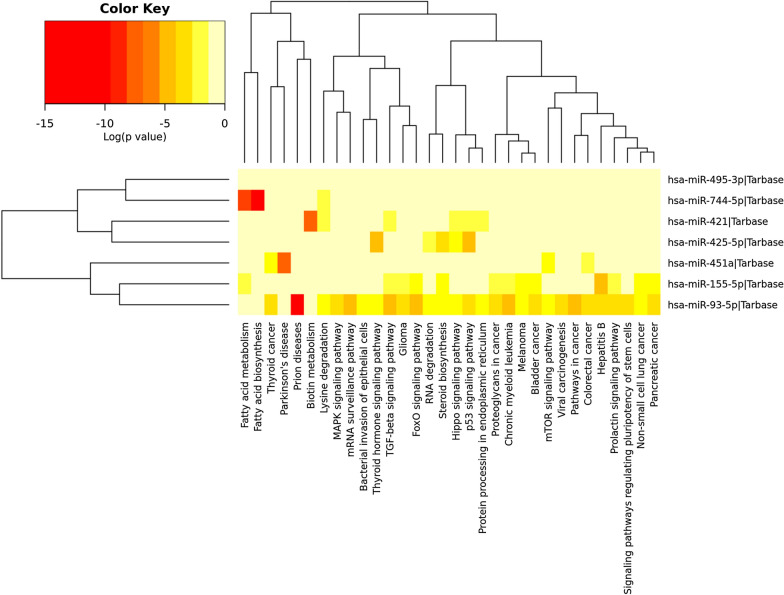
Methods: We analysed these parameters in a cohort of sarcopenic patients undergoing structured rehabilitation. The rs363050 genotype frequency distribution was analyzed in 177 sarcopenic patients and 181 healthy controls (HC). The concentration of seven miRNAs (miR-451a, miR-425-5p, miR155-5p, miR-421-3p, miR-495-3p, miR-744-5p and miR-93-5p), identified by mouse brain miRNome analysis to be differentially expressed in wild type compared to SNAP-25± heterozygous mice, was analyzed as well by droplet digital PCR (ddPCR) in a subgroup of severe sarcopenic patients undergoing rehabilitation.
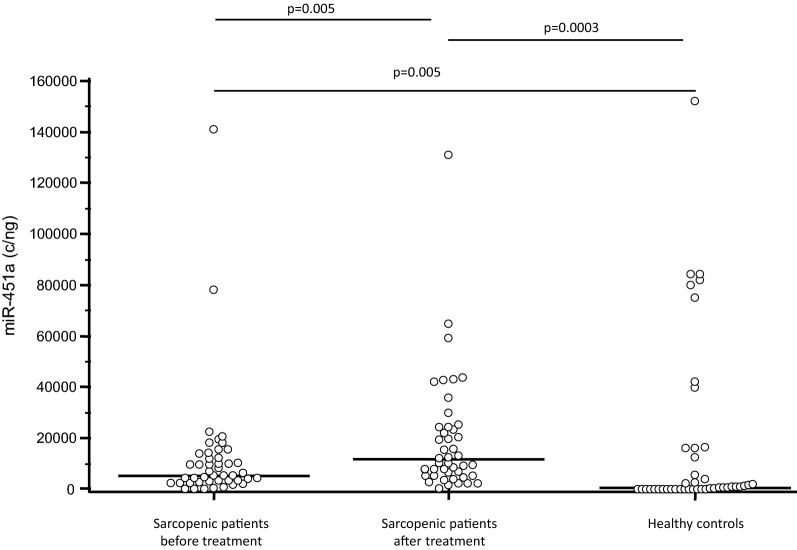
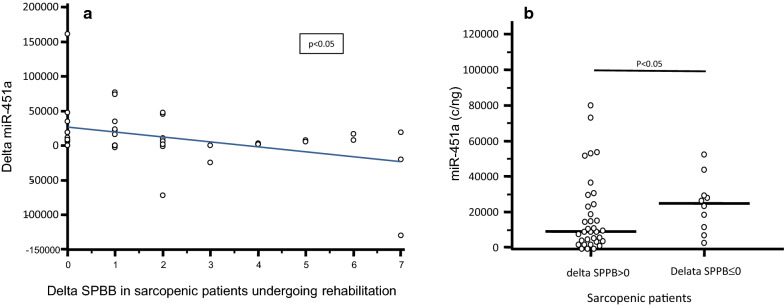
Results: The SNAP-25 rs363050 AA genotype was significantly more common in sarcopenic patients compared to HC (pc = 0.01); miR-451a was significantly up-regulated in these patients before rehabilitation. Rehabilitation modified miRNAs expression, as miR-155-5p, miR-421-3p, miR-451a, miR-425-5p, miR-744-5p and miR-93-5p expression was significantly up-regulated (p < 0.01), whereas that of miR-495-3p was significantly down-regulated (p < 0.001) by rehabilitation. Notably, rehabilitation-associated improvement of the muscle-skeletal SPPB score was significantly associated with the reduction of miR-451a expression.
Conclusion: These results support the hypothesis of a role for SNAP-25 in sarcopenia and suggest SNAP-25-associated miRNAs as circulatory biomarkers of rehabilitative outcome for sarcopenia.
Keywords: Biomarkers; Rehabilitation; SNAP-25; Sarcopenia; miRNAs.
© 2021. The Author(s).
Conflict of interest statement
The authors declare that they have no competing interests.
Figures

References
-
- Cruz-Jentoft AJ, Bahat G, Bauer J, Boirie Y, Bruyere O, Cederholm T, Cooper C, Landi F, Rolland Y, Sayer AA, Schneider SM, Sieber CC, Topinkova E, Vandewoude M, Visser M, Zamboni, M, Writing Group for the European Working Group on Sarcopenia in Older People 2 (EWGSOP2), and the Extended Group for EWGSOP2. Sarcopenia: revised European consensus on definition and diagnosis. Age Ageing 2019;48:16–31.
-
- Goodpaster BH, Carlson CL, Visser M, Kelley DE, Scherzinger A, Harris TB, Stamm E, Newman AB. Attenuation of skeletal muscle and strength in the elderly: the Health ABC study. J Appl Physiol. 1985;2001(90):2157–2165. - PubMed
