Exploring epigenetic and microRNA approaches for γ-globin gene regulation
- PMID: 34292080
- PMCID: PMC8606961
- DOI: 10.1177/15353702211028195
Exploring epigenetic and microRNA approaches for γ-globin gene regulation
Abstract
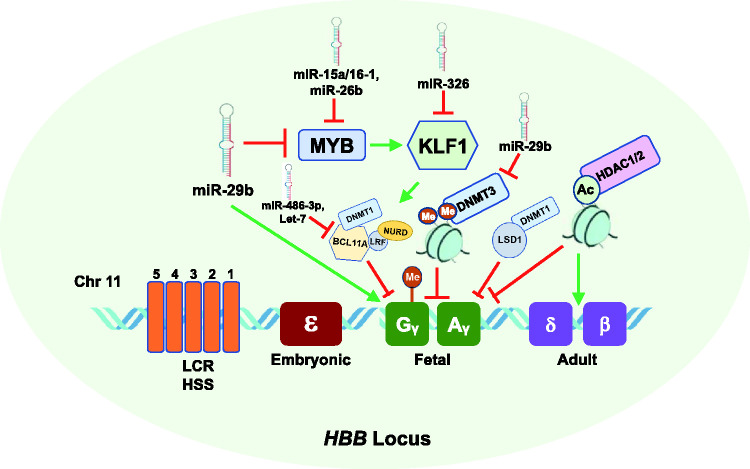
Therapeutic interventions aimed at inducing fetal hemoglobin and reducing the concentration of sickle hemoglobin is an effective approach to ameliorating acute and chronic complications of sickle cell disease, exemplified by the long-term use of hydroxyurea. However, there remains an unmet need for the development of additional safe and effective drugs for single agent or combination therapy for individuals with β-hemoglobinopathies. Regulation of the γ-globin to β-globin switch is achieved by chromatin remodeling at the HBB locus on chromosome 11 and interactions of major DNA binding proteins, such as KLF1 and BCL11A in the proximal promoters of the globin genes. Experimental evidence also supports a role of epigenetic modifications including DNA methylation, histone acetylation/methylation, and microRNA expression in γ-globin gene silencing during development. In this review, we will critically evaluate the role of epigenetic mechanisms in γ-globin gene regulation and discuss data generated in tissue culture, pre-clinical animal models, and clinical trials to support drug development to date. The question remains whether modulation of epigenetic pathways will produce sufficient efficacy and specificity for fetal hemoglobin induction and to what extent targeting these pathways form the basis of prospects for clinical therapy.
Keywords: DNA methylation; Epigenetics; fetal hemoglobin; histone acetylation; microRNA; sickle cell disease.
Conflict of interest statement
Figures
References
-
- Weatherall DJ. The role of the inherited disorders of hemoglobin, the first "molecular diseases," in the future of human genetics. Annu Rev Genomics Hum Genet 2013; 14:1–24 - PubMed
-
- Gribnau J, Diderich K, Pruzina S, Calzolari R, Fraser P. Intergenic transcription and developmental remodeling of chromatin subdomains in the human beta-globin locus. Mol Cell 2000; 5:377–86 - PubMed
-
- Martyn GE, Wienert B, Yang L, Shah M, Norton LJ, Burdach J, Kurita R, Nakamura Y, Pearson RCM, Funnell APW, Quinlan KGR, Crossley M. Natural regulatory mutations elevate the fetal globin gene via disruption of BCL11A or ZBTB7A binding. Nat Genet 2018; 50:498–503 - PubMed
Publication types
MeSH terms
Substances
Grants and funding
LinkOut - more resources
Full Text Sources