


Autism spectrum disorder in females with fragile X syndrome: a systematic review and meta-analysis of prevalence
- PMID: 34294028
- PMCID: PMC8299695
- DOI: 10.1186/s11689-021-09362-5
Autism spectrum disorder in females with fragile X syndrome: a systematic review and meta-analysis of prevalence
Abstract
Background: Whilst up to 60% of males with fragile X syndrome (FXS) meet criteria for autism spectrum disorder (ASD), the prevalence and nature of ASD in females with FXS remains unclear.
Method: A systematic literature search identified papers reporting ASD prevalence and/or symptomatology in females with FXS.
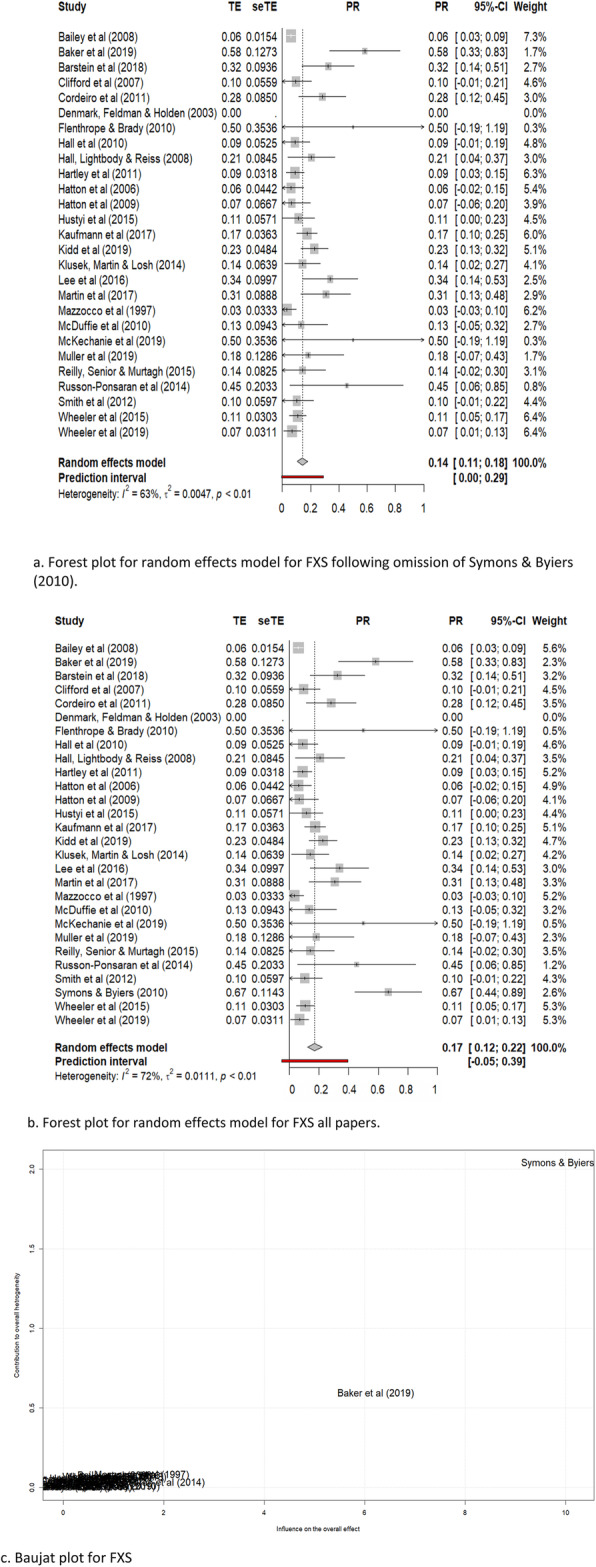
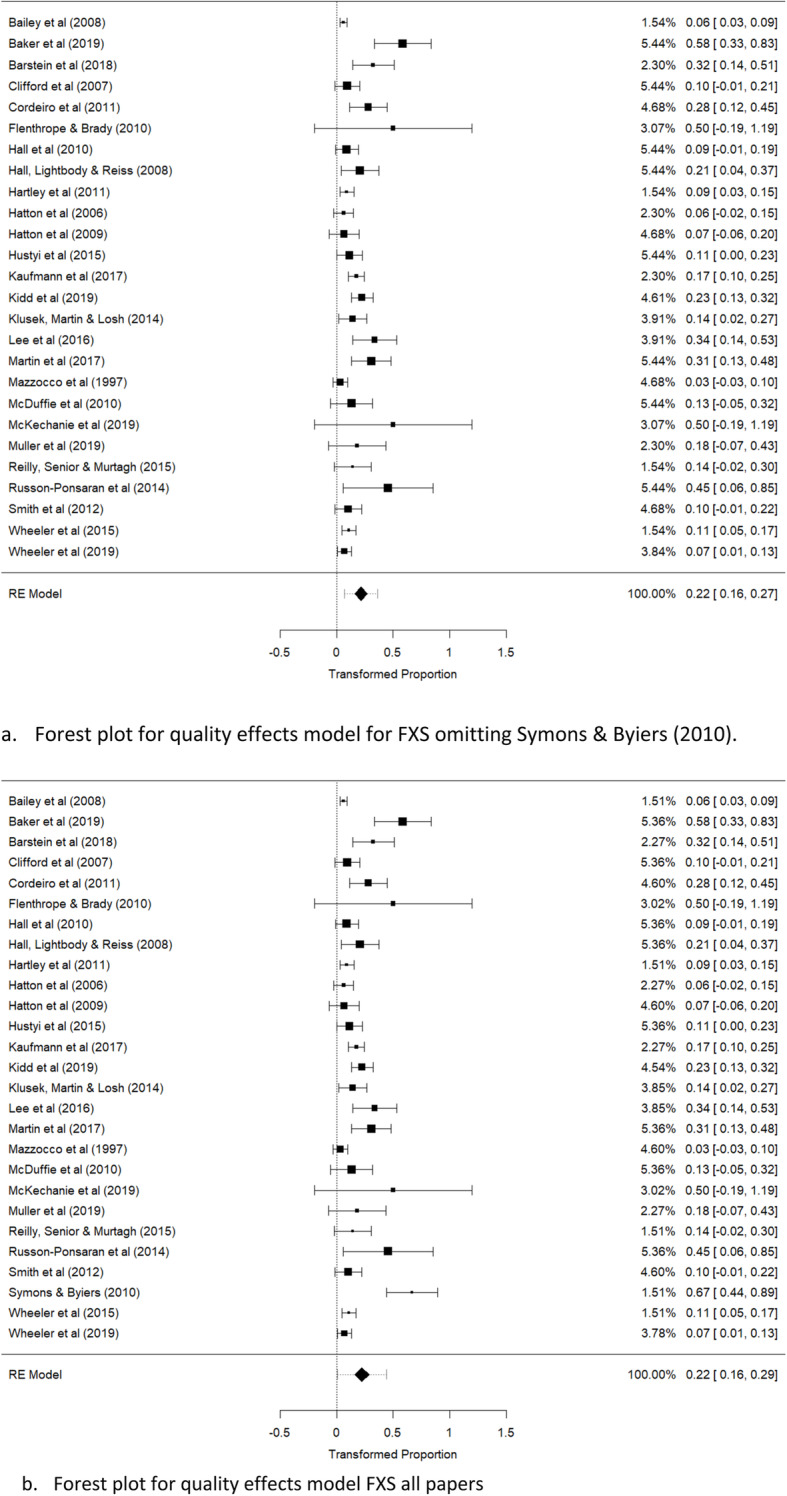
Results and conclusion: Meta-analysis suggested that rates of ASD for females with FXS are reliably higher than for females in the general population (a random effects model estimated weighted average prevalence at 14%, 95% CI 13-18%). Whilst papers highlighted a number of social and repetitive difficulties for females with FXS, characteristic profiles of impairment are not clear. Possible associations between ASD traits and IQ, and between ASD and levels of fragile X mental retardation protein, are suggested, but data are equivocal.
Keywords: Autistic spectrum disorder; Female; Fragile X syndrome; Meta-analysis; Prevalence.
© 2021. The Author(s).
Conflict of interest statement
The authors declare that there are no competing interests.
Figures
References
-
- Lozano R, Hare EB, Hagerman RJ. Fragile X-associated disorders. In: Rosenberg RN, Pascual JM, editors. Rosenberg’s molecular and genetic basis of neurological and psychiatric disease. 5. Sacramento: University of California Davis Medical Center; 2015. pp. 183–195.
-
- Centers for Disease Control and Prevention Prevalence of autism spectrum disorder among children aged 8 years. MMWR Surveill Summ. 2014;63:1–21. - PubMed
-
- Moss J, Howlin P, Oliver C. The assessment and presentation of autism spectrum disorder and associated characteristics in individuals with severe intellectual disability and genetic syndrome. In: Burack J, Hodapp R, Iarocci G, Zigler E, editors. The Oxford handbook of intellectual disability and development. USA: OUP; 2011. pp. 275–302.
