A pilot study of a low glycemic load diet in patients with stage I-III colorectal cancer
- PMID: 34295544
- PMCID: PMC8261320
- DOI: 10.21037/jgo-20-330
A pilot study of a low glycemic load diet in patients with stage I-III colorectal cancer
Abstract
Background: Consumption of a diet with high glycemic indices has been associated with inferior cancer-specific outcomes in patients with early-stage colorectal cancer, but there is limited prospective evidence that alterations in dietary habits improves cancer outcomes. This study aimed to determine the feasibility and acceptability of following a low glycemic load (GL) diet in patients with stage I-III colorectal cancer.
Methods: Patients with stage I-III colorectal cancer, who completed definitive therapy, and consumed an average daily GL >150 participated in a 12-week tailored face-to-face dietary intervention with a target GL. This study followed a 2-stage design, with 4 planned cohorts, each with an assigned GL target and dietary intervention intensity. The primary endpoint of feasibility was determined by participant compliance, defined as an individual following the assigned GL ≥75% of the time. Compliance was determined using 24-hour telephone recalls. A cohort was deemed feasible if at least 67% of participants were compliant. Secondary endpoints included acceptability of the diet, nutritional support resources necessary to follow the diet, and evaluation of the effect of the diet on physical measures and correlative laboratories.
Results: Only cohort 1 was required as the primary endpoint of feasibility was met (stringent GL target, low intensity dietary support). The majority of participants experienced a decrease in body mass index (BMI) and waist circumference, 29% experiencing meaningful weight loss (≥5%). The dietitian spent an average of 6.97 hours (SD 2.18) face-to-face time and 1.58 hours (SD 0.68) by phone with each participant. Significant decreases were seen in total cholesterol, very-low-density lipoprotein (VLDL) and triglycerides (all P<0.05). All participants liked the foods and were satisfied with the diet. All participants felt the in-person meetings were helpful, and 62% did not feel a virtual meeting (e.g., Skype, etc.) could replace in-person meetings.
Conclusions: Patients with stage I-III colorectal cancer can follow a low GL diet with a 12-week in-person dietary intervention. Significant changes in physical and laboratory measures suggest relevant biologic effects of the dietary intervention. This study establishes feasibility, and warrants a larger scale prospective intervention trial to evaluate the impact of a low GL diet on cancer outcomes.
Keywords: Glycemic load (GL); colorectal cancer; early stage.
2021 Journal of Gastrointestinal Oncology. All rights reserved.
Conflict of interest statement
Conflicts of Interest: All authors have completed the ICMJE uniform disclosure form (available at: http://dx.doi.org/10.21037/jgo-20-330). NJM reports a disclosure from Flatiron Health and Roche. The other authors have no conflicts of interest to declare.
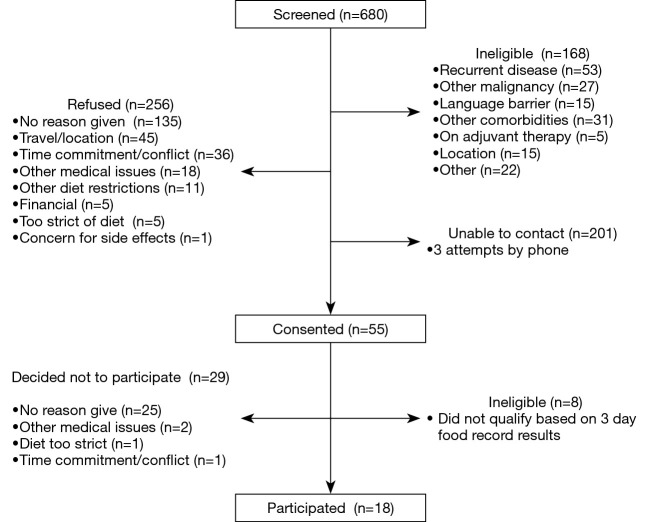
References
-
- Global Cancer Observatory [Internet]. [cited 2020 Feb 27]. Available online: https://gco.iarc.fr/
-
- Edge SB, Compton CC. The American Joint Committee on Cancer: the 7th edition of the AJCC cancer staging manual and the future of TNM. Ann Surg Oncol 2010;17:1471-4. - PubMed
-
- André T, De Gramont A, Vernerey D, et al. Adjuvant fluorouracil, leucovorin, and oxaliplatin in stage II to III colon cancer: Updated 10-year survival and outcomes according to BRAF mutation and mismatch repair status of the MOSAIC study. J Clin Oncol 2015;33:4176-87. 10.1200/JCO.2015.63.4238 - DOI - PubMed
Grants and funding
LinkOut - more resources
Full Text Sources
Miscellaneous