Review
. 2021 Jul 6:8:646506.
doi: 10.3389/fmed.2021.646506. eCollection 2021.

Digital Technology-Based Telemedicine for the COVID-19 Pandemic

Affiliations
Review

Digital Technology-Based Telemedicine for the COVID-19 Pandemic

Yu-Ting Shen et al. Front Med (Lausanne). .

Abstract

In the year 2020, the coronavirus disease 2019 (COVID-19) crisis intersected with the development and maturation of several digital technologies including the internet of things (IoT) with next-generation 5G networks, artificial intelligence (AI) that uses deep learning, big data analytics, and blockchain and robotic technology, which has resulted in an unprecedented opportunity for the progress of telemedicine. Digital technology-based telemedicine platform has currently been established in many countries, incorporated into clinical workflow with four modes, including "many to one" mode, "one to many" mode, "consultation" mode, and "practical operation" mode, and has shown to be feasible, effective, and efficient in sharing epidemiological data, enabling direct interactions among healthcare providers or patients across distance, minimizing the risk of disease infection, improving the quality of patient care, and preserving healthcare resources. In this state-of-the-art review, we gain insight into the potential benefits of demonstrating telemedicine in the context of a huge health crisis by summarizing the literature related to the use of digital technologies in telemedicine applications. We also outline several new strategies for supporting the use of telemedicine at scale.

Keywords: COVID-19; SARS-CoV-2; infectious diseases; respiratory diseases; telemedicine.


Conflict of interest statement

The authors declare that the research was conducted in the absence of any commercial or financial relationships that could be construed as a potential conflict of interest.

Figures
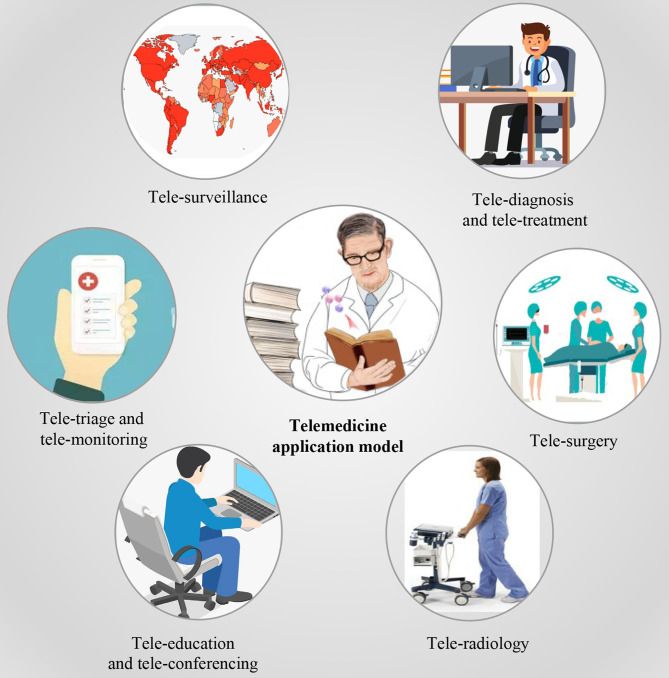
Figure 1
Figure 1
Telemedicine application model in context of the coronavirus disease 2019 outbreak.
Figure 2
Figure 2
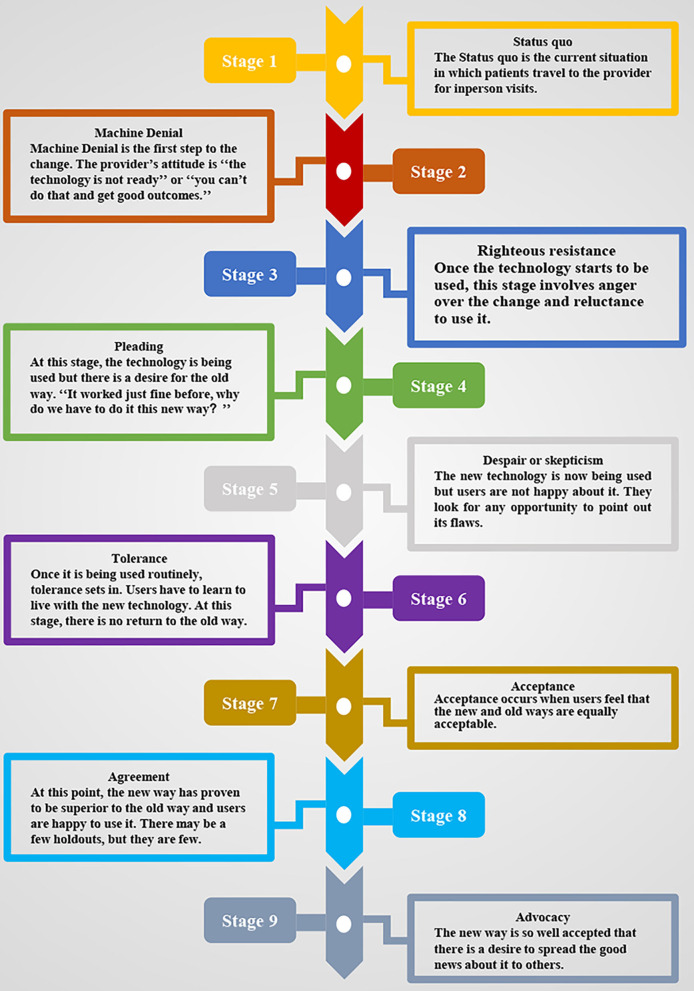
The nine stages of transformational change of telemedicine (19).
Figure 3
Figure 3
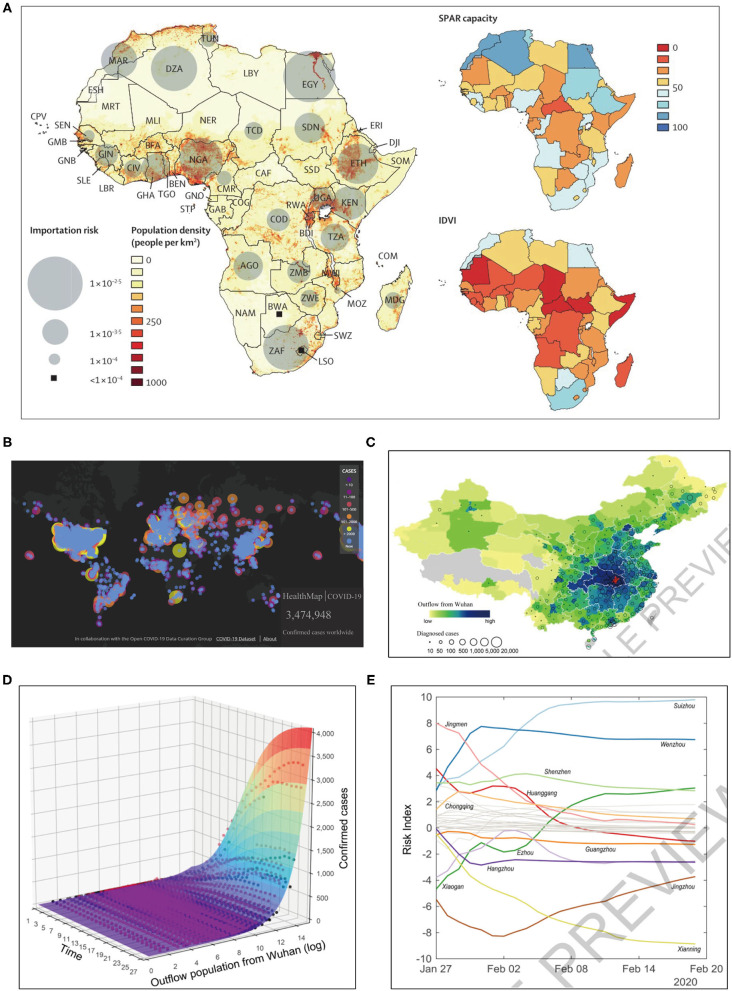
Telemedicine based on artificial intelligence and big data technologies for the surveillance of COVID-19 pandemic. (A) Big data based modeling study: preparedness and vulnerability of African countries against importations of COVID-19 (35). (B) Online contagious COVID-19 surveillance mapping provided by HealthMap (36). (C) Geographic distribution of population outflow from Wuhan through January 24, 2020 (in red) and the confirmed COVID-19 cases in other Chinese prefectures as of February 19, 2020 (37). (D,E) Predictive model supported by the population outflow data from Wuhan: (D) the surface displays the fitted performance of this epidemiological model, with dots representing actual number of confirmed cases, and (E) the risk scores over time present a dynamic picture of the shifting transmission risks in different prefectures (37). SPAR, State Party Self-Assessment Annual Reporting; IDVI, Infectious Disease Vulnerability Index.
Figure 4
Figure 4
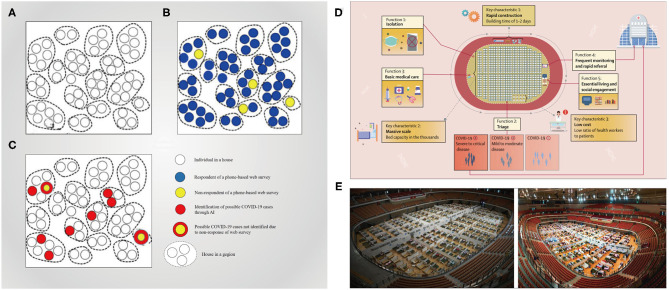
Telemedicine system for the screening and triage COVID-19 patients. (A–C) Conceptual framework of collecting data and identifying possible COVID-19 cases (52); a geographic region (e.g., a village, town, county, or city) with households in it (A). The respondents and non-respondents of a phone-based web survey (B). The possible identified COVID-19 cases among the respondents and non-respondents of the survey (78) (C). (D,E) Fangcang shelter hospitals equipped with telemedicine system and their key characteristics and essential functions (79).
Figure 5
Figure 5
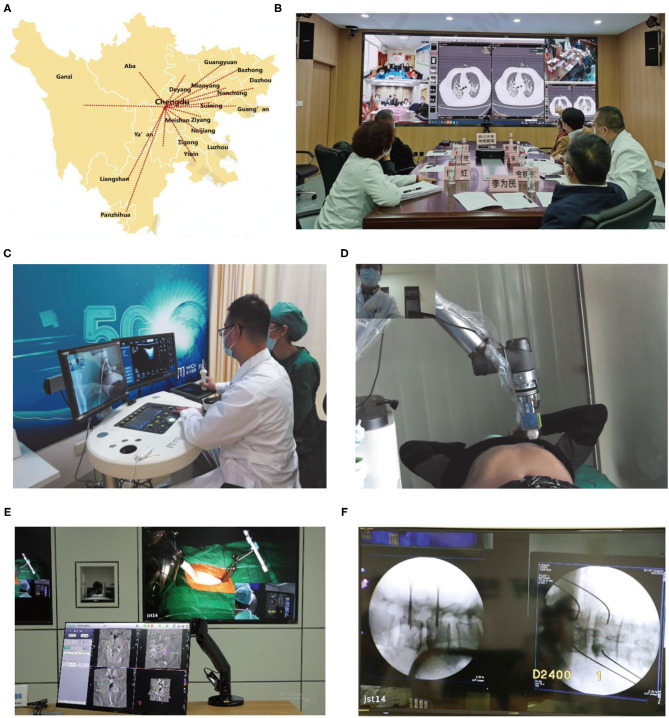
Telemedicine based on fifth-generation (5G) network and robotic technology for disease diagnosis and treatment during the COVID-19 outbreak. (A) 5G telemedicine platform of Sichuan Province of China developed during this pandemic. (B) The web-based real-time video tele-consultation provided by a multidisciplinary medical team based on “5G Dual Gigabit network” to deal with cases vulnerable to severe COVID-19 in western China (57). (C,D) 5G remote robotic ultrasound diagnostic system used in Fangcang shelter hospitals (82). (E) 5G network-based tele-ultrasound system tele-robotic spinal surgery including screw planning at master control room and (F) K-wire placement (63).
Figure 6
Figure 6
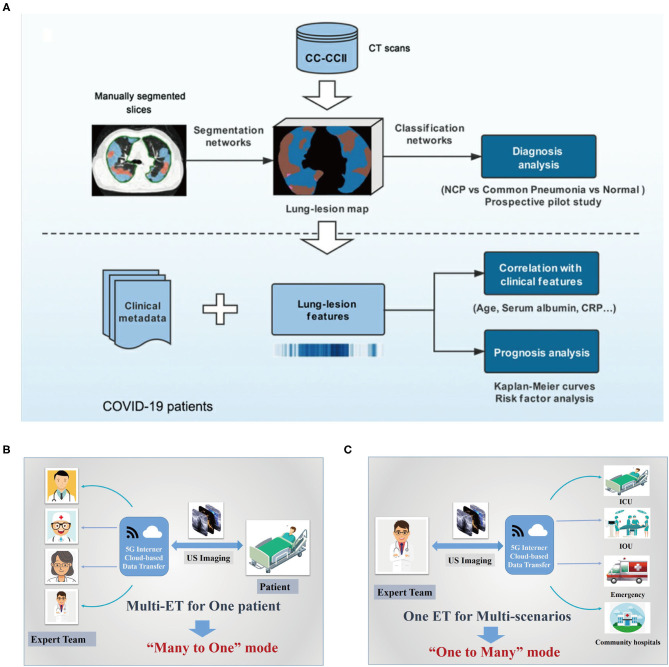
Digital technology-based tele-radiology system used during this COVID-19 outbreak. (A) The artificial intelligence (AI) framework for COVID-19 diagnosis and prognosis prediction based on CT imaging (58). (B,C) Schematic diagram of the basic structure of tele-ultrasound system based on 5G internet cloud-based data transfer, the “many to one” mode (A) and “one to many” mode (59, 60). COVID-19, coronavirus disease 2019; NCP, novel coronavirus pneumonia; CRP, C-reactive protein; CT, computed tomography; 5G, fifth generation; PC, picture archiving and communication system; IOU, intraoperative ultrasound; ICU, intensive care unit.
Figure 7
Figure 7
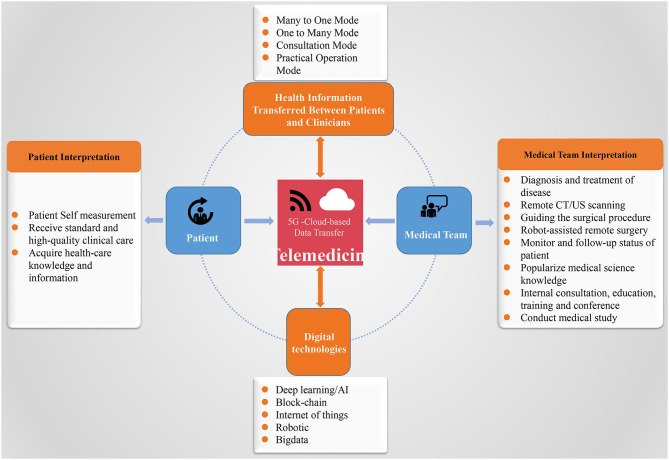
The proposed data flow of telemedicine for clinical care: to maximize clinical care though telemedicine system, a closed loop is quite necessary, which involves healthcare data derived from patients and practitioners; transferred via 5G-Cloud internet; interpreted by the patients, medical practitioners, or with certain automated platforms (e.g., AI, robot, and big data analysis); and returned back to the patients and medical staff for better clinical decisions. And in turn, the large-scale shared cloud-based data would provide a great opportunity for AI development. 5G, fifth generation; AI, artificial intelligence; CT, computed tomography; US, ultrasound.
Figure 8
Figure 8
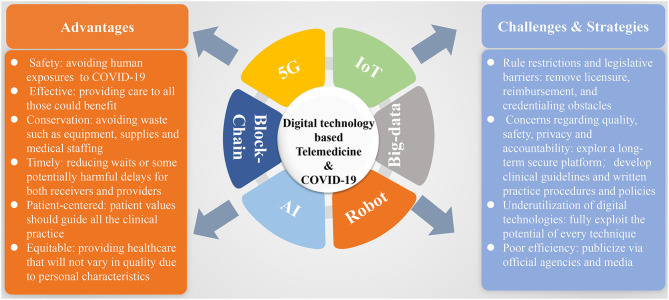
Summative scheme of digital technology-based telemedicine used during the COVID-19 outbreak with its advantages, challenges, and strategies for future wide application. COVID-19, coronavirus disease 2019; 5G, fifth generation; IoT, internet of things; AI, artificial intelligence.

Comment in

References

    1. Huang C, Wang Y, Li X, Ren L, Zhao J, Hu Y, et al. Clinical features of patients infected with 2019 novel coronavirus in Wuhan, China. Lancet. (2020) 395:497–506. 10.1016/s0140-6736(20)30183-5 - DOI - PMC - PubMed
    1. Zhu N, Zhang D, Wang W, Li X, Yang B, Song J, et al. A novel coronavirus from patients with pneumonia in China, 2019. N Engl J Med. (2020) 382:727–33. 10.1056/NEJMoa2001017 - DOI - PMC - PubMed
    1. Wang D, Hu B, Hu C, Zhu F, Liu X, Zhang J, et al. Clinical characteristics of 138 hospitalized patients with 2019 novel coronavirus-infected pneumonia in Wuhan, China. JAMA. (2020) 323:1061–9. 10.1001/jama.2020.1585 - DOI - PMC - PubMed
    1. Perkel JM. The internet of things comes to the lab. Nature. (2017) 542:125–6. 10.1038/542125a - DOI - PubMed
    1. Ting DSW, Lin H, Ruamviboonsuk P, Wong TY, Sim DA. Artificial intelligence, the internet of things, and virtual clinics: ophthalmology at the digital translation forefront Comment. Lancet Digit Health. (2020) 2:E8–9. 10.1016/s2589-7500(19)30217-1 - DOI - PubMed