


Novelty of Sphingolipids in the Central Nervous System Physiology and Disease: Focusing on the Sphingolipid Hypothesis of Neuroinflammation and Neurodegeneration
- PMID: 34298977
- PMCID: PMC8303517
- DOI: 10.3390/ijms22147353
Novelty of Sphingolipids in the Central Nervous System Physiology and Disease: Focusing on the Sphingolipid Hypothesis of Neuroinflammation and Neurodegeneration
Abstract
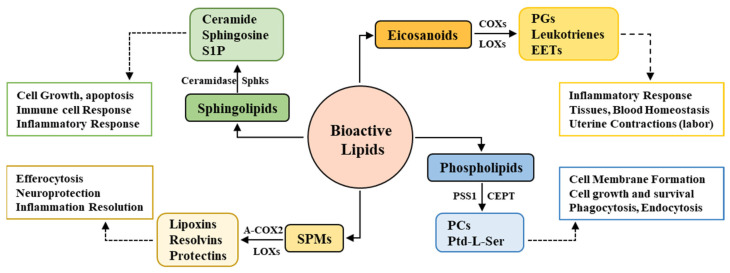
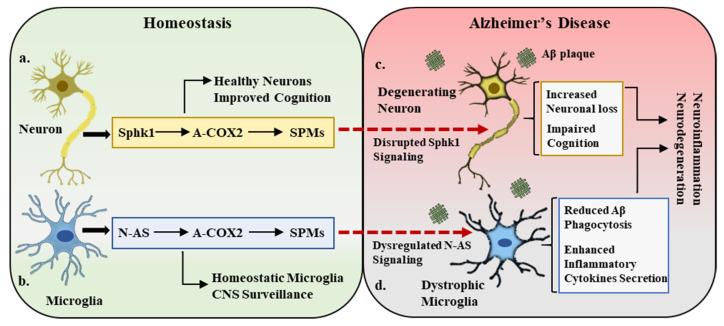
For decades, lipids were confined to the field of structural biology and energetics as they were considered only structural constituents of cellular membranes and efficient sources of energy production. However, with advances in our understanding in lipidomics and improvements in the technological approaches, astounding discoveries have been made in exploring the role of lipids as signaling molecules, termed bioactive lipids. Among these bioactive lipids, sphingolipids have emerged as distinctive mediators of various cellular processes, ranging from cell growth and proliferation to cellular apoptosis, executing immune responses to regulating inflammation. Recent studies have made it clear that sphingolipids, their metabolic intermediates (ceramide, sphingosine-1-phosphate, and N-acetyl sphingosine), and enzyme systems (cyclooxygenases, sphingosine kinases, and sphingomyelinase) harbor diverse yet interconnected signaling pathways in the central nervous system (CNS), orchestrate CNS physiological processes, and participate in a plethora of neuroinflammatory and neurodegenerative disorders. Considering the unequivocal importance of sphingolipids in CNS, we review the recent discoveries detailing the major enzymes involved in sphingolipid metabolism (particularly sphingosine kinase 1), novel metabolic intermediates (N-acetyl sphingosine), and their complex interactions in CNS physiology, disruption of their functionality in neurodegenerative disorders, and therapeutic strategies targeting sphingolipids for improved drug approaches.
Keywords: Alzheimer’s disease; COX2; N-acetyl sphingosine; specialized pro-resolving lipid mediators; sphingolipids; sphingosine kinase 1.
Conflict of interest statement
The authors declare no conflict of interest.
Figures
References
-
- Cai T., Yang F. Phospholipid and Phospholipidomics in Health and Diseases. In: Wang X., Wu D., Shen H., editors. Lipidomics in Health & Disease: Methods & Application. Springer; Singapore: 2018. pp. 177–202.
Publication types
MeSH terms
Substances
LinkOut - more resources
Full Text Sources
Medical
Research Materials
