


Mental Health Crisis and Stress Coping among Healthcare College Students Momentarily Displaced from Their Campus Community Because of COVID-19 Restrictions in Japan
- PMID: 34299694
- PMCID: PMC8307597
- DOI: 10.3390/ijerph18147245
Mental Health Crisis and Stress Coping among Healthcare College Students Momentarily Displaced from Their Campus Community Because of COVID-19 Restrictions in Japan
Abstract
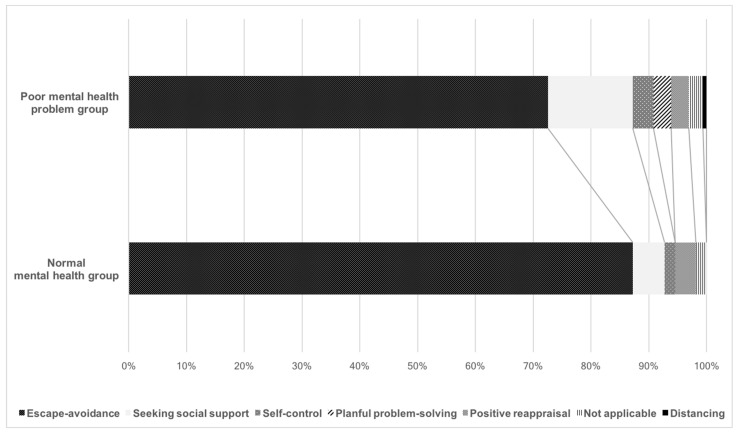
College students are one of the most affected groups by self-quarantine due to COVID-19, as they may live in loneliness and anxiety, increasing their risk of mental health crisis. This study aimed to identify risk factors for poor mental health and stress coping strategies among healthcare college students during the COVID-19 pandemic in Japan. A cross-sectional survey was conducted over 7 consecutive days starting on 28 April 2020 using a web-based questionnaire. The survey assessed socioeconomic characteristics and the General Health Questionnaire-12 score, self-reported health status, anxiety, and satisfaction with daily life, work, leisure, and new activities. Approximately 70% of 223 respondents had poor mental health. Less communication with friends was the main risk factor for mental health problems. Good health status and satisfaction with leisure and new activities were associated with reduced risk of mental health problems. Students with poor mental health tended to seek social support as a stress coping strategy. This study showed that the mental health of students declined during self-quarantine, and loneliness could be the major reason. There is a need for a new form of communication and learning that deals with the isolation and loneliness of students, especially for students living alone.
Keywords: COVID-19; healthcare college students; mental health; stress coping.
Conflict of interest statement
The authors declare no conflict of interest.
Figures
References
MeSH terms
LinkOut - more resources
Full Text Sources
Medical
Miscellaneous
