. 2021 Jul 10;18(14):7395.
doi: 10.3390/ijerph18147395.

Corona Health-A Study- and Sensor-Based Mobile App Platform Exploring Aspects of the COVID-19 Pandemic

Affiliations

Corona Health-A Study- and Sensor-Based Mobile App Platform Exploring Aspects of the COVID-19 Pandemic

Felix Beierle et al. Int J Environ Res Public Health. .

Abstract

Physical and mental well-being during the COVID-19 pandemic is typically assessed via surveys, which might make it difficult to conduct longitudinal studies and might lead to data suffering from recall bias. Ecological momentary assessment (EMA) driven smartphone apps can help alleviate such issues, allowing for in situ recordings. Implementing such an app is not trivial, necessitates strict regulatory and legal requirements, and requires short development cycles to appropriately react to abrupt changes in the pandemic. Based on an existing app framework, we developed Corona Health, an app that serves as a platform for deploying questionnaire-based studies in combination with recordings of mobile sensors. In this paper, we present the technical details of Corona Health and provide first insights into the collected data. Through collaborative efforts from experts from public health, medicine, psychology, and computer science, we released Corona Health publicly on Google Play and the Apple App Store (in July 2020) in eight languages and attracted 7290 installations so far. Currently, five studies related to physical and mental well-being are deployed and 17,241 questionnaires have been filled out. Corona Health proves to be a viable tool for conducting research related to the COVID-19 pandemic and can serve as a blueprint for future EMA-based studies. The data we collected will substantially improve our knowledge on mental and physical health states, traits and trajectories as well as its risk and protective factors over the course of the COVID-19 pandemic and its diverse prevention measures.

Keywords: digital phenotyping; ecological momentary assessment; longitudinal studies; mobile crowdsensing; mobile health.


Conflict of interest statement

J.D. is an investigator in the EU-Horizon-funded Predict Study of P1Vital and Co-Applicant with BioVariance in the InDepth Study funded by the Bavarian State Government.

Figures
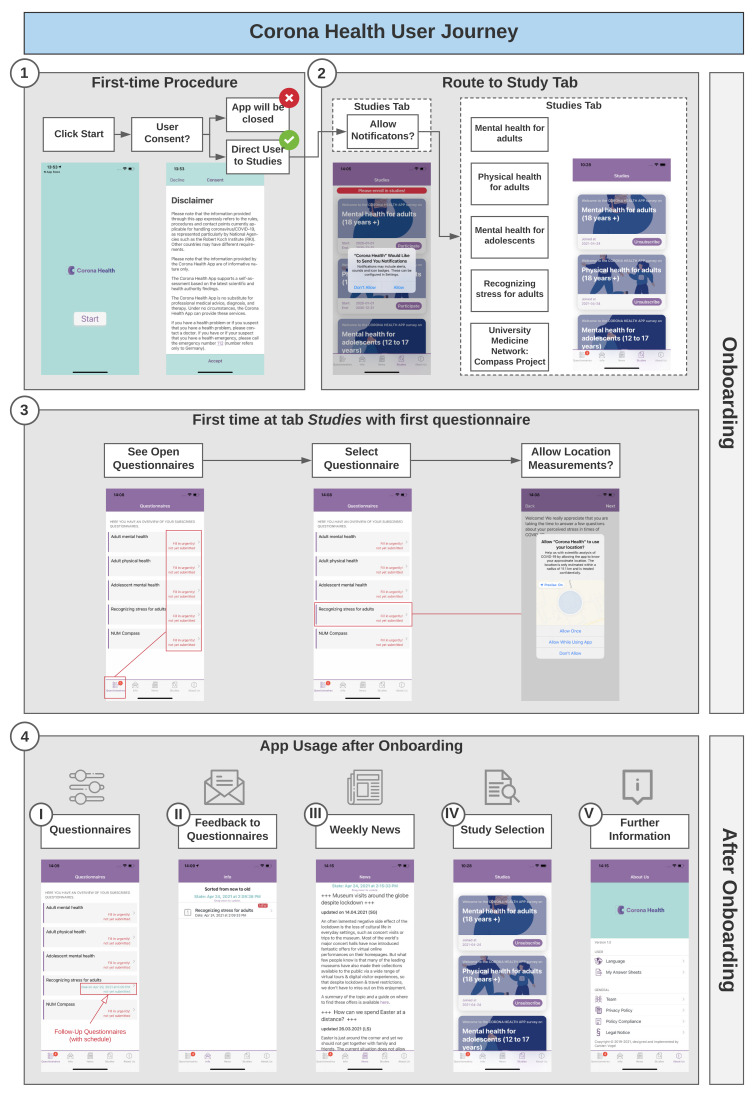
Figure 1
Figure 1
User journey of Corona Health, highlighting the steps for initial start of the app, registration for studies, filling out baseline and follow-up questionnaires.
Figure 2
Figure 2
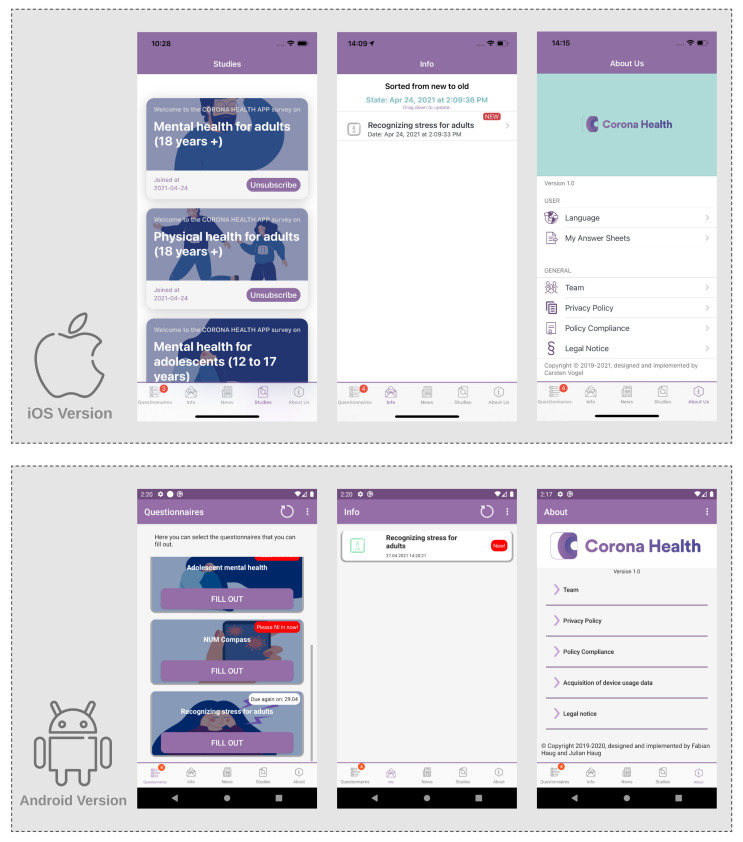
Screenshots of the iOS and Android versions of Corona Health.
Figure 3
Figure 3
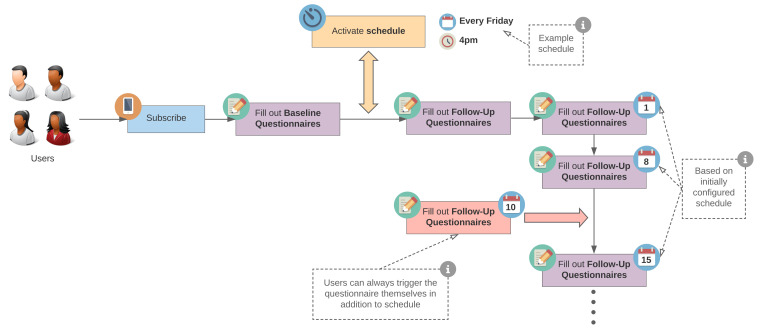
Notification scheduling in Corona Health. After the baseline questionnaire is filled out, the notification schedule for the selected study is activated. Notifications will be triggered based on the given schedule. Additionally, the user can always fill out additional follow-up questionnaires by manually accessing them.
Figure 4
Figure 4
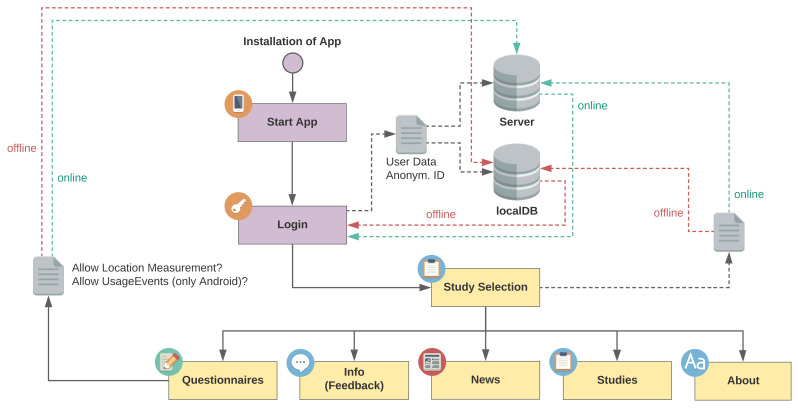
Corona Health processes of the User Journey on a technical level. Continuous lines indicate user interactions and dashed lines indicate background data interactions. After installation, the app can be started and an anonymous login process is started. If the backend server cannot be reached, the local database temporarily handles the login, storage of questionnaires and mobile sensing data.
Figure 5
Figure 5
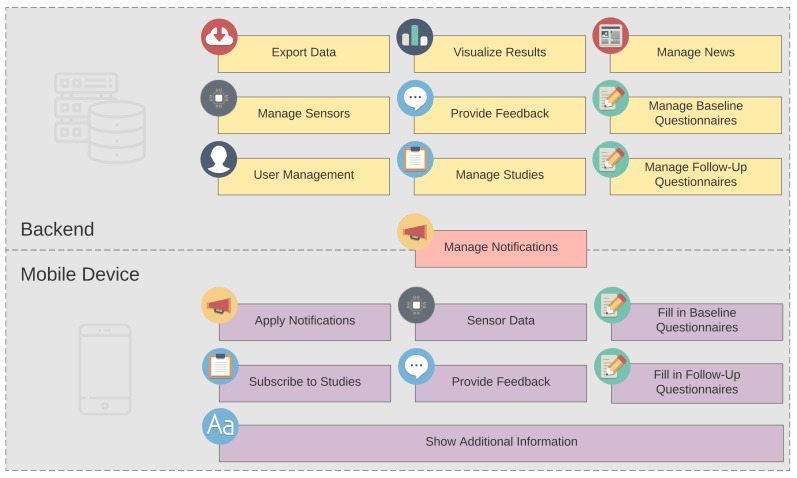
The core modules of Corona Health.
Figure 6
Figure 6
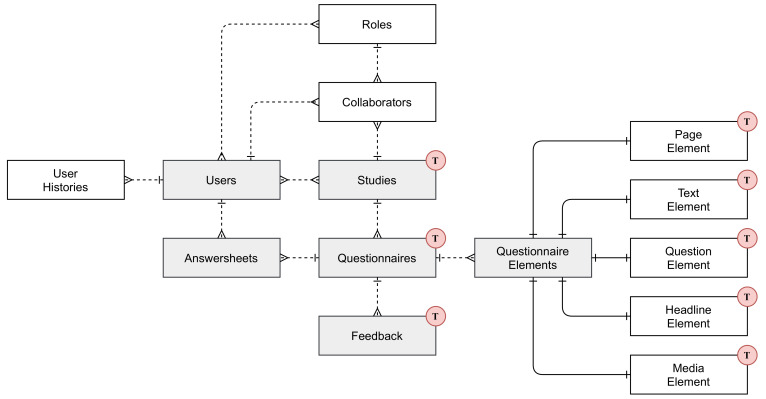
Excerpt of Corona Health’s relational database schema. The circled Ⓣ indicates the presence of translated text data.
Figure 7
Figure 7
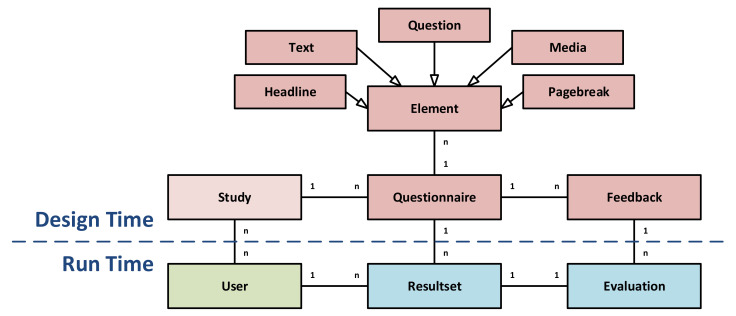
API data model.
Figure 8
Figure 8
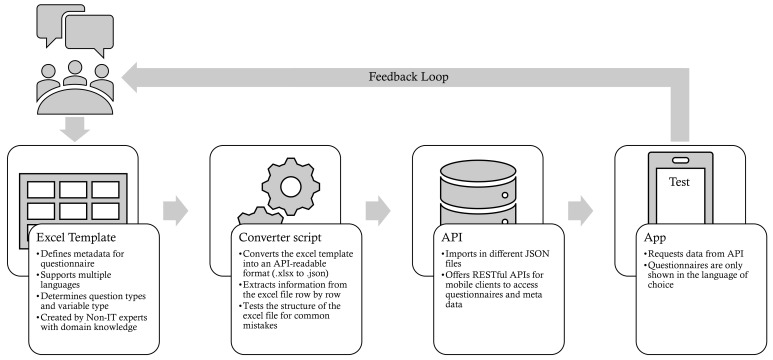
Steps to publish a questionnaire within the mobile application. The automated conversion allows for fast iteration cycles, resulting in a more flexible and end-user driven development process.
Figure 9
Figure 9
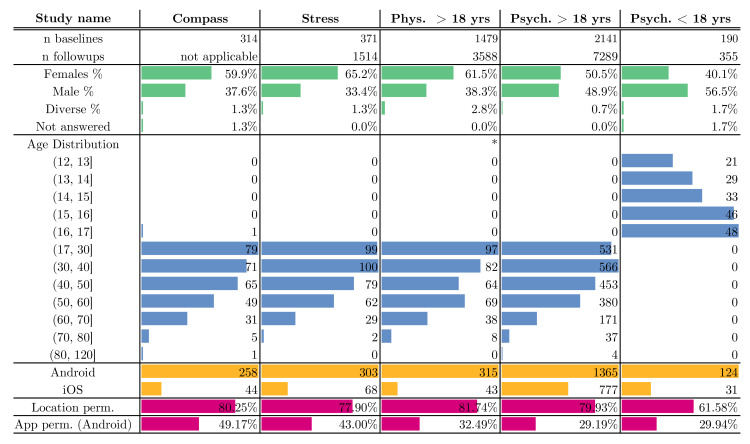
Fact sheet for the five studies. A total of 17,241 questionnaires were completed by 11 May 2021. Note that demographic information was not available for the Adult Physical Health Questionnaire (Study “Phys. > 18 yrs”) until the December 2020 update.

References

    1. Zhang Y., Ma Z.F. Impact of the COVID-19 Pandemic on Mental Health and Quality of Life among Local Residents in Liaoning Province, China: A Cross-Sectional Study. Int. J. Environ. Res. Public Health. 2020;17:2381. doi: 10.3390/ijerph17072381. - DOI - PMC - PubMed
    1. Wang C., Pan R., Wan X., Tan Y., Xu L., Ho C.S., Ho R.C. Immediate Psychological Responses and Associated Factors during the Initial Stage of the 2019 Coronavirus Disease (COVID-19) Epidemic among the General Population in China. Int. J. Environ. Res. Public Health. 2020;17:1729. doi: 10.3390/ijerph17051729. - DOI - PMC - PubMed
    1. Gualano M.R., Lo Moro G., Voglino G., Bert F., Siliquini R. Effects of Covid-19 Lockdown on Mental Health and Sleep Disturbances in Italy. Int. J. Environ. Res. Public Health. 2020;17:4779. doi: 10.3390/ijerph17134779. - DOI - PMC - PubMed
    1. Xiong J., Lipsitz O., Nasri F., Lui L.M.W., Gill H., Phan L., Chen-Li D., Iacobucci M., Ho R., Majeed A., et al. Impact of COVID-19 Pandemic on Mental Health in the General Population: A Systematic Review. J. Affect. Disord. 2020;277:55–64. doi: 10.1016/j.jad.2020.08.001. - DOI - PMC - PubMed
    1. Gloster A.T., Lamnisos D., Lubenko J., Presti G., Squatrito V., Constantinou M., Nicolaou C., Papacostas S., Aydın G., Chong Y.Y., et al. Impact of COVID-19 Pandemic on Mental Health: An International Study. PLoS ONE. 2020;15:e0244809. doi: 10.1371/journal.pone.0244809. - DOI - PMC - PubMed

Publication types