


Exploring Factors for Predicting Anxiety Disorders of the Elderly Living Alone in South Korea Using Interpretable Machine Learning: A Population-Based Study
- PMID: 34300076
- PMCID: PMC8305562
- DOI: 10.3390/ijerph18147625
Exploring Factors for Predicting Anxiety Disorders of the Elderly Living Alone in South Korea Using Interpretable Machine Learning: A Population-Based Study
Abstract
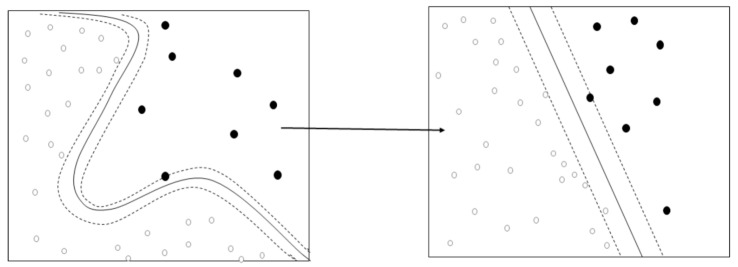
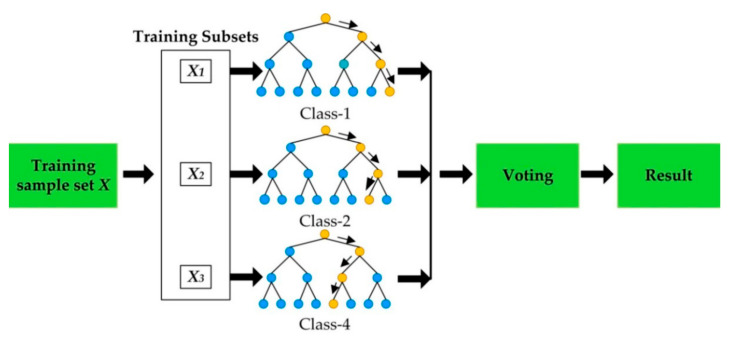
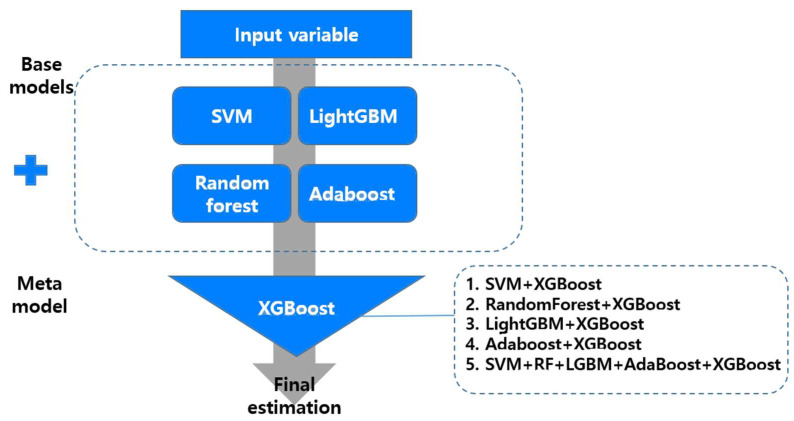
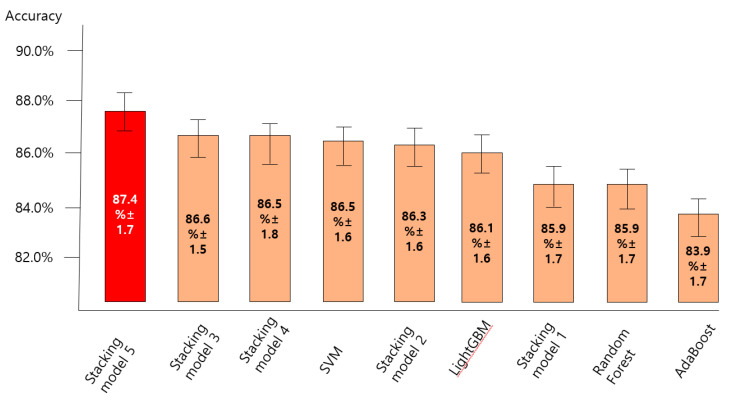
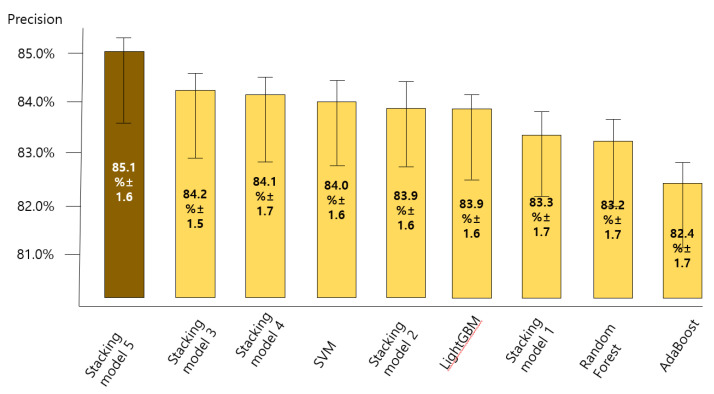
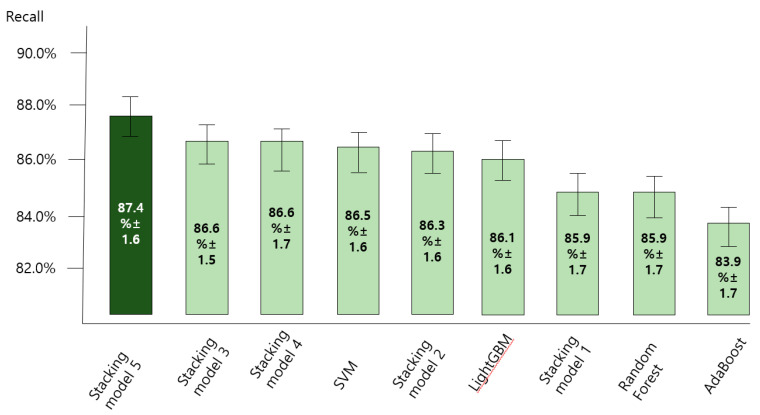
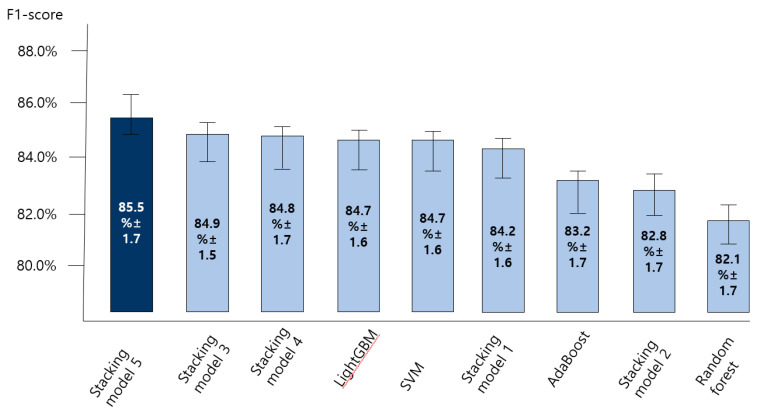
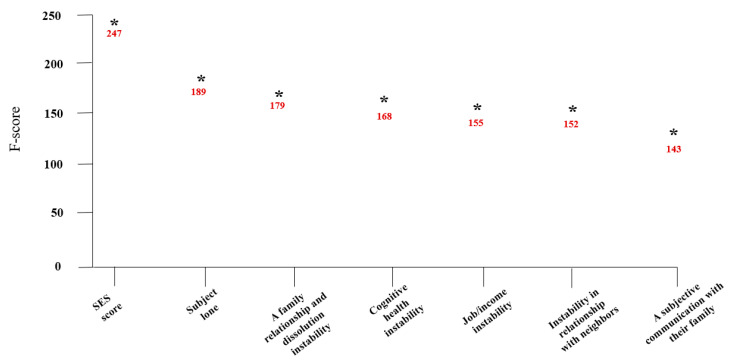
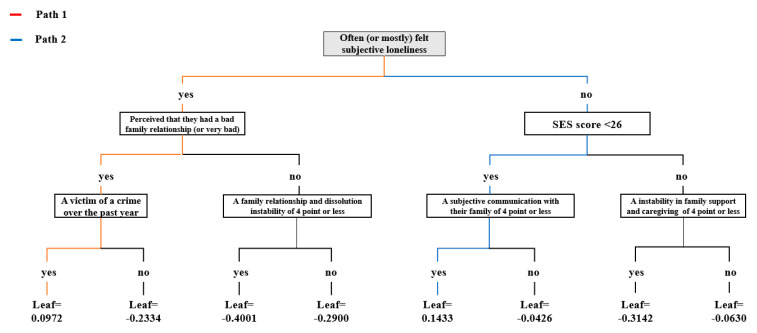
This epidemiological study aimed to develop an X-AI that could explain groups with a high anxiety disorder risk in old age. To achieve this objective, (1) this study explored the predictors of senile anxiety using base models and meta models. (2) This study presented decision tree visualization that could help psychiatric consultants and primary physicians easily interpret the path of predicting high-risk groups based on major predictors derived from final machine learning models with the best performance. This study analyzed 1558 elderly (695 males and 863 females) who were 60 years or older and completed the Zung's Self-Rating Anxiety Scale (SAS). We used support vector machine (SVM), random forest, LightGBM, and Adaboost for the base model, a single predictive model, while using XGBoost algorithm for the meta model. The analysis results confirmed that the predictive performance of the "SVM + Random forest + LightGBM + AdaBoost + XGBoost model (stacking ensemble: accuracy 87.4%, precision 85.1%, recall 87.4%, and F1-score 85.5%)" was the best. Also, the results of this study showed that the elderly who often (or mostly) felt subjective loneliness, had a Self Esteem Scale score of 26 or less, and had a subjective communication with their family of 4 or less (on a 10-point scale) were the group with the highest risk anxiety disorder. The results of this study imply that it is necessary to establish a community-based mental health policy that can identify elderly groups with high anxiety risks based on multiple risk factors and manage them constantly.
Keywords: Self-Rating Anxiety Scale; explainable artificial intelligence; machine learning; multiple risk factors; stacking ensemble.
Conflict of interest statement
The author declares no conflict of interest.
Figures
References
-
- Ministry of Health & Welfare . National Mental Health Statistics 2019. Ministry of Health & Welfare; Sejong, Korea: 2020.
Publication types
MeSH terms
LinkOut - more resources
Full Text Sources
Medical
