


Conservative versus accelerated rehabilitation after rotator cuff repair: a systematic review and meta-analysis
- PMID: 34303366
- PMCID: PMC8310609
- DOI: 10.1186/s12891-021-04397-0
Conservative versus accelerated rehabilitation after rotator cuff repair: a systematic review and meta-analysis
Abstract
Background: The purpose of this systematic review and meta-analysis is to compare the conservative and accelerated rehabilitation protocols in patients who underwent arthroscopic rotator cuff repair in terms of clinical outcomes and range of motions at 3, 6, 12, and 24-month follow-up.
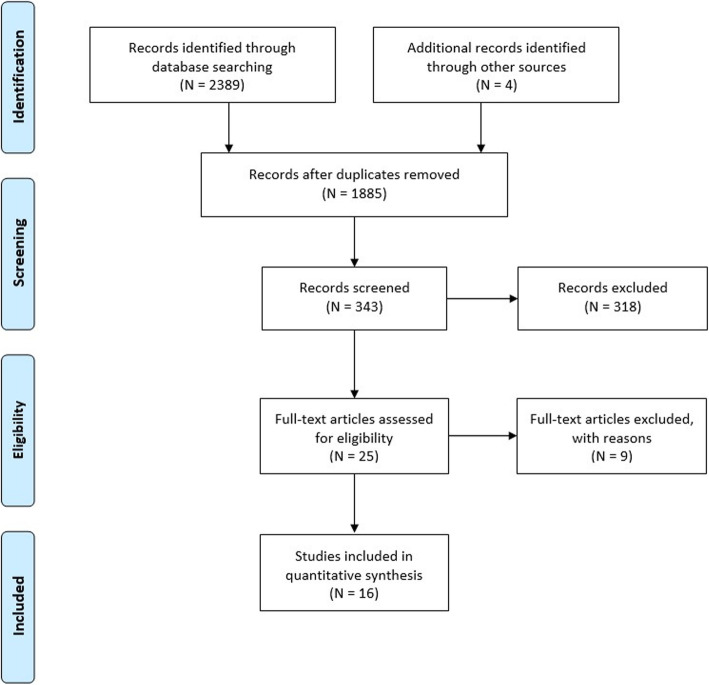
Methods: According to PRISMA guidelines, a systematic review of the literature was performed. For each included article, the following data has been extracted: authors, year, study design, level of evidence, demographic characteristics, follow-up, clinical outcomes, range of motions, and retear events. A meta-analysis was performed to compare accelerated versus conservative rehabilitation protocols after arthroscopic rotator cuff repair. The retear rate, postoperative Constant-Murley score and range of motions at 3, 6, 12, and 24 months of follow-up were the outcomes measured.
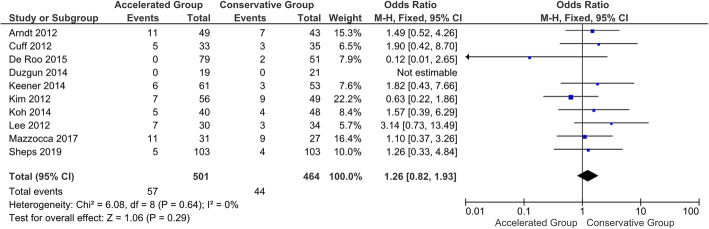
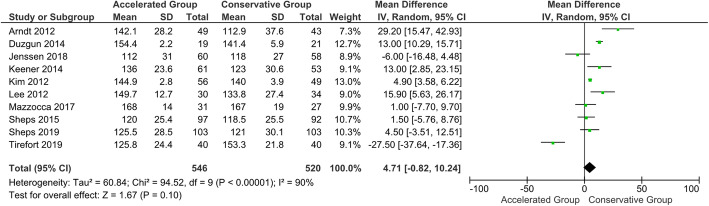
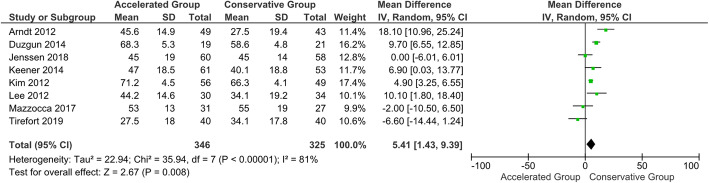
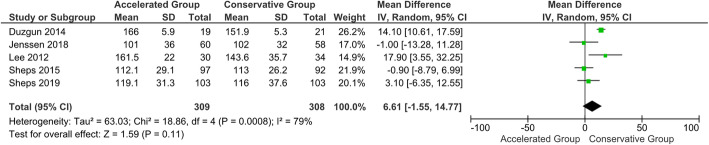
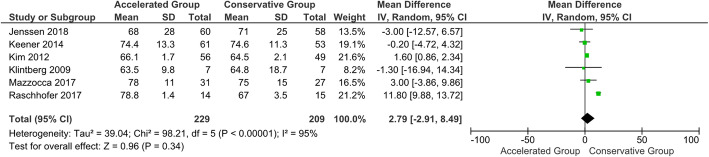
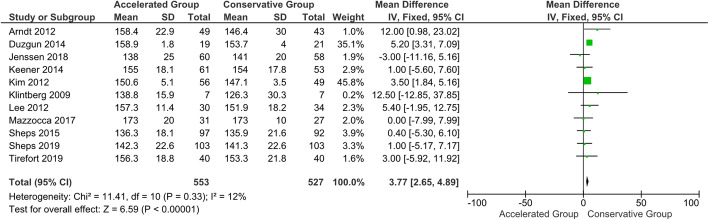
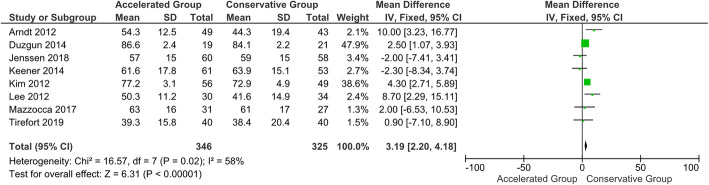
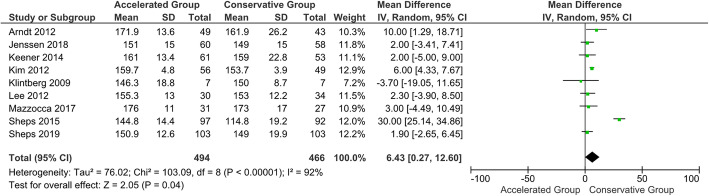
Results: The search strategy yielded 16 level I-II clinical studies. A total of 1424 patients, with 732 patients and 692 in the accelerated and conservative group, were included. The average age (mean ± standard deviation) was 56.1 ± 8.7 and 56.6 ± 9 in the accelerated and conservative group. The mean follow-up was 12.5 months, ranging from 2 to 24 months. The meta-analysis showed no statistically significant differences in terms of retear rate between the groups (P = 0.29). The superiority of the accelerated group was demonstrated in terms of external rotation (P < 0.05) at 3-month follow-up; in terms of forward elevation, external rotation, abduction (P < 0.05), but not in terms of Constant-Murley score at 6-month follow-up; in terms of forward elevation (P < 0.05) at 12-month follow-up. No significant differences between the two group were highlighted at 24-month follow-up.
Conclusions: No statistically significant differences in the retear rate among the accelerated and conservative group have been demonstrated. On the other hand, statistically and clinically significant differences were found in terms of external rotation at 3 and 6 months of follow-up in favour of the accelerated group. However, no differences between the two groups were detected at 24 months follow-up.
Keywords: Accelerated; Conservative; Protocol; Rehabilitation; Rotator cuff; Rotator cuff repair.
© 2021. The Author(s).
Conflict of interest statement
U.G.L. is a member of the Editorial Board of B.M.C. Musculoskeletal Disorders. The remaining authors declare that they have no conflict of interest.
Figures

References
-
- Longo UG, Berton A, Papapietro N, Maffulli N, Denaro V. Epidemiology, genetics and biological factors of rotator cuff tears. Med Sport Sci. 2012;57:1–9. - PubMed
-
- Salvatore G, Longo UG, Candela V, Berton A, Migliorini F, Petrillo S, Ambrogioni LR, Denaro V. Epidemiology of rotator cuff surgery in Italy: regional variation in access to health care. Results from a 14-year nationwide registry. Musculoskelet Surg. 2020;104(3):329–35. 10.1007/s12306-019-00625-y. - PubMed
Publication types
MeSH terms
LinkOut - more resources
Full Text Sources
Medical
