


Characterization of Retinal Function Using Microperimetry-Derived Metrics in Both Adults and Children With RPGR-Associated Retinopathy
- PMID: 34303686
- PMCID: PMC8847997
- DOI: 10.1016/j.ajo.2021.07.018
Characterization of Retinal Function Using Microperimetry-Derived Metrics in Both Adults and Children With RPGR-Associated Retinopathy
Abstract
Purpose: To investigate microperimetry testing of retinitis pigmentosa GTPase regulator gene (RPGR)-associated retinopathy in a cohort of children and adults.
Design: Prospective observational case series.
Methods: The coefficient of repeatability and intraclass correlation coefficient (ICC) of mean sensitivity (MS) were calculated for mesopic microperimetry. Best-corrected visual acuity (BCVA), contrast sensitivity (CS), MS, total volume (VTOT), and central 3-degree field volume (V3) from volumetric and topographic analyses were acquired.
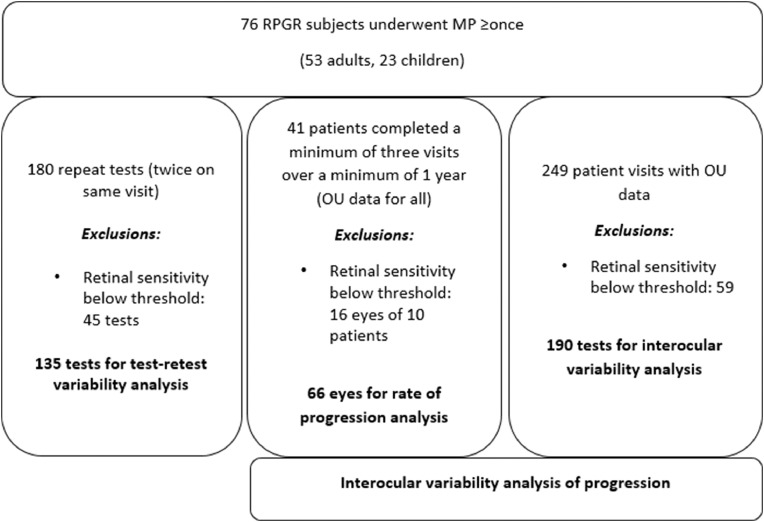
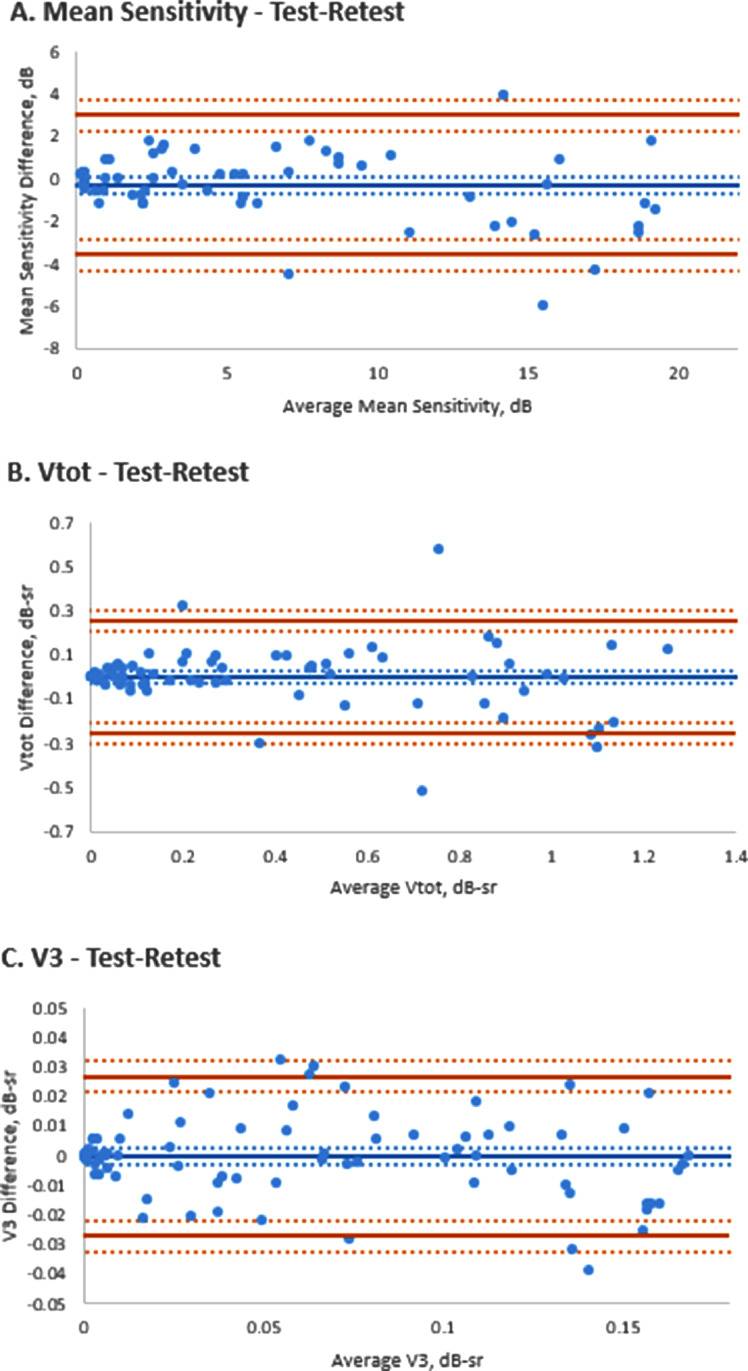
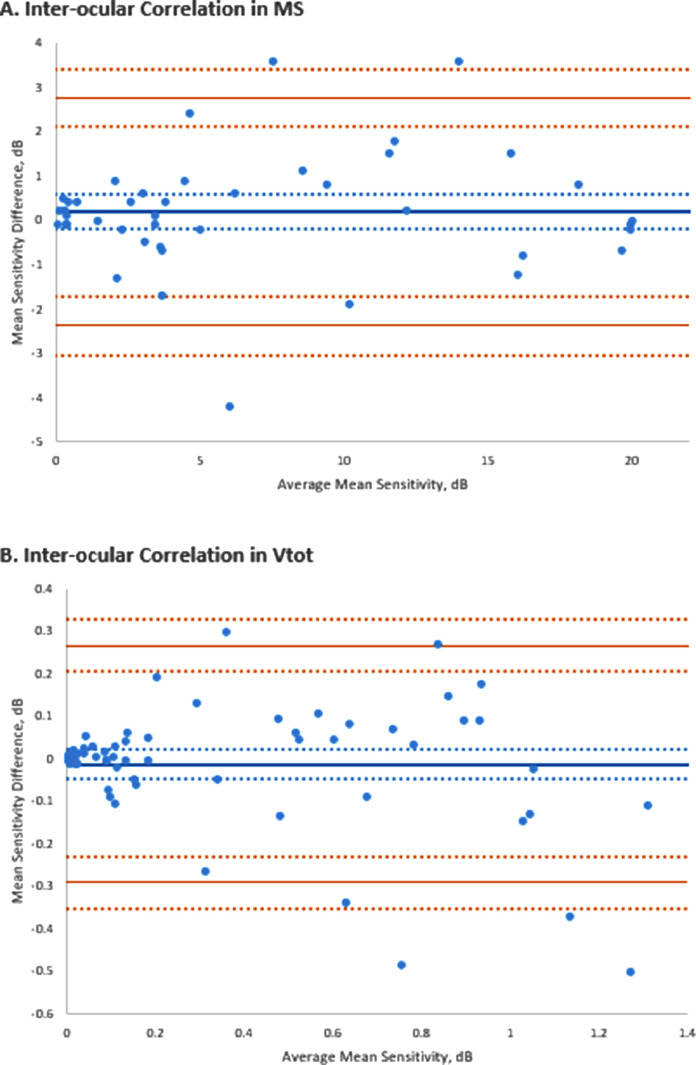
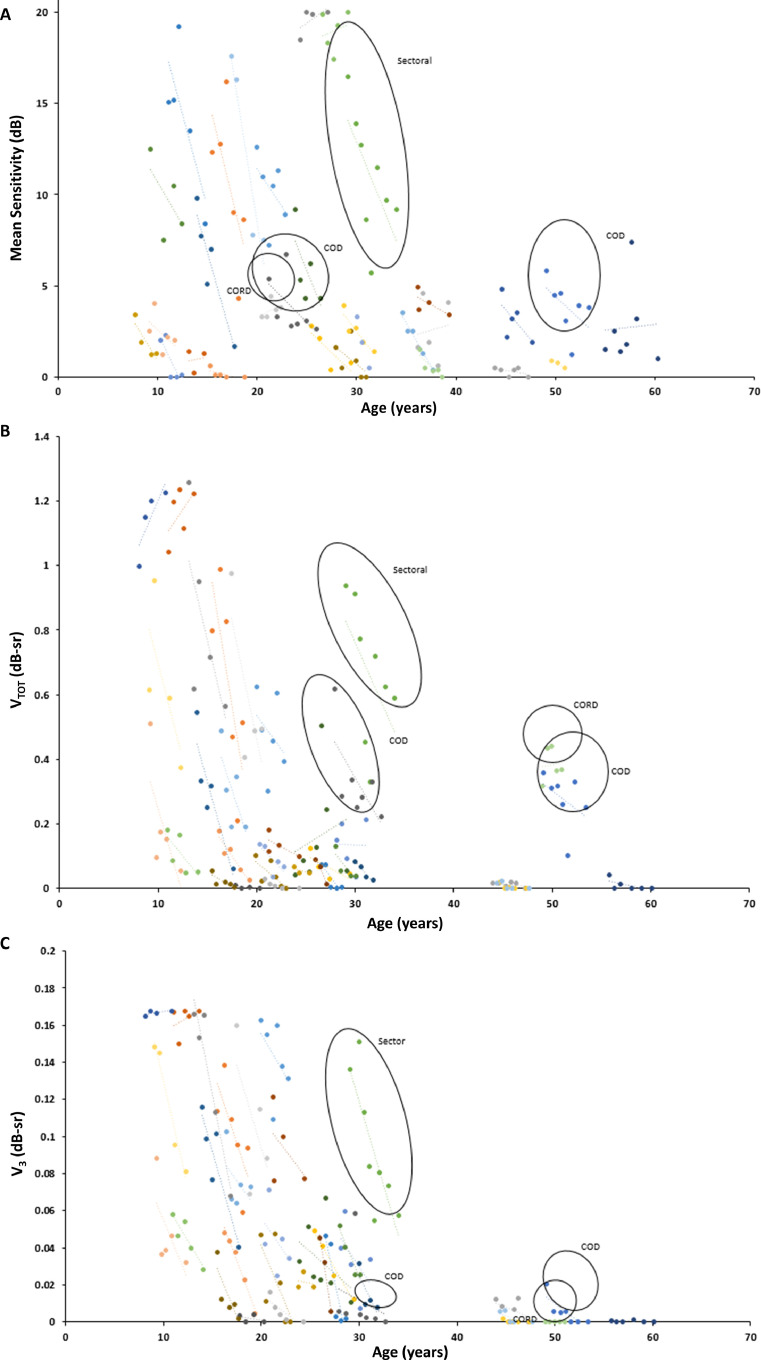
Results: The study recruited 76 individuals with RPGR (53 adults, 23 children). The mean follow-up period was 2.8 years. The ICC values for MS, VTOT, and V3 were 0.982 dB (95% CI, 0.969-0.989 dB), 0.970 dB-steradian (sr) (95% CI, -0.02658 to 0.03691 dB-sr), and 0.986 dB-sr (95% CI, 0.978-0.991), respectively. The r values for interocular MS, VTOT, and V3 were 0.97 (P < .01), 0.97 (P < .01), and 0.98 (P < .01), respectively, indicating strong interocular correlation. The interocular correlation of progression for MS, VTOT, and V3 was 0.81 (P < .01), 0.64 (P < .01), and 0.81 (P < .01), respectively. There was no statistically significant difference in the interocular progression rates for MS or VTOT. V3 did show a statistically significant difference. Most patients lost retinal sensitivity rapidly during their second and third decades of life.
Conclusions: The high degree of reproducibility of results and the good interocular correlation lends this method to accurately monitoring disease progression, as well as supporting validation of the use of MP in assessing the outcomes of gene therapy clinical treatment trials.
Copyright © 2021 The Author(s). Published by Elsevier Inc. All rights reserved.
Figures
References
-
- Tee JJ, Smith AJ, Hardcastle AJ, Michaelides M. RPGR-associated retinopathy: clinical features, molecular genetics, animal models and therapeutic options. Br J Ophthalmol. 2016;100(8):1022–1027. - PubMed
-
- Xu Y, Guan L, Shen T, et al. Mutations of 60 known causative genes in 157 families with retinitis pigmentosa based on exome sequencing. Hum Genet. 2014;133(10):1255–1271. - PubMed
-
- Hartong DT, Berson EL, Dryja TP. Retinitis pigmentosa. Lancet. 2006;368(9549):1795–1809. - PubMed
Publication types
MeSH terms
Substances
Grants and funding
LinkOut - more resources
Full Text Sources
Medical
Research Materials
Miscellaneous
