Review
. 2022 Jan;32(1):30-44.
doi: 10.1016/j.tcb.2021.07.001. Epub 2021 Jul 22.

Cell cycle on the crossroad of tumorigenesis and cancer therapy

Affiliations
Review

Cell cycle on the crossroad of tumorigenesis and cancer therapy

Jing Liu et al. Trends Cell Biol. 2022 Jan.

Abstract

Aberrancy in cell cycle progression is one of the fundamental mechanisms underlying tumorigenesis, making regulators of the cell cycle machinery rational anticancer therapeutic targets. A growing body of evidence indicates that the cell cycle regulatory pathway integrates into other hallmarks of cancer, including metabolism remodeling and immune escape. Thus, therapies against cell cycle machinery components can not only repress the division of cancer cells, but also reverse cancer metabolism and restore cancer immune surveillance. Besides the ongoing effects on the development of small molecule inhibitors (SMIs) of the cell cycle machinery, proteolysis targeting chimeras (PROTACs) have recently been used to target these oncogenic proteins related to cell cycle progression. Here, we discuss the rationale of cell cycle targeting therapies, particularly PROTACs, to more efficiently retard tumorigenesis.

Keywords: PROTAC; cancer; cancer immune; cell cycle; degradation; metabolism.


Conflict of interest statement

Declaration of interests W.W. is a cofounder of and consultant for ReKindle Therapeutics. The other authors have no interests to declare.

Figures

Figure 1.
Figure 1.. Cell cycle machinery and checkpoints.
The proceeding of the cell cycle depends on subsequential degradation of Cyclins and other key cell cycle regulators by the APC/C and SCF E3 ligase complexes, to ensure the faithful completion of DNA replication and orderly cell division. In G1 phase, Cyclin D-CDK4/6 and Cyclin E-CDK2 phosphorylate Rb protein, leading to the relief from G1/S checkpoint by triggering E2F release from Rb and the repressive complex for the transcription of downstream targets, to prepare for the synthesis of protein and DNA. After the replication of genome DNA in S phase, cells in G2 phase pass through the G2/M checkpoint, where errors during DNA synthesis activate the DNA damage pathway to repress Cyclin B-CDK1 kinase activity through the ATR-Chk1-WEE1/CDC25C signaling axis. During mitosis, the spindle assembly checkpoint is governed by MCC-mediated repression of APCCdc20, which is responsible for the degradation of Securin to activate Separase and the degradation of Cyclin B to activate CDK1. Among these cell cycle controlling E3 ligases, APCCdh1 controls the ubiquitination and protein stability of Cdc20 and Skp2, thus ensuring the ordered activation and inactivation of APC/C and SCF in different cell cycle phases.
Figure 2.
Figure 2.. Regulation of cell metabolism by the cell cycle machinery at the post-translational level.
In G1 phase, Cyclin D-CDK4/6 phosphorylates and inactivates the glycolytic enzymes, PFK and PKM2, to rewire glycolysis into more reliance on the pentose phosphate pathway (PPP) and serine pathway, or phosphorylates and inactivates the master regulators of mitochondrial biogenesis, NRF1 and PGC1α, to repress oxidative phosphorylation (OXPHOS), or indirectly represses metabolic-related proteins, including VDAC/HK2 and PPARα On the other hand, APCCdh1 ubiquitinates and degrades multiple metabolic enzymes or regulators, such as PFKBP3, GLS1 and IDH3β, to repress glycolysis and glutaminolysis. In late G1 and S phases, Cyclin E-CDK2 and Cyclin A-CDK2 phosphorylate the TCA cycle enzyme IDH1/2, which are further ubiquitinated by SCFSkp2 to render more glycolysis in S phase. In M phase, Cyclin B-CDK1 phosphorylates and inactivates various mitochondrial proteins to repress OXPHOS.
Figure 3.
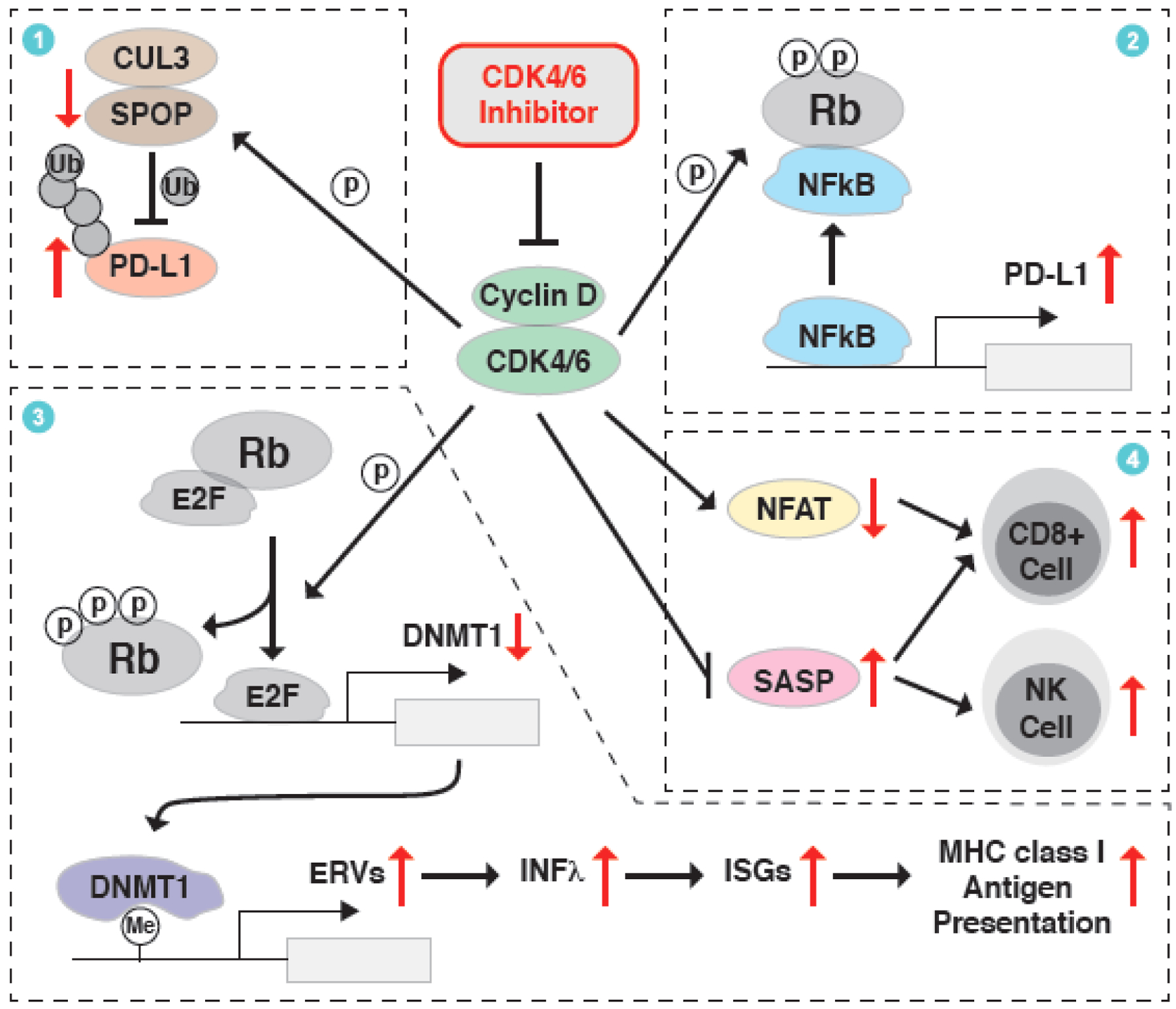
Figure 3.. CDK4/6 inhibitor at the crosstalk of cell cycle and immune surveillance.
An unexpected immune-regulatory function of CDK4/6 inhibitor has been observed in clinic and various underlying mechanisms have been revealed to contribute to this phenotype. First, Cyclin D-CDK4/6 kinase can phosphorylate and stabilize SPOP, thus facilitating CUL3SPOP E3 ligase-mediated ubiquitination and proteasomal degradation of PD-L1, which could be blocked by the CDK4/6 inhibitor. Second, Cyclin D-CDK4/6 phosphorylates Rb, promotes its binding to NFκB/p65 and thus inactivates the transcription of PD-L1, while CDK4/6 inhibition triggers the transcription of PD-L1. Third, Cyclin D-CDK4/6 phosphorylates Rb to active E2F-mediated transcription of DNMT1, an epigenetic transcription repressor of endogenous retroviral elements (ERVs). This process could be antagonized by CDK4/6 inhibitor to trigger the IFNλ/ISGs/MHC signaling axis and the presentation of tumor antigens. Lastly, inhibition of CDK4/6 stimulates ASAP and represses NFAT-mediated transcriptome, which eventually promotes the infiltration of CD8+ T cells and/or NK cells for the killing of cancer cells.
Figure 4.
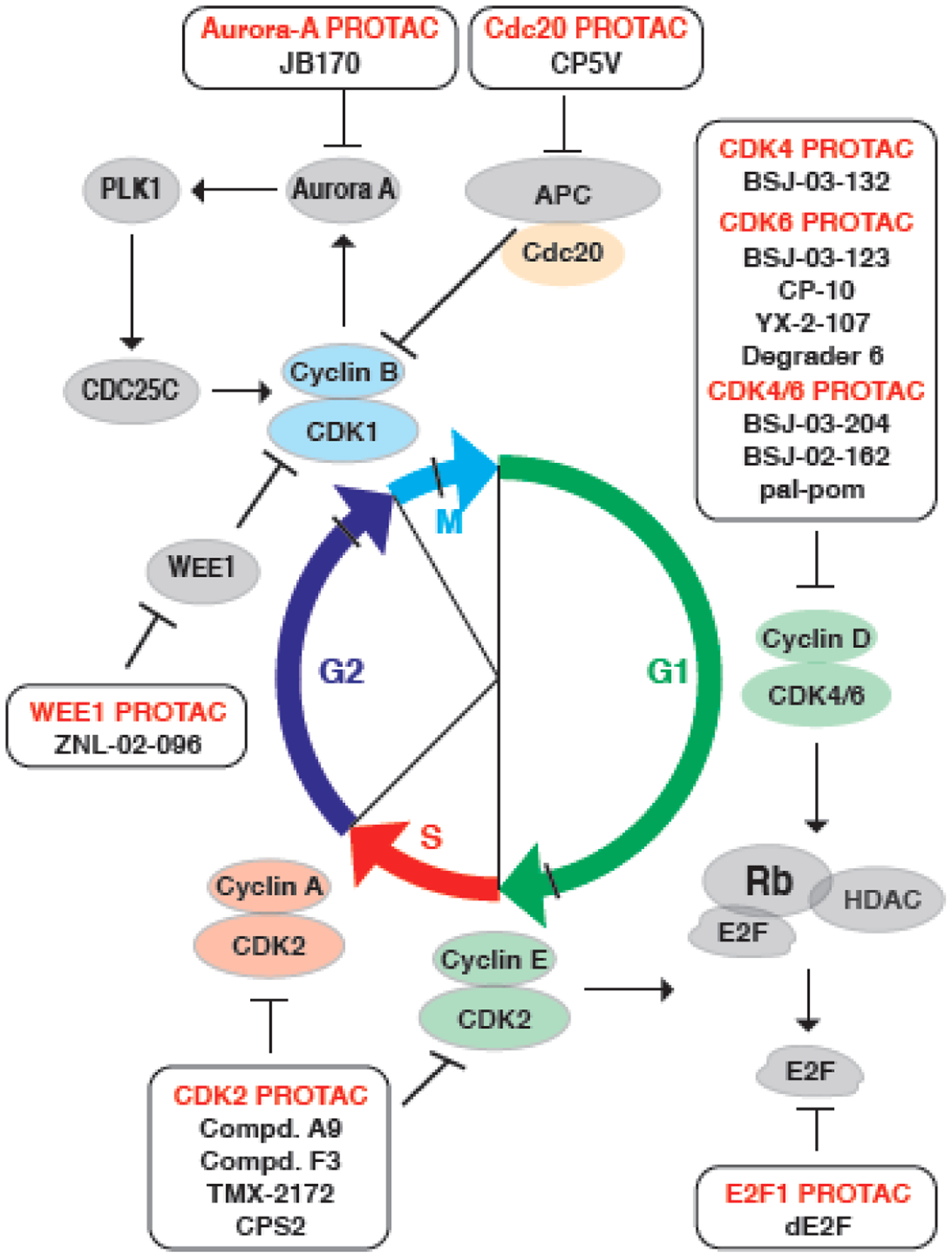
Figure 4.. PROTACs present new avenues to degrade oncogenic proteins in the cell cycle machinery.
PROTACs against cell cycle controlling kinases, including CDK2/4/6, WEE1, Aurora A, as well as E2F1 and Cdc20, have been developed recently as potent therapeutics to combat cancer. By targeting upstream regulators of the G2/M checkpoint, WEE1-PROTAC (ZNL-20-096), Aurora A-PROTAC (JB170) and Cdc20-PROTAC (CP5V) block the mitosis entry and progression. Based on the CDK4/6 inhibitors, PROTACs have been developed to either target CDK4/6 (BSJ-03-024, BSJ-02-162, and pal-pom), or CDK4 only (BSJ-03-132), or CDK6 only (BSJ-03-123, CP-10, YX-2-107, and Degrader 6), which elicit potent degradation efficiency and anti-proliferation effect in cancer cells. For the S-phase related CDK2, several PROTACs (Compd. A9, Compd. F3, TMC-2172, and CPS2) have been developed to specifically degrade CDK2, sparing its close analog CDK1 and other CDKs. Downstream of the G1/S checkpoint, the effecter transcription factor E2F1 can also be targeted by dE2F, a DNA-based PROTAC for E2F. Compared with SMIs, PROTACs have several superior advantages, including the ability to distinguish close family members (such as CDK4 vs. CDK6, or CDK2 vs. CDK1), the capability of blocking the kinase activity-independent function of CDKs, as well as the potential to overcome drug resistance to inhibitor.

References

    1. Hartwell LH et al. (1973) Genetic Control of the Cell Division Cycle in Yeast: V. Genetic Analysis of cdc Mutants. Genetics 74, 267–286. - PMC - PubMed
    1. Nurse P (2000) A long twentieth century of the cell cycle and beyond. Cell 100, 71–78. - PubMed
    1. Nasmyth K (2001) A prize for proliferation. Cell 107, 689–701. - PubMed
    1. Bertoli C et al. (2013) Control of cell cycle transcription during G1 and S phases. Nat Rev Mol Cell Biol 14, 518–528. - PMC - PubMed
    1. Guardavaccaro D and Pagano M (2006) Stabilizers and destabilizers controlling cell cycle oscillators. Mol Cell 22, 1–4. - PubMed

Publication types