


Microbial Infections Are a Risk Factor for Neurodegenerative Diseases
- PMID: 34305533
- PMCID: PMC8292681
- DOI: 10.3389/fncel.2021.691136
Microbial Infections Are a Risk Factor for Neurodegenerative Diseases
Abstract
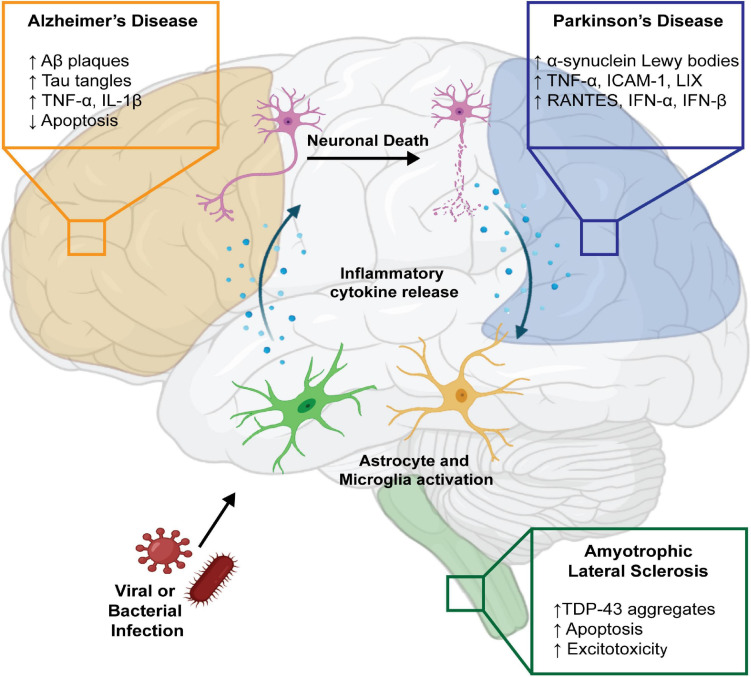
Neurodegenerative diseases, such as Alzheimer's disease, Parkinson's disease, and amyotrophic lateral sclerosis, comprise a family of disorders characterized by progressive loss of nervous system function. Neuroinflammation is increasingly recognized to be associated with many neurodegenerative diseases but whether it is a cause or consequence of the disease process is unclear. Of growing interest is the role of microbial infections in inciting degenerative neuroinflammatory responses and genetic factors that may regulate those responses. Microbial infections cause inflammation within the central nervous system through activation of brain-resident immune cells and infiltration of peripheral immune cells. These responses are necessary to protect the brain from lethal infections but may also induce neuropathological changes that lead to neurodegeneration. This review discusses the molecular and cellular mechanisms through which microbial infections may increase susceptibility to neurodegenerative diseases. Elucidating these mechanisms is critical for developing targeted therapeutic approaches that prevent the onset and slow the progression of neurodegenerative diseases.
Keywords: Alzheimer’s disease; Parkinson’s disease; amyotrophic lateral sclerosis; infection; microbes; neurodegenerative diseases; viruses.
Copyright © 2021 Lotz, Blackhurst, Reagin and Funk.
Conflict of interest statement
The authors declare that the research was conducted in the absence of any commercial or financial relationships that could be construed as a potential conflict of interest.
Figures
References
-
- Al-Atrache Z., Lopez D. B., Hingley S. T., Appelt D. M. (2019). Astrocytes infected with Chlamydia pneumoniae demonstrate altered expression and activity of secretases involved in the generation of β-amyloid found in Alzheimer disease. BMC Neurosci. 20:6. 10.1186/s12868-019-0489-5 - DOI - PMC - PubMed
Publication types
Grants and funding
LinkOut - more resources
Full Text Sources
