. 2021 Jul 8:12:670746.
doi: 10.3389/fgene.2021.670746. eCollection 2021.

P2RY14 Is a Potential Biomarker of Tumor Microenvironment Immunomodulation and Favorable Prognosis in Patients With Head and Neck Cancer

Affiliations

P2RY14 Is a Potential Biomarker of Tumor Microenvironment Immunomodulation and Favorable Prognosis in Patients With Head and Neck Cancer

Qingxiang Li et al. Front Genet. .

Abstract

The tumor microenvironment (TME) has a crucial role in tumor development, progression, and treatment response. Yet, the exact interaction between cancer biology and the TME is not fully understood. The following study analyzed the correlation between immune/stromal/estimate scores and survival prognosis in head and neck squamous cell carcinoma (HNSC) using a bioinformatic method. As a result, a predictive biomarker, UDP-glucose-specific G(i) protein-coupled P2Y receptor (P2RY14), was discovered. The potential role of P2RY14-driven signaling pathways in the immune-remodeling of TME was then investigated. Briefly, low immune scores were associated with unfavorable prognosis and clinical-stage, larger tumor size, and the down-regulation of P2RY14 in HNSC patients. In addition, the survival analysis showed that HNSC patients with high expression had longer survival than patients with low expression from both TCGA databases and our own patients. We further discovered that P2RY14 is involved in the immune activity in the TME of HNSC; a downregulation of P2RY14 resulted in being an indicator for the conversion of TME status (from immune-dominant to metabolic-dominant status). The intersection analysis of genes co-expressed with P2RY14 indicated that the T-cell receptor signaling pathway and PD-L1 expression and PD-1 checkpoint pathway were candidate signaling pathways driven by the P2RY14 gene in HNSC. Further investigation of immune-associated signaling pathways regulated by P2RY14 may help HNSC patients gain higher immunotherapy benefits.

Keywords: P2RY14; head and neck cancer; immunomodulation; tumor microenvironment; tumor-infiltrating immune cells.


Conflict of interest statement

The authors declare that the research was conducted in the absence of any commercial or financial relationships that could be construed as a potential conflict of interest.

Figures
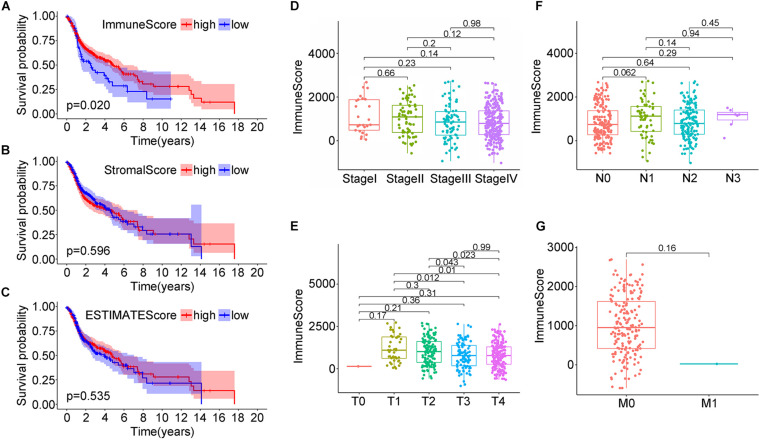
FIGURE 1
FIGURE 1
Correlation analysis of head and neck squamous cell carcinoma (HNSC) patients survival and stromal score/immune score/estimate score distribution from the TCGA database. (A–C) Kaplan–Meier survival analysis for HNSC patients grouped by immune score, stromal score, and estimate score. (D–G) Distribution of immune score in clinical stage, T classification, N classification, and M classification.
FIGURE 2
FIGURE 2
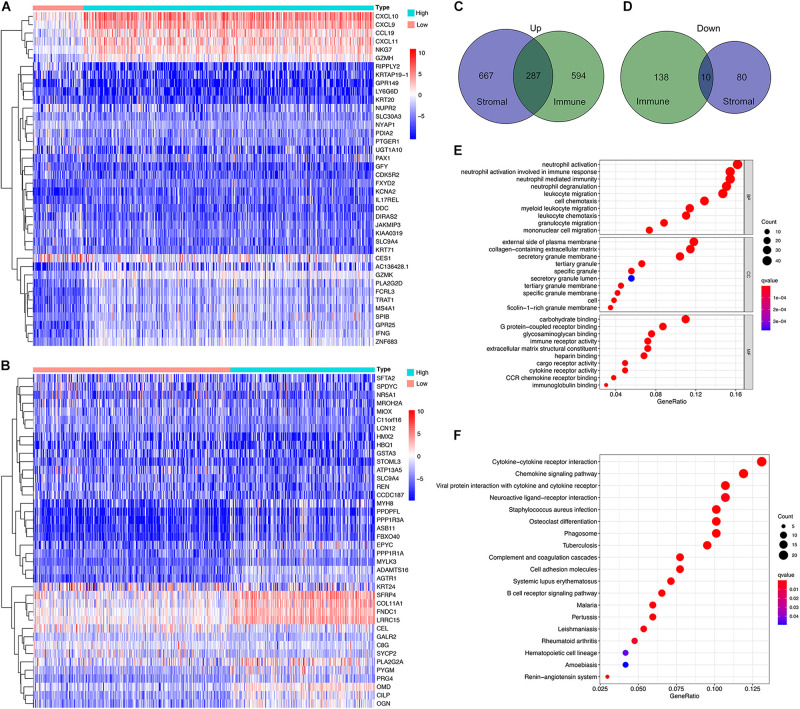
Profile of differential expressed genes (DEG)s and functional enrichment analysis based on the stromal and immune scores. (A,B) Heatmap for DEGs generated by comparing the high score with low score group for Immune Scores and Stromal Scores. The row name of the heatmaps is the gene name. (C,D) Common up-regulated, and down-regulated DEGs shared by Immune Score and Stromal Score in the Venn plots. (E,F) GO and KEGG enrichment analysis for DEGs.
FIGURE 3
FIGURE 3
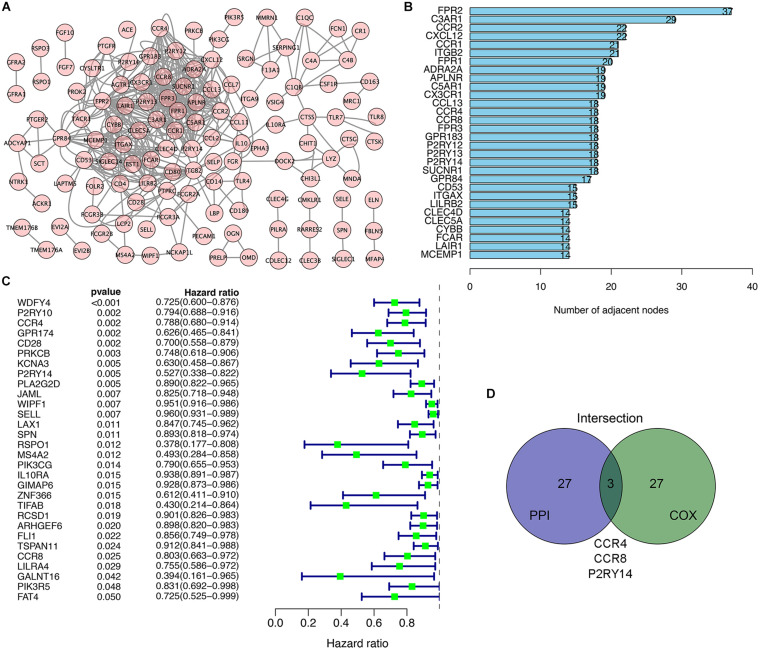
Intersection analysis of top genes that derived protein-protein interaction (PPI) network and univariate COX processing. (A) PPI network constructed with the nodes with interaction confidence value > 0.90. (B) The top 30 genes ordered according to the number of adjacent nodes (from large to small). (C) Univariate COX regression analysis with DEGs. Listing the top 30 significant factors with p < 0.05 (from small to large). (D) The common factors shared by the top 30 genes in PPI and top 30 significant factors in univariate COX.
FIGURE 4
FIGURE 4
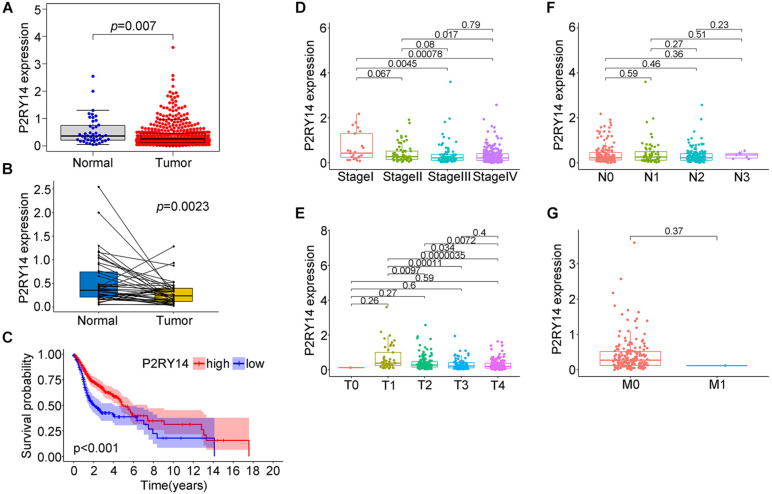
Expression of P2RY14 in samples of HNSC patients from the TCGA database and its correlation with survival and TNM staging distribution. (A) Differentiated expression of P2RY14 in normal and tumor samples. (B) Paired differentiation analysis of P2RY14 in the normal and tumor sample derived from the same patient. (C) Survival analysis for HNSC patients with different P2RY14 expression. (D–G) Distribution of P2RY14 expression level in clinical stage, T classification, N classification, and M classification.
FIGURE 5
FIGURE 5
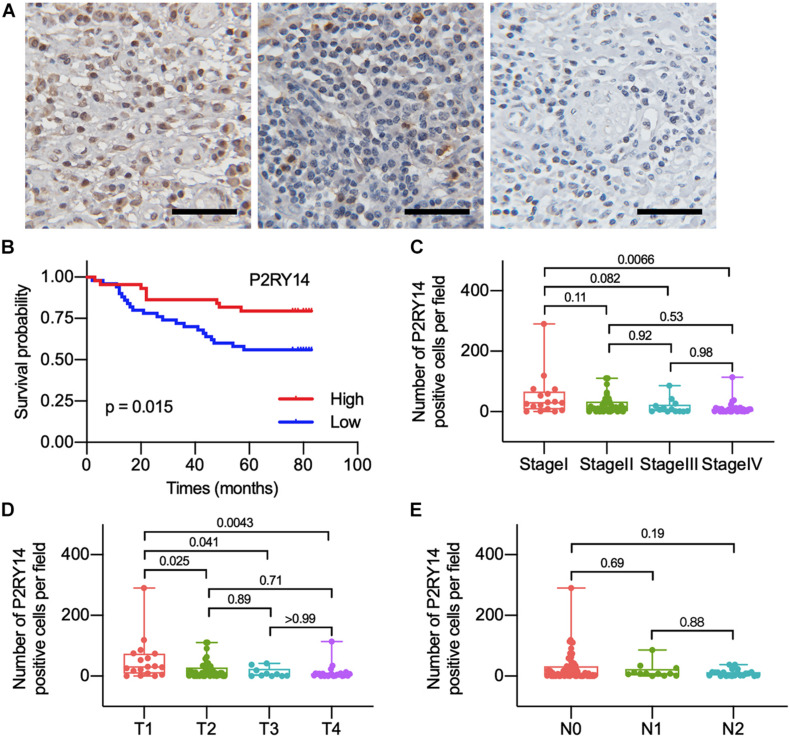
The differentiated expression of P2RY14 in samples and correlation with survival and distribution of OSCC patients. (A) Representative immunohistochemical staining images of P2RY14 in tumor stroma from HNSC patients (scale bar: 50 μm). (B) Survival analysis for HNSC patients with different P2RY14 expression. (C–E) Distribution of P2RY14 expression level in clinical stage, T classification, and N classification.
FIGURE 6
FIGURE 6
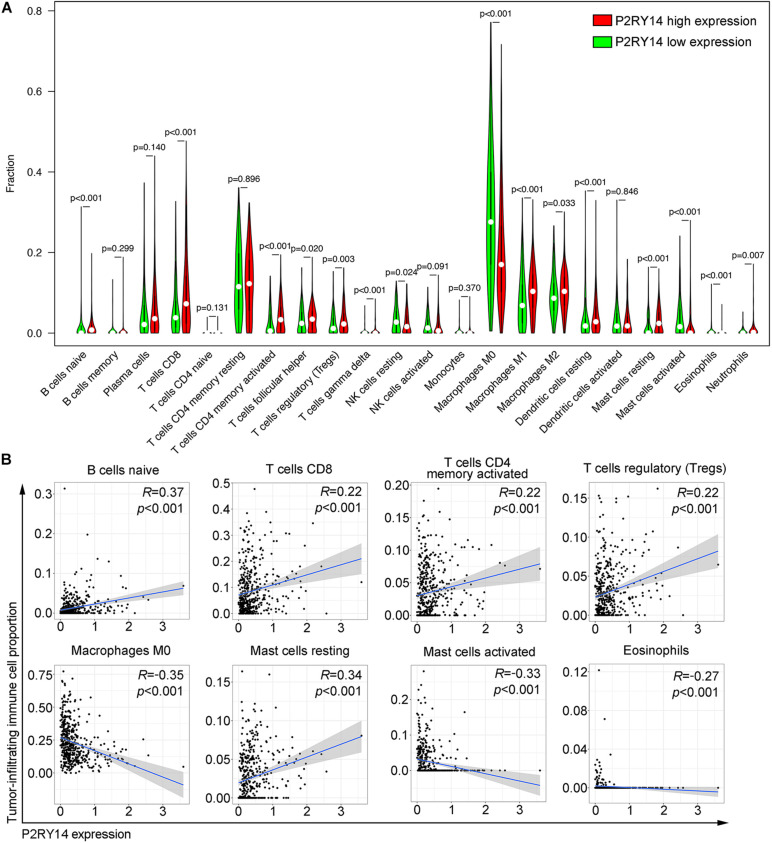
Correlation of tumor-infiltrating immune cells proportion with P2RY14 expression. (A) Violin plots showing the ratio differentiation of 22 kinds of immune cells between HNSC tumor samples with high or low P2RY14 expression. (B) Scatter plot showing the correlation of eight kinds of tumor-infiltrating immune cells proportion with the P2RY14 expression.
FIGURE 7
FIGURE 7
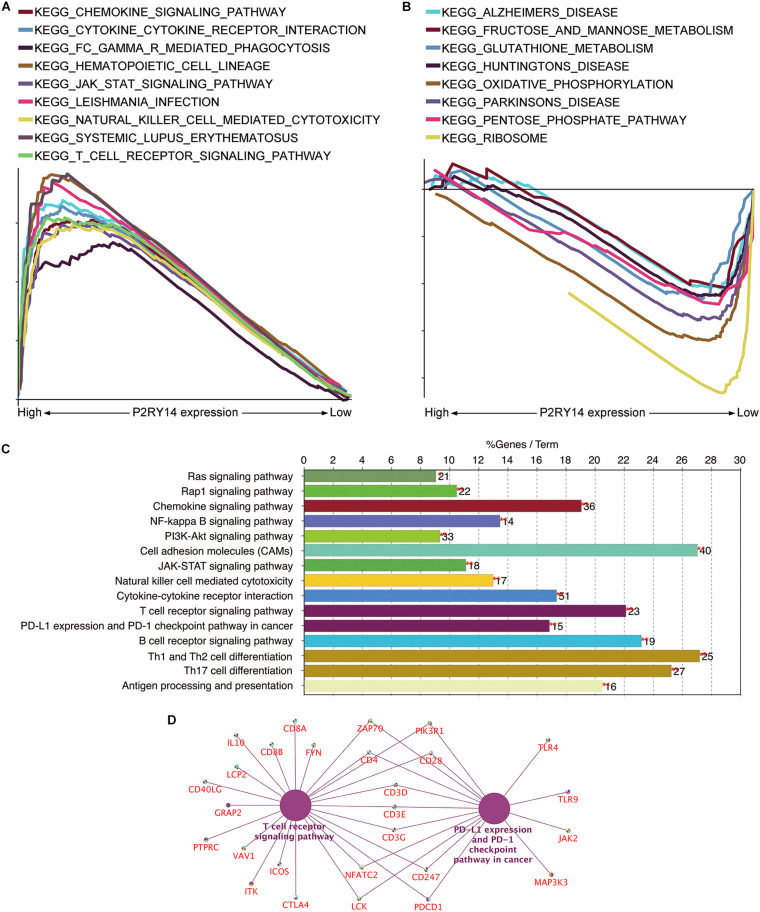
Analyses of the functional role of P2RY14 gene in the tumor microenvironment (TME) and the underlying regulatory genes in HNSC. (A,B) The enriched gene sets in HALLMARK by the samples with high or low P2RY14 expression. (C) KEGG pathway analysis of the genes co-expressed with P2RY14. (D) The genes co-expressed with P2RY14 in the T-cell receptor signaling pathway and PD-L1 expression and PD-1 checkpoint pathway in cancer.

References

    1. Arase T., Uchida H., Kajitani T., Ono M., Tamaki K., Oda H., et al. (2009). The UDP-glucose receptor P2RY14 triggers innate mucosal immunity in the female reproductive tract by inducing IL-8. J. Immunol. 182 7074–7084. 10.4049/jimmunol.0900001 - DOI - PubMed
    1. Barrett M. O., Sesma J. I., Ball C. B., Jayasekara P. S., Jacobson K. A., Lazarowski E. R., et al. (2013). A selective high-affinity antagonist of the P2Y14 receptor inhibits UDP-glucose-stimulated chemotaxis of human neutrophils. Mol. Pharmacol. 84 41–49. 10.1124/mol.113.085654 - DOI - PMC - PubMed
    1. Battistone M. A., Mendelsohn A. C., Spallanzani R. G., Allegretti A. S., Liberman R. N., Sesma J., et al. (2020). Proinflammatory P2Y14 receptor inhibition protects against ischemic acute kidney injury in mice. J. Clin. Invest. 130 3734–3749. 10.1172/JCI134791 - DOI - PMC - PubMed
    1. Bray F., Ferlay J., Soerjomataram I., Siegel R. L., Torre L. A., Jemal A. (2018). Global cancer statistics 2018: GLOBOCAN estimates of incidence and mortality worldwide for 36 cancers in 185 countries. CA Cancer J. Clin. 68 394–424. 10.3322/caac.21492 - DOI - PubMed
    1. Chen W., Zheng R., Baade P. D., Zhang S., Zeng H., Bray F., et al. (2016). Cancer statistics in China, 2015. CA Cancer J. Clin. 66 115–132. 10.3322/caac.21338 - DOI - PubMed