


Effects of stored autotransfusion on electrolytes and postoperative complications in patients undergoing elective orthopedic surgery
- PMID: 34306482
- PMCID: PMC8290778
Effects of stored autotransfusion on electrolytes and postoperative complications in patients undergoing elective orthopedic surgery
Abstract
Objective: To ivestigate the effect of stored autotransfusion on the electrolytes and postoperative complications in patients undergoing elective orthopedic surgery.
Methods: A total of 76 cases of patients undergoing elective orthopedic surgery were randomly divided into an observation group (38 cases, taking stored autotransfusion) and a control group (38 cases, taking allogeneic blood transfusion) according to a random number table method. The intraoperative-related indexes (intraoperative blood loss, autologous or allogeneic blood transfusion volume, urine volume, and length of hospital stay), electrolyte levels before and 48 hours after the operation, routine blood and coagulation function were compared between the two groups, and the postoperative complications related to blood transfusion were recorded.
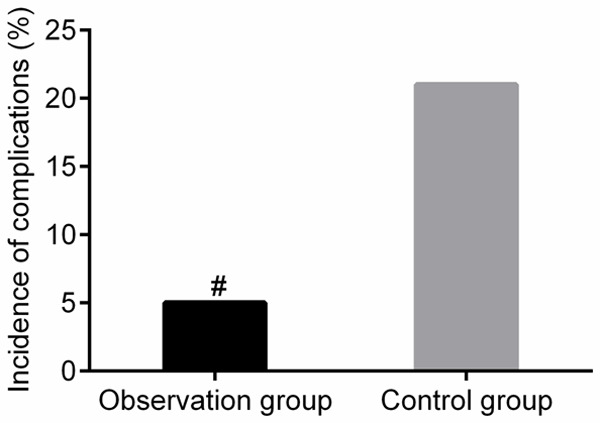
Results: The length of hospital stay of the observation group was significantly lower than that of the control group (P<0.05). The concentrations of K+ and Na+ in the control group 48 h after the operation were higher than those before the operation and than those in the observation group, while the concentration of Ca2+ was lower than that before the operation and that in the observation group (all P<0.05). The levels of Hb, RBC, and HCT in the control group 48 h after the operation were lower than those before the operation and those in the observation group (all P<0.05). The levels of WBC in the two groups 48 h after the operation were significantly higher, but those in the observation group were lower than those in the control group (all P<0.05). There were no significant changes in Pt, APTT, D-D, and FIB levels between the two groups. There were no significant changes in Pt, APTT, D-D, and FIB levels 48 hours after the operation compared with those before the operation (P>0.05). The incidence of postoperative complications caused by blood transfusion in the observation group was lower than that in the control group (P<0.05).
Conclusion: Storage autotransfusion can effectively balance the electrolyte level and reduce the incidence of complications in patients undergoing elective orthopedic surgery. This is worthy of clinical application.
Keywords: Stored autotransfusion; complications; elective orthopedic surgery; electrolytes.
AJTR Copyright © 2021.
Conflict of interest statement
None.
Figures
References
-
- Hulsebos H, Bernard J. Consider autotransfusion in the field. Mil Med. 2016;181:e945–7. - PubMed
-
- Chou MY, Wang YC, Peng LN, Liang CK, Chu CS, Liao MC, Lin YT, Hsu CJ, Chen LK. Intraoperative blood transfusion predicts postoperative delirium among older patients undergoing elective orthopedic surgery: a prospective cohort study. Int J Geriatr Psychiatry. 2019;34:881–888. - PubMed
LinkOut - more resources
Full Text Sources
Miscellaneous