


Glutamic acid decarboxylase 65-positive autoimmune encephalitis presenting with gelastic seizure, responsive to steroid: A case report
- PMID: 34307585
- PMCID: PMC8283609
- DOI: 10.12998/wjcc.v9.i19.5325
Glutamic acid decarboxylase 65-positive autoimmune encephalitis presenting with gelastic seizure, responsive to steroid: A case report
Abstract
Background: Anti-glutamic acid decarboxylase (GAD) antibody is known to cause several autoimmune-related situations. The most known relationship is that it may cause type I diabetes. In addition, it was also reported to result in several neurologic syndromes including stiff person syndrome, cerebellar ataxia, and autoimmune encephalitis. Decades ago, isolated epilepsy associated with anti-GAD antibody was first reported. Recently, the association between temporal lobe epilepsy and anti-GAD antibody has been discussed. Currently, with improvements in examination technique, many more autoimmune-related disorders can be diagnosed and treated easier than in the past.
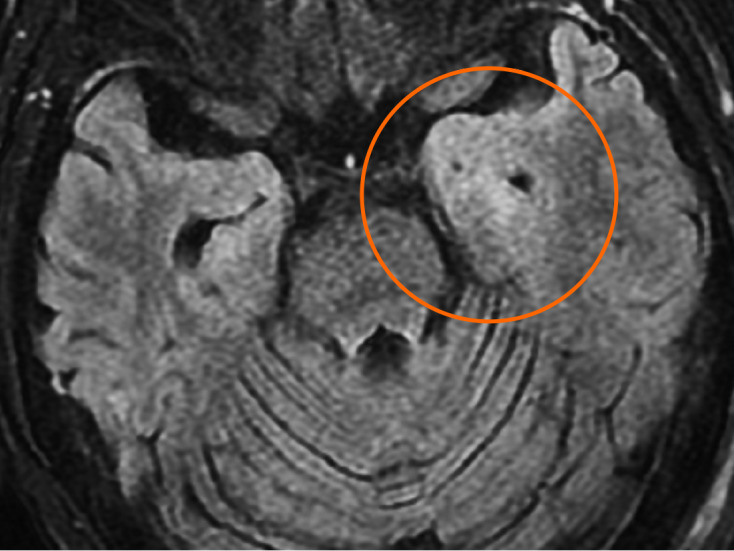
Case summary: A 44-year-old female Asian with a history of end-stage renal disease (without diabetes mellitus) under hemodialysis presented with diffuse abdominal pain. The initial diagnosis was peritonitis complicated with sepsis and paralytic ileus. Her peritonitis was treated and she recovered well, but seizure attack was noticed during hospitalization. The clinical impression was gelastic seizure with the presentation of frequent smiling, head turned to the right side, and eyes staring without focus; the duration was about 5-10 s. Temporal lobe epilepsy was recorded through electroencephalogram, and she was later diagnosed with anti-GAD65 antibody positive autoimmune encephalitis. Her seizure was treated initially with several anticonvulsants but with poor response. However, she showed excellent response to intravenous methylprednisolone pulse therapy. Her consciousness returned to normal, and no more seizures were recorded after 5 d of intravenous methylprednisolone treatment.
Conclusion: In any case presenting with new-onset epilepsy, in addition to performing routine brain imaging to exclude structural lesion and cerebrospinal fluid studies to exclude common etiologies of infection and inflammation, checking the autoimmune profile has to be considered. In the practice of modern medicine, autoimmune-related disorders are relatively treatable and should not be missed.
Keywords: Anti-GAD antibody; Autoimmune encephalitis; Case report; Electroencephalogram; GAD65 antibody; Gelastic seizure.
©The Author(s) 2021. Published by Baishideng Publishing Group Inc. All rights reserved.
Conflict of interest statement
Conflict-of-interest statement: All the authors have no conflict of interest related to the manuscript.
Figures

References
-
- Jazebi N, Rodrigo S, Gogia B, Shawagfeh A. Anti-glutamic acid decarboxylase (GAD) positive cerebellar Ataxia with transitioning to progressive encephalomyelitis with rigidity and myoclonus (PERM), responsive to immunotherapy: A case report and review of literature. J Neuroimmunol. 2019;332:135–137. - PubMed
-
- Liu Z, Huang Q, Li H, Qiu W, Chen B, Luo J, Yang H, Liu T, Liu S, Xu H, Long Y, Gao C. Glutamic Acid Decarboxylase Antibody in a Patient with Myelitis: A Retrospective Study. Neuroimmunomodulation. 2018;25:68–72. - PubMed
-
- Nemni R, Braghi S, Natali-Sora MG, Lampasona V, Bonifacio E, Comi G, Canal N. Autoantibodies to glutamic acid decarboxylase in palatal myoclonus and epilepsy. Ann Neurol. 1994;36:665–667. - PubMed
-
- Joubert B, Rostásy K, Honnorat J. Immune-mediated ataxias. Handb Clin Neurol. 2018;155:313–332. - PubMed
-
- Fileccia E, Rinaldi R, Liguori R, Incensi A, D'Angelo R, Giannoccaro MP, Donadio V. Post-ganglionic autonomic neuropathy associated with anti-glutamic acid decarboxylase antibodies. Clin Auton Res. 2017;27:51–55. - PubMed
Publication types
LinkOut - more resources
Full Text Sources
Miscellaneous
