


Pilot Study on Reducing Symptoms of Anxiety with a Heart Rate Variability Biofeedback Wearable and Remote Stress Management Coach
- PMID: 34308526
- PMCID: PMC8310680
- DOI: 10.1007/s10484-021-09519-x
Pilot Study on Reducing Symptoms of Anxiety with a Heart Rate Variability Biofeedback Wearable and Remote Stress Management Coach
Abstract
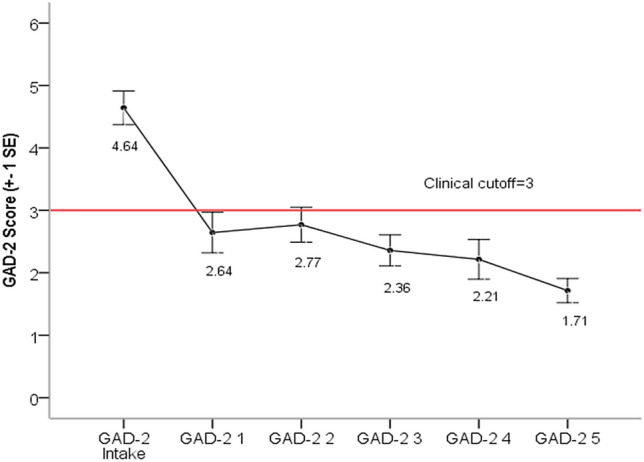
We assessed the feasibility of using a consumer friendly, heart rate variability biofeedback (HRVB) wearable device in conjunction with a remote stress management coach to reduce symptoms of anxiety. We utilized a discreet, continuously wearable electrocardiogram device, the Lief Smart Patch, which measures and records heart rate and HRV in real time, and guides HRVB exercises using vibrations and visual cues. During the 8-week study, participants (N = 14) wore the Lief Smart Patch, participated in HRVB with the device, utilized the mobile app, and communicated with a remote stress management coach. We collected self-report survey responses to measure symptoms of anxiety (GAD-2) and depression (PHQ-2) every 2 weeks, as well as HRV data throughout the study. Participants' mean GAD-2 score began at 4.6 out of 6. By the trial's completion, the group's mean GAD-2 score dropped to 1.7 (t(13) = 11.0, p < .001) with only 2 of the 14 subjects remaining over the clinical threshold of high anxiety. Similarly, the group's mean PHQ-2 score dropped from 2.93 to 1.29 (t(13) = 3.54, p < .01). In addition, participants increased their HRV (RMSSD) by an average of + 11.4 ms after participating in a low dose biofeedback exercise. These findings suggest that engaging in HRVB through a discreet wearable device in conjunction with a remote stress management program may be effective for reducing symptoms of anxiety and depression.
Keywords: Autonomic dysfunction; Heart rate variability biofeedback; Relaxation training; Symptoms of anxiety; Wearable electronic devices.
© 2021. The Author(s), under exclusive licence to Springer Science+Business Media, LLC, part of Springer Nature.
Conflict of interest statement
One author, Adrienne Chung, owns equity in Lief Therapeutics and is their Head of Behavioral Health Communication. The other authors declare that they have no conflict of interest.
Figures

References
-
- American Psychological Association . Patient health questionnaire (PHQ-9 & PHQ-2) American Psychological Association; 2020.
-
- American Psychiatric Association . Update on telehealth restrictions in response to COVID-19. American Psychiatric Association; 2020.
-
- Anxiety and Depression Association of America . Facts & statistics. Anxiety and Depression Association of America; 2020.
Publication types
MeSH terms
LinkOut - more resources
Full Text Sources
