


Insufficient evidence for vitamin D use in COVID-19: A rapid systematic review
- PMID: 34310814
- PMCID: PMC8420259
- DOI: 10.1111/ijcp.14649
Insufficient evidence for vitamin D use in COVID-19: A rapid systematic review
Abstract
Background: Vitamin D deficiency has been linked to the increased severity of numerous viral infections.
Objective: To assess whether vitamin D supplementation is safe and effective for the treatment of COVID-19.
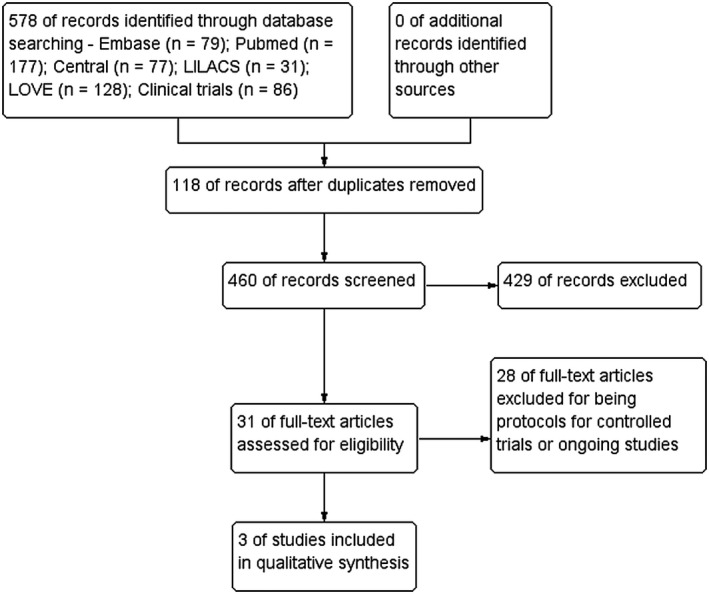
Methods: We searched MEDLINE, EMBASE, CENTRAL, LILACS and LOVE for randomised controlled trials (RCTs) published up to 2 March evaluating the effects of vitamin D for the treatment of coronavirus disease (COVID-19). Two authors selected the studies and analysed the data evidence following Cochrane Recommendations.
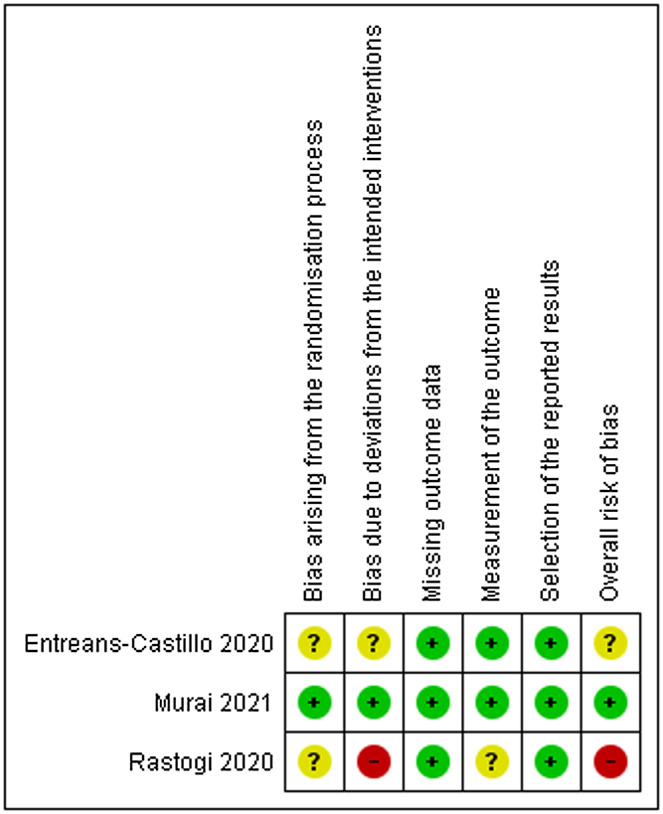
Results: We included three RCTs with a total of 385 participants. We found low certainty evidence indicating that hospitalised patients under calcifediol plus standard care (SC) treatment seem to present a significantly lower risk of being admitted to ICU but no difference in mortality. We found low to very low certainty evidence that the improvement in fibrinogen levels is slightly greater in mildly symptomatic or asymptomatic patients with COVID-19 that used cholecalciferol plus SC than in those treated with placebo plus SC (mean difference), and the patients who used cholecalciferol plus SC achieved more SARS-CoV-2 negativity, but not on d-dimer, c-reactive protein (CRP) or procalcitonin compared with the patients in the placebo plus SC group. We also found low to moderate certainty evidence that a single high dose of vitamin D does not seem to be effective for reducing mortality, length of hospital stay, ICU admissions and d-dimer or CRP levels when used in patients with moderate to severe COVID-19.
Conclusions: As a practical implication, the use of vitamin D associated with SC seems to provide some benefit to patients with COVID-19. However, the evidence is currently insufficient to support the routine use of vitamin D for the management of COVID-19, as its effectiveness seems to depend on the dosage, on the baseline vitamin D levels, and on the degree of COVID-19 severity.
© 2021 John Wiley & Sons Ltd.
Conflict of interest statement
None.
Figures












References
-
- World Health Organization . Coronavirus disease (COVID‐19). Weekly Epidemiological Update. Data as received by WHO from national authorities, as of 27 September 2020, 10 am CEST 2020. https://www.who.int/docs/default‐source/coronaviruse/situation‐reports/2...
Publication types
MeSH terms
Substances
LinkOut - more resources
Full Text Sources
Medical
Research Materials
Miscellaneous