


Late Type A Dissection After Transfemoral Aortic Valve Replacement
- PMID: 34317372
- PMCID: PMC8302056
- DOI: 10.1016/j.jaccas.2019.12.050
Late Type A Dissection After Transfemoral Aortic Valve Replacement
Abstract
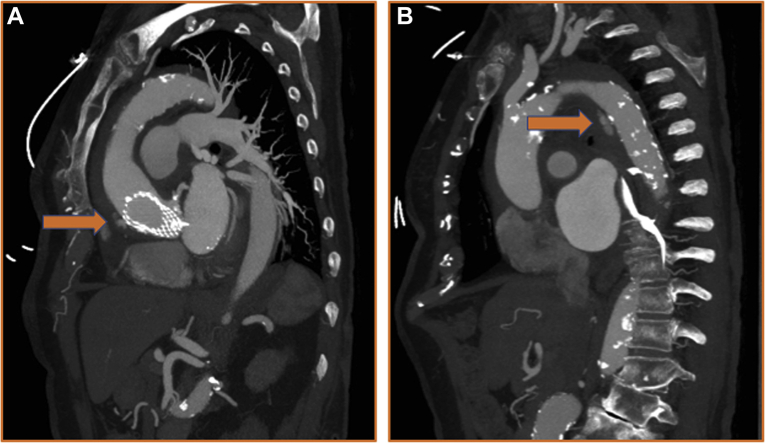
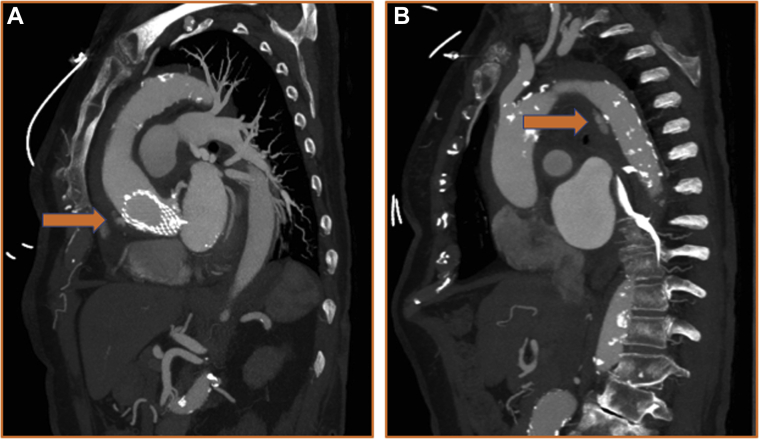
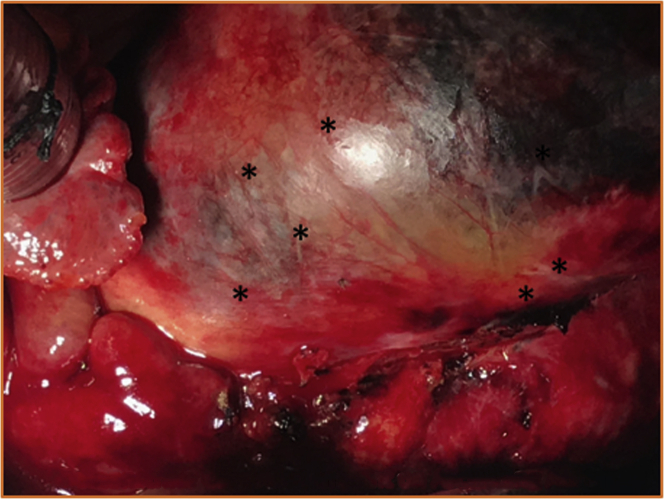
An 87-year-old woman had residual moderate to severe aortic insufficiency following transcatheter aortic valve replacement. A year later, she developed extensive Stanford type A aortic dissection originating at the supra-annular aortic edge of the transcatheter aortic valve replacement nitinol frame. Dissection repair, frozen elephant trunk with exclusion of prior insufficiency while preserving the transcatheter aortic valve replacement valve was performed. (Level of Difficulty: Beginner.).
Keywords: STS-PROM, Society of Thoracic Surgeons predicted risk of mortality; TAAD, Stanford type A aortic dissection; TAVR, transcatheter aortic valve replacement; TEVAR, thoracic endovascular aortic repair; aortic valve; dissection; stenosis.
© 2020 The Authors.
Figures
References
-
- Bonser R.S., Ranasinghe A.M., Loubani M. Evidence, lack of evidence, controversy, and debate in the provision and performance of the surgery of acute type A aortic dissection. J Am Coll Cardiol. 2011;58:2455–2474. - PubMed
-
- Berfield K.K., Sweet M.P., McCabe J.M. Endovascular repair for type A aortic dissection after transcatheter aortic valve replacement with a Medtronic CoreValve. Ann Thorac Surg. 2015;100:1444–1446. - PubMed
-
- Ong S.H., Mueller R., Gerckens U. Iatrogenic dissection of the ascending aorta during TAVI sealed with the CoreValve revalving prosthesis. Catheter Cardiovasc Interv. 2011;77:910–914. - PubMed
Publication types
LinkOut - more resources
Full Text Sources
