


Incorporating mucosal-associated invariant T cells into the pathogenesis of chronic liver disease
- PMID: 34321839
- PMCID: PMC8291028
- DOI: 10.3748/wjg.v27.i25.3705
Incorporating mucosal-associated invariant T cells into the pathogenesis of chronic liver disease
Abstract
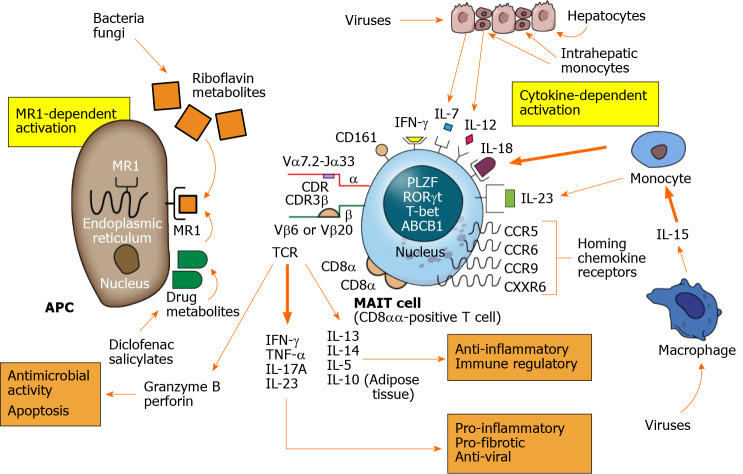
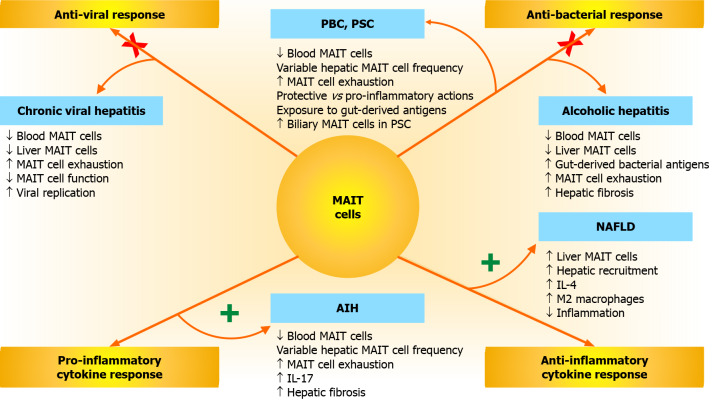
Mucosal-associated invariant T (MAIT) cells have been described in liver and non-liver diseases, and they have been ascribed antimicrobial, immune regulatory, protective, and pathogenic roles. The goals of this review are to describe their biological properties, indicate their involvement in chronic liver disease, and encourage investigations that clarify their actions and therapeutic implications. English abstracts were identified in PubMed by multiple search terms, and bibliographies were developed. MAIT cells are activated by restricted non-peptides of limited diversity and by multiple inflammatory cytokines. Diverse pro-inflammatory, anti-inflammatory, and immune regulatory cytokines are released; infected cells are eliminated; and memory cells emerge. Circulating MAIT cells are hyper-activated, immune exhausted, dysfunctional, and depleted in chronic liver disease. This phenotype lacks disease-specificity, and it does not predict the biological effects. MAIT cells have presumed protective actions in chronic viral hepatitis, alcoholic hepatitis, non-alcoholic fatty liver disease, primary sclerosing cholangitis, and decompensated cirrhosis. They have pathogenic and pro-fibrotic actions in autoimmune hepatitis and mixed actions in primary biliary cholangitis. Local factors in the hepatic microenvironment (cytokines, bile acids, gut-derived bacterial antigens, and metabolic by-products) may modulate their response in individual diseases. Investigational manipulations of function are warranted to establish an association with disease severity and outcome. In conclusion, MAIT cells constitute a disease-nonspecific, immune response to chronic liver inflammation and infection. Their pathological role has been deduced from their deficiencies during active liver disease, and future investigations must clarify this role, link it to outcome, and explore therapeutic interventions.
Keywords: Antimicrobial; Immune regulatory; Innate-like lymphocytes; Mucosal-associated invariant T cell; Pathogenic.
©The Author(s) 2021. Published by Baishideng Publishing Group Inc. All rights reserved.
Conflict of interest statement
Conflict-of-interest statement: The author has no conflict of interest.
Figures
References
-
- Gold MC, Cerri S, Smyk-Pearson S, Cansler ME, Vogt TM, Delepine J, Winata E, Swarbrick GM, Chua WJ, Yu YY, Lantz O, Cook MS, Null MD, Jacoby DB, Harriff MJ, Lewinsohn DA, Hansen TH, Lewinsohn DM. Human mucosal associated invariant T cells detect bacterially infected cells. PLoS Biol. 2010;8:e1000407. - PMC - PubMed
-
- Montano-Loza AJ, Czaja AJ. Cell mediators of autoimmune hepatitis and their therapeutic implications. Dig Dis Sci. 2015;60:1528–1542. - PubMed
Publication types
MeSH terms
Substances
LinkOut - more resources
Full Text Sources
Medical
