. 2019 Feb:7:41-48.
doi: 10.1016/j.cophys.2018.12.008. Epub 2018 Dec 28.

Molecular mechanisms of retinal ischemia

Affiliations

Molecular mechanisms of retinal ischemia

Seth D Fortmann et al. Curr Opin Physiol. 2019 Feb.

Abstract

Each day, the retina converts an immense number of photons into chemical signals that are then transported to higher order neural centers for interpretation. This process of photo transduction requires large quantities of cellular energy and anabolic precursors, making the retina one of the most metabolically active tissues in the body. With such a large metabolic demand, the retina is understandably sensitive to perturbations in perfusion and hypoxia. Indeed, retinal ischemia underlies many prevalent retinal disorders including diabetic retinopathy (DR), retinal vein occlusion (RVO), and retinopathy of prematurity (ROP). Retinal ischemia leads to the expression of growth factors, cytokines, and other cellular mediators which promote inflammation, vascular dysfunction, and ultimately, vision loss. This review aims to highlight the most recent and compelling findings that have advanced our understanding of the molecular mechanisms underlying retinal ischemias.


Conflict of interest statement

Conflict of interest statement Nothing declared.

Figures
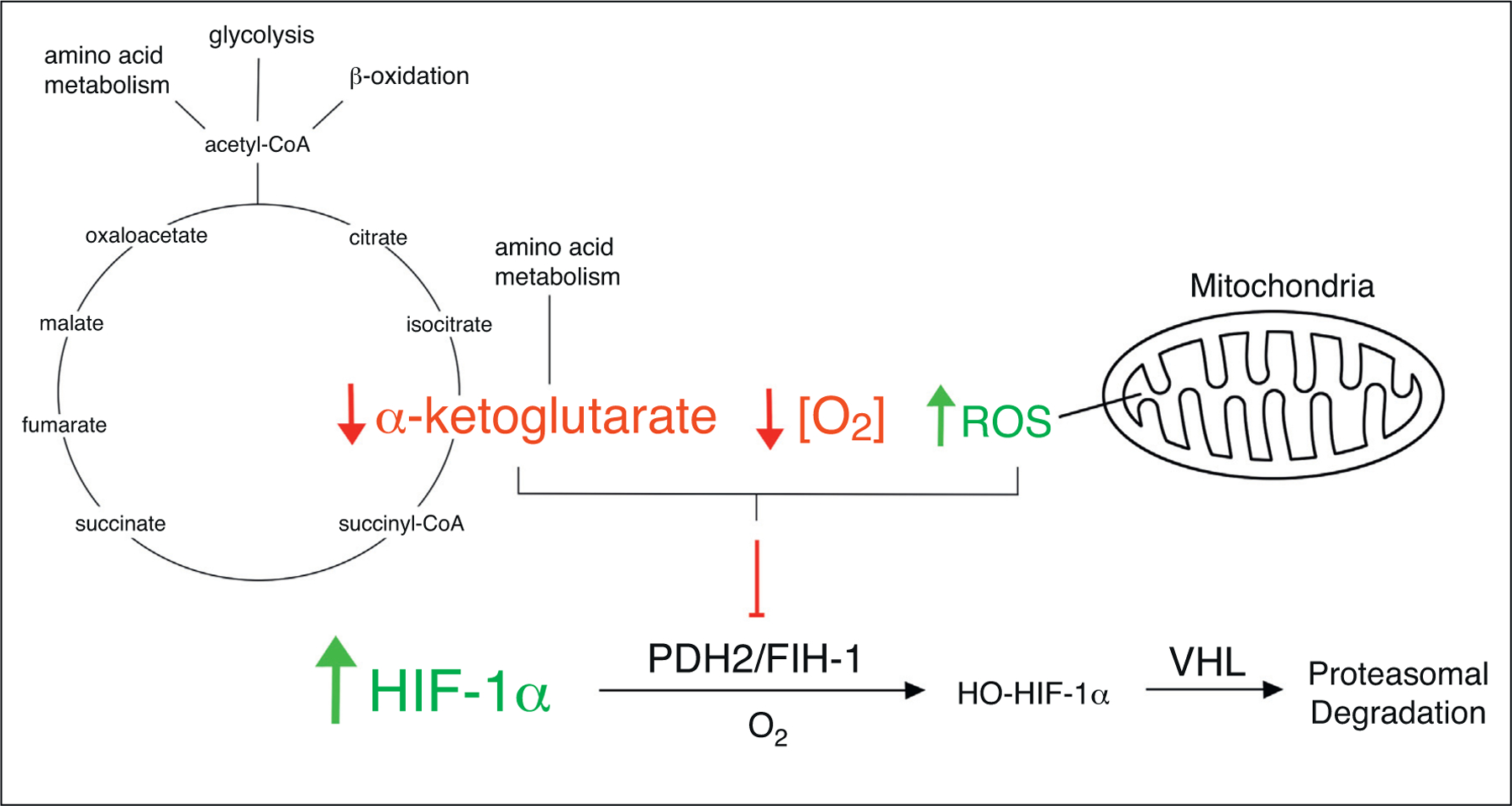
Figure 1
Figure 1
Molecular mechanisms regulating HIF activation. All metazoans share an evolutionarily conserved heterodimer system known as hypoxia-inducible factor 1 (HIF-1) which indirectly senses intracellular oxygen concentrations and acts as a transcription factor to initiate a cellular response to hypoxia. HIF-1 consists of two subunits, HIF-1α and HIF-1β, both of which are constitutively expressed at the transcriptional and translational levels. Regulation of the HIF-1 heterodimer system primarily occurs through post-translational modifications of HIF-1α which is hydroxylated by the prolyl hydroxylase PHD2 and the asparaginyl hydroxylase FIH-1. Hydroxylated HIF-1α binds von Hippel-Lindau (VHL) which recruits ubiquitin ligases and targets HIF-1α for proteasomal degradation. PHD2 and FIH-1-mediated hydroxylation of HIF-1α utilizes O2 as a substrate and is thus limited by the availability of oxygen, providing a real-time sensor of intracellular O2 concentrations. During hypoxia, HIF-1α hydroxylation is inhibited, preventing its degradation and allowing heterodimerization with HIF-1β. This unit directly interacts with DNA at hypoxia response elements (HREs) and induces the transcription of a diverse set of genes including those involved in angiogenesis, metabolism, and inflammation [7]. In PHD2 and FIH-1-mediated hydroxylation of HIF-1α, one oxygen atom is inserted into HIF-1α while the remaining oxygen atom is inserted into α-ketoglutarate, splitting it into CO2 and succinate. Thus, independent of hypoxia, reduced α-ketoglutarate levels can act as a limiting reagent in the hydroxylation of HIF-1α, leading to its activation. In addition, increased mitochondrial-derived ROS can inhibit hydroxylation of HIF-1α through an unknown mechanism, leading to its activation.
Figure 2
Figure 2
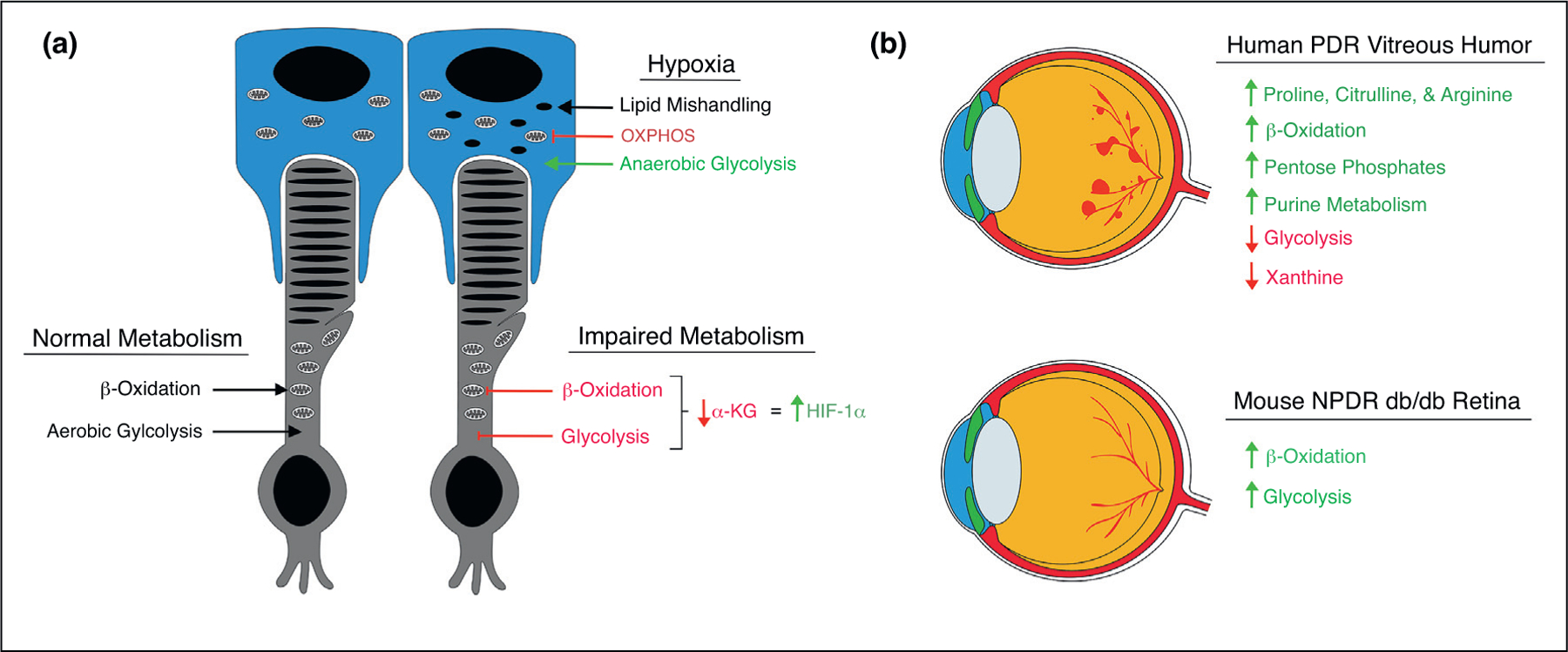
Novel insights into the metabolic alterations in retinal ischemias. (a) In the normal state, photoreceptors (depicted here in grey) rely on aerobic glycolysis for synthesis of anabolic precursors and β-oxidation for production of ATP. When both β-oxidation and glycolysis are impaired, as in Vldlr−/− mice, α-ketogluterate levels are reduced leading to activation of HIF-1α and subsequent neovascularization. In pseudohypoxic RPE cells (depicted here in blue), β-oxidation regulatory proteins are reduced and long-chain acylcarnitines aggregate, suggesting impaired lipid handling. In addition, TCA cycle enzymes are downregulated and glycolytic enzymes are increased, suggesting a shift to anaerobic glycolysis. (b) Metabolomic studies on vitreous humor from PDR patients (depicted here as upper eye) revealed several metabolic alterations including increased proline, citrulline, arginine, acylcarnitines, pentose phosphates, and purine intermediates, and decreased glycolytic intermediates and xanthine. Metabolomic analysis of retinas from diabetic db/db mice (depicted here as lower eye) revealed increased acylcarnitines and glycolytic metabolites.
Figure 3
Figure 3
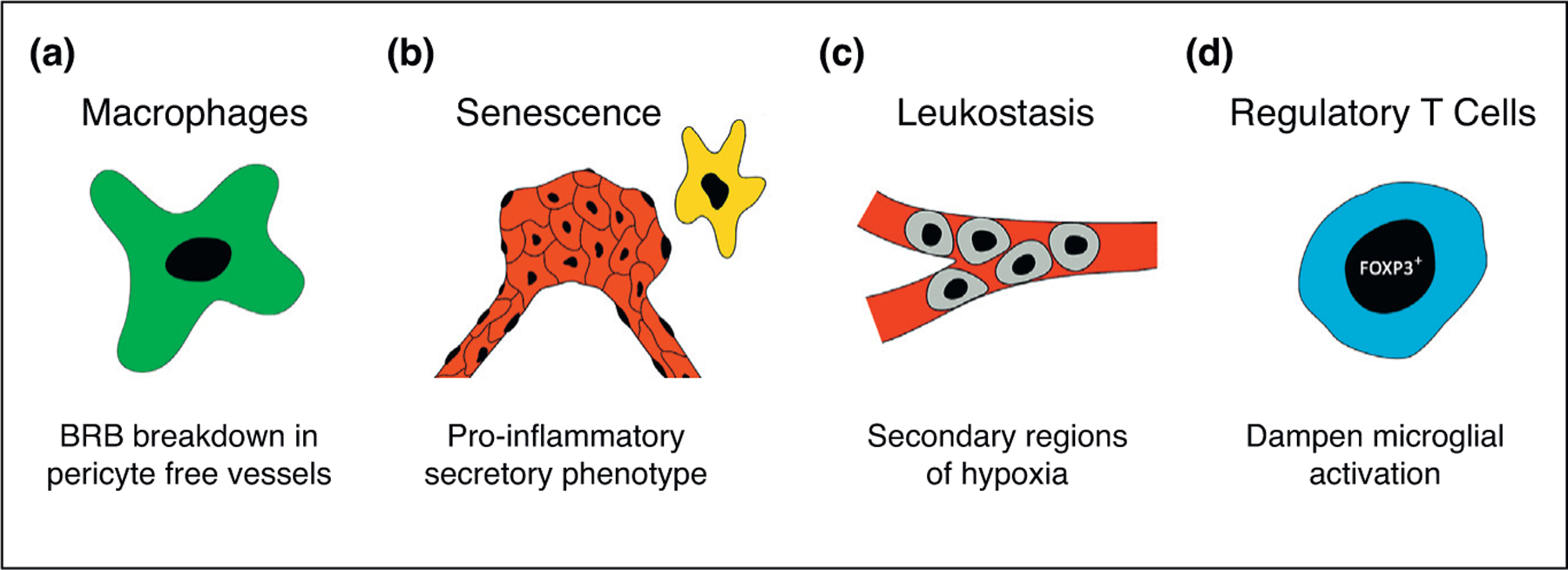
Novel insights into the inflammatory responses to retinal ischemias. (a) CD45hi CD11b+ macrophages are increased in mouse retinas with pericyte free vessels and promote vascular dysfunction through paracrine growth factor release. (b) Neovascular endothelial cells and microglia enter a senescent-like state in hypoxic mouse retinas and develop a pro-inflammatory secretory phenotype. (c) Leukostasis-mediated vascular plugging occurs in response to increased retinal VEGF and results in secondary regions of retinal hypoxia. (d) FOXP3+ Tregs improve vascular dysfunction in hypoxic mouse retinas by decreasing microglial activation via direct cell contact.
Figure 4
Figure 4
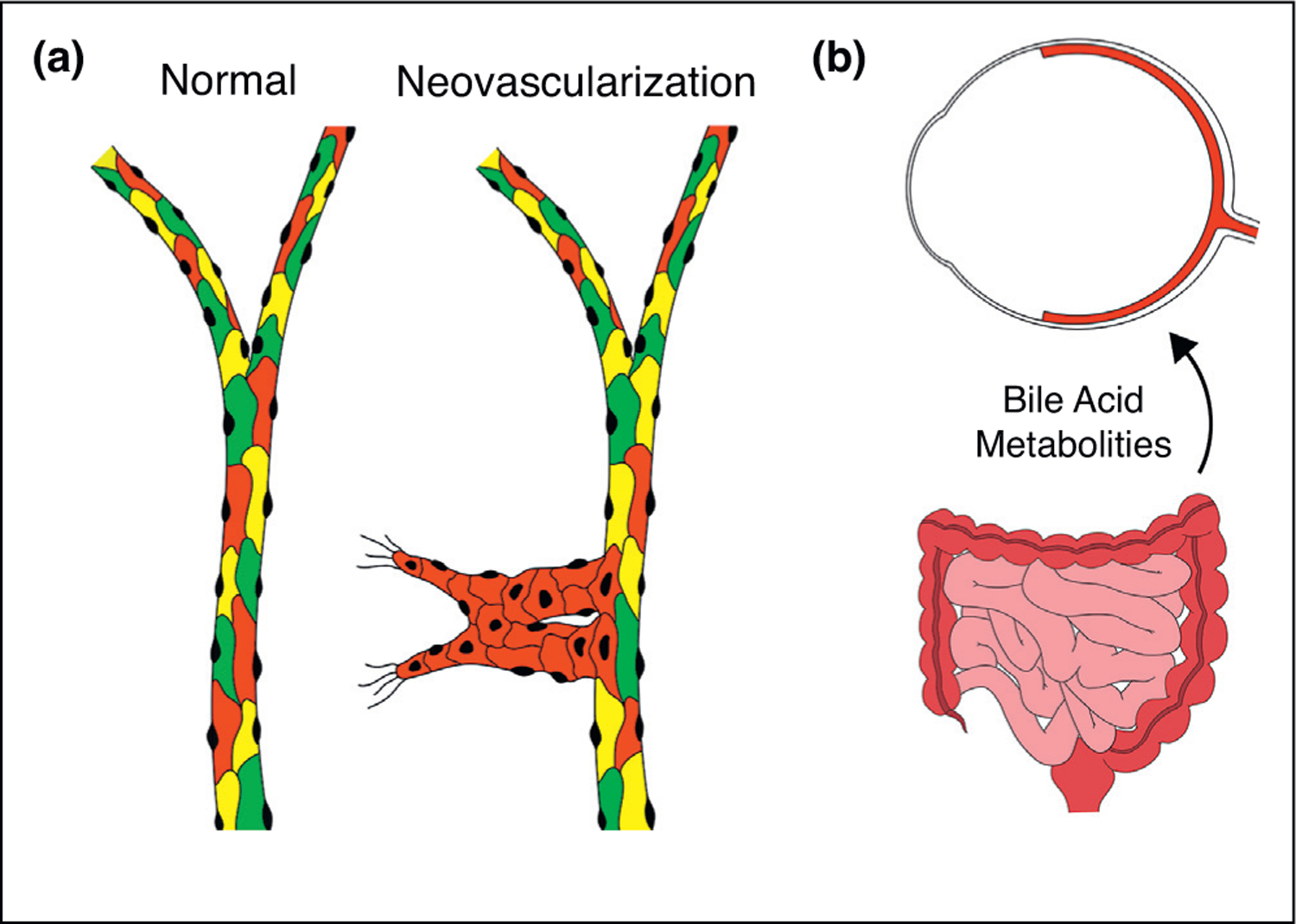
Novel insights into vascular dysfunction in retinal ischemias. (a) Normal retinal vasculature is composed of a heterogeneous assortment of ECs while neovascularization is homogenous and composed of clonally expanded ECs originating from a previously quiescent EC. (b) Changes in gut flora, induced by intermittent fasting, alters BA metabolism, leading to increased TUDCA. TUDCA travels via the blood to the neural retina where it signals through its cognate receptor and protects the retinal vasculature.

References

    1. Epstein Andrew CR, Gleadle Jonathan M, McNeill Luke A, Hewitson Kirsty S, O’Rourke John, Mole David R, Mukherji Mridul et al.: C. elegans EGL-9 and mammalian homologs define a family of dioxygenases that regulate HIF by prolyl hydroxylation. Cell 2001, 107:43–54 10.1016/S0092-8674(01)00507-4. - DOI - PubMed
    1. Kaelin WG: Cancer and altered metabolism: potential importance of hypoxia-inducible factor and 2-oxoglutarate-dependent dioxygenases. Cold Spring Harbor Symp Quant Biol 2011, 76:335–345 10.1101/sqb.2011.76.010975. - DOI - PMC - PubMed
    1. Zhao S, Lin Y, Xu W, Jiang W, Zha Z, Wang P, Yu W et al.: Glioma-derived mutations in IDH1 dominantly inhibit IDH1 catalytic activity and induce HIF-1. Science 2009, 324:261–265 10.1126/science.1170944. - DOI - PMC - PubMed
    1. Tormos Kathryn V, Chandel Navdeep S: Inter-connection between mitochondria and HIFs. J Cell Mol Med 2010, 14:795–804 10.1111/j.1582-4934.2010.01031.x. - DOI - PMC - PubMed
    1. Hamanaka Robert B, Weinberg Samuel E, Reczek Colleen R, Chandel Navdeep S: The mitochondrial respiratory chain is required for organismal adaptation to hypoxia. Cell Rep 2016, 15:451–459 10.1016/j.celrep.2016.03.044. - DOI - PMC - PubMed

LinkOut - more resources