


Vitamin D, infections and immunity
- PMID: 34322844
- PMCID: PMC8318777
- DOI: 10.1007/s11154-021-09679-5
Vitamin D, infections and immunity
Abstract
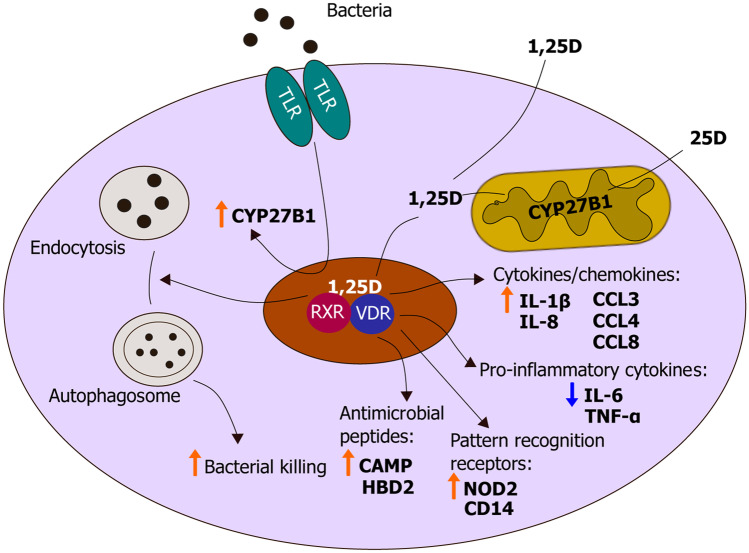
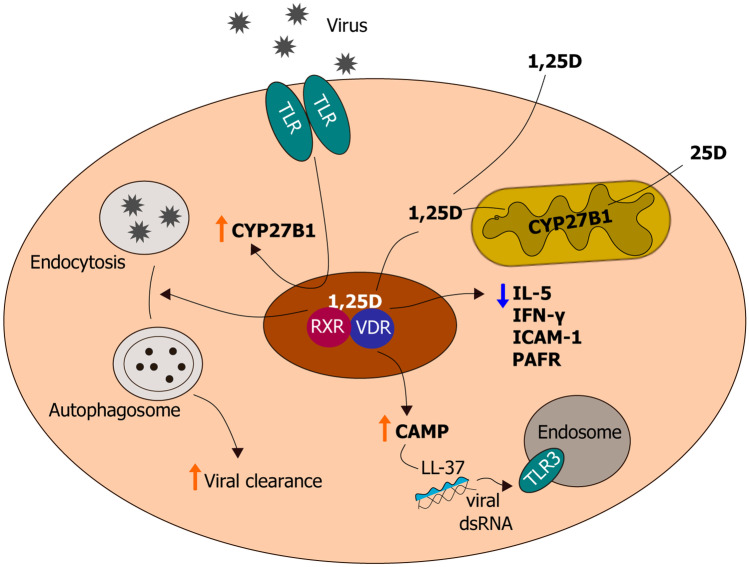
Vitamin D, best known for its role in skeletal health, has emerged as a key regulator of innate immune responses to microbial threat. In immune cells such as macrophages, expression of CYP27B1, the 25-hydroxyvitamin D 1α-hydroxylase, is induced by immune-specific inputs, leading to local production of hormonal 1,25-dihydroxyvitamin D (1,25D) at sites of infection, which in turn directly induces the expression of genes encoding antimicrobial peptides. Vitamin D signaling is active upstream and downstream of pattern recognition receptors, which promote front-line innate immune responses. Moreover, 1,25D stimulates autophagy, which has emerged as a mechanism critical for control of intracellular pathogens such as M. tuberculosis. Strong laboratory and epidemiological evidence links vitamin D deficiency to increased rates of conditions such as dental caries, as well as inflammatory bowel diseases arising from dysregulation of innate immune handling intestinal flora. 1,25D is also active in signaling cascades that promote antiviral innate immunity; 1,25D-induced expression of the antimicrobial peptide CAMP/LL37, originally characterized for its antibacterial properties, is a key component of antiviral responses. Poor vitamin D status is associated with greater susceptibility to viral infections, including those of the respiratory tract. Although the severity of the COVID-19 pandemic has been alleviated in some areas by the arrival of vaccines, it remains important to identify therapeutic interventions that reduce disease severity and mortality, and accelerate recovery. This review outlines of our current knowledge of the mechanisms of action of vitamin D signaling in the innate immune system. It also provides an assessment of the therapeutic potential of vitamin D supplementation in infectious diseases, including an up-to-date analysis of the putative benefits of vitamin D supplementation in the ongoing COVID-19 crisis.
Keywords: Antibacterial; Antiviral; COVID-19; Cathelicidin; Inflammation; NOD2; Vitamin D; β-defensin 2.
© 2021. The Author(s).
Conflict of interest statement
The authors have declared that no conflict of interest exists.
Figures
References
-
- Tavera-Mendoza LE, White JH. Cell defenses and the sunshine vitamin. Sci Am. 2007;297(5):62–5, 8–70, 2. - PubMed
-
- Pettifor JM, Thandrayen K, Thacher TD. Chapter 67 - Vitamin D Deficiency and Nutritional Rickets in Children. In: Feldman D, editor. Vitamin D (Fourth Edition): Academic Press; 2018. p. 179–201.
-
- Gonzalez-Gross M, Valtuena J, Breidenassel C, Moreno LA, Ferrari M, Kersting M, et al. Vitamin D status among adolescents in Europe: the Healthy Lifestyle in Europe by Nutrition in Adolescence study. Br J Nutr. 2012;107(5):755–764. - PubMed
Publication types
MeSH terms
Substances
Grants and funding
LinkOut - more resources
Full Text Sources
Medical
