


Post-intensive care syndrome after a critical COVID-19: cohort study from a Belgian follow-up clinic
- PMID: 34324073
- PMCID: PMC8319705
- DOI: 10.1186/s13613-021-00910-9
Post-intensive care syndrome after a critical COVID-19: cohort study from a Belgian follow-up clinic
Abstract
Purpose: Many patients with coronavirus disease 2019 (COVID-19) required critical care. Mid-term outcomes of the survivors need to be assessed. The objective of this single-center cohort study was to describe their physical, cognitive, psychological, and biological outcomes at 3 months following intensive care unit (ICU)-discharge (M3).
Patients and methods: All COVID-19 adults who survived an ICU stay ≥ 7 days and attended the M3 consultation at our multidisciplinary follow-up clinic were involved. They benefited from a standardized assessment, addressing health-related quality of life (EQ-5D-3L), sleep disorders (PSQI), and the three principal components of post-intensive care syndrome (PICS): physical status (Barthel index, handgrip and quadriceps strength), mental health disorders (HADS and IES-R), and cognitive impairment (MoCA). Biological parameters referred to C-reactive protein and creatinine.
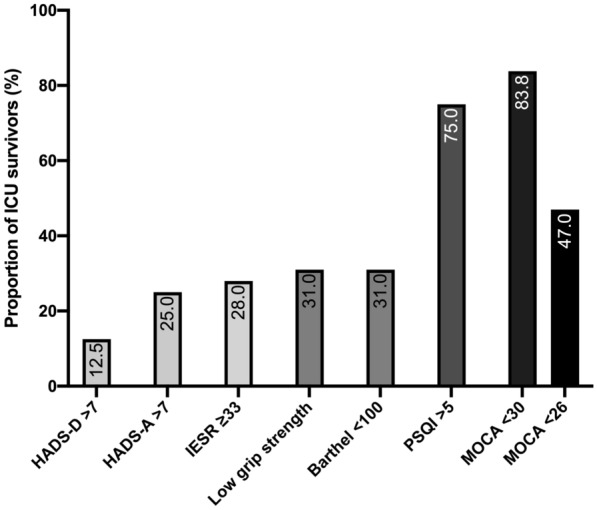
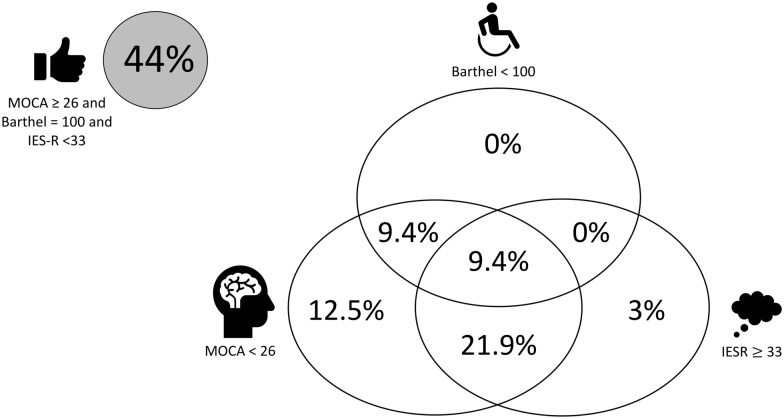
Results: Among the 92 patients admitted to our ICU for COVID-19, 42 survived a prolonged ICU stay and 32 (80%) attended the M3 follow-up visit. Their median age was 62 [49-68] years, 72% were male, and nearly half received inpatient rehabilitation following ICU discharge. At M3, 87.5% (28/32) had not regained their baseline level of daily activities. Only 6.2% (2/32) fully recovered, and had normal scores for the three MoCA, IES-R and Barthel scores. The main observed disorders were PSQI > 5 (75%, 24/32), MoCA < 26 (44%, 14/32), Barthel < 100 (31%, 10/32) and IES-R ≥ 33 (28%, 9/32). Combined disorders were observed in 13/32 (40.6%) of the patients. The EQ-5D-3L visual scale was rated at 71 [61-80]. A quarter of patients (8/32) demonstrated a persistent inflammation based on CRP blood level (9.3 [6.8-17.7] mg/L).
Conclusion: The burden of severe COVID-19 and prolonged ICU stay was considerable in the present cohort after 3 months, affecting both functional status and biological parameters. These data are an argument on the need for closed follow-up for critically ill COVID-19 survivors.
Keywords: Activities of daily living; COVID-19; Cognitive impairment; Critical care; Critical illness; Health-related quality of life; Outcome assessment; Post-intensive care syndrome; Post-traumatic stress disorder; Sleep; Survivors; Survivorship.
© 2021. The Author(s).
Conflict of interest statement
All authors declare that they have no competing interests.
Figures

References
LinkOut - more resources
Full Text Sources
Research Materials
Miscellaneous
