


Drug delivery to the anterior segment of the eye: A review of current and future treatment strategies
- PMID: 34324989
- PMCID: PMC8579814
- DOI: 10.1016/j.ijpharm.2021.120924
Drug delivery to the anterior segment of the eye: A review of current and future treatment strategies
Abstract
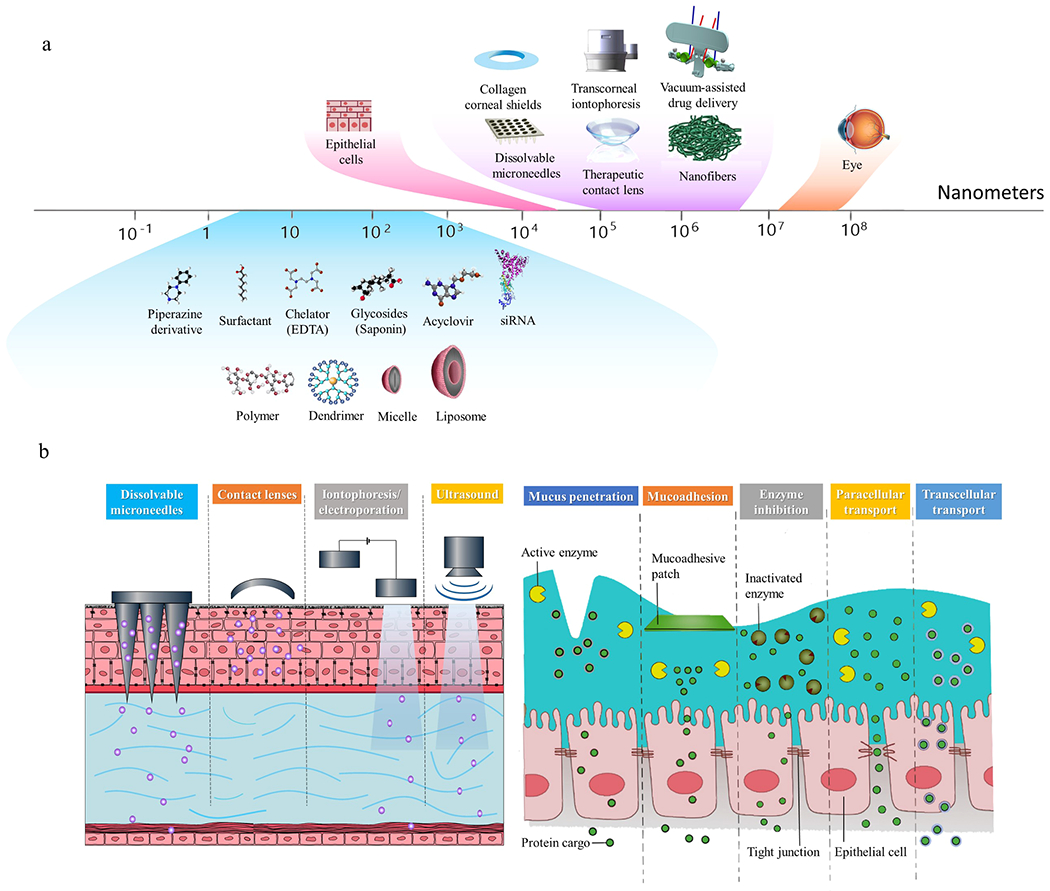
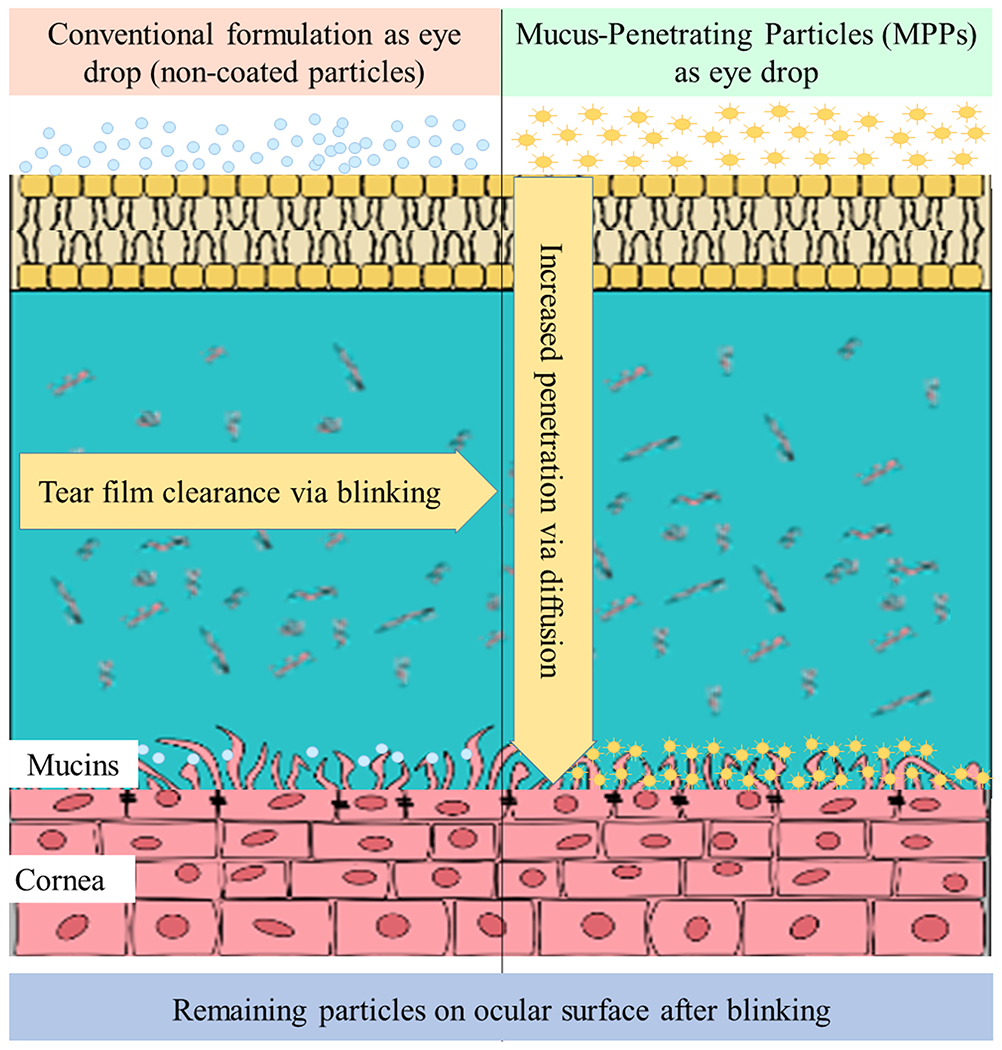
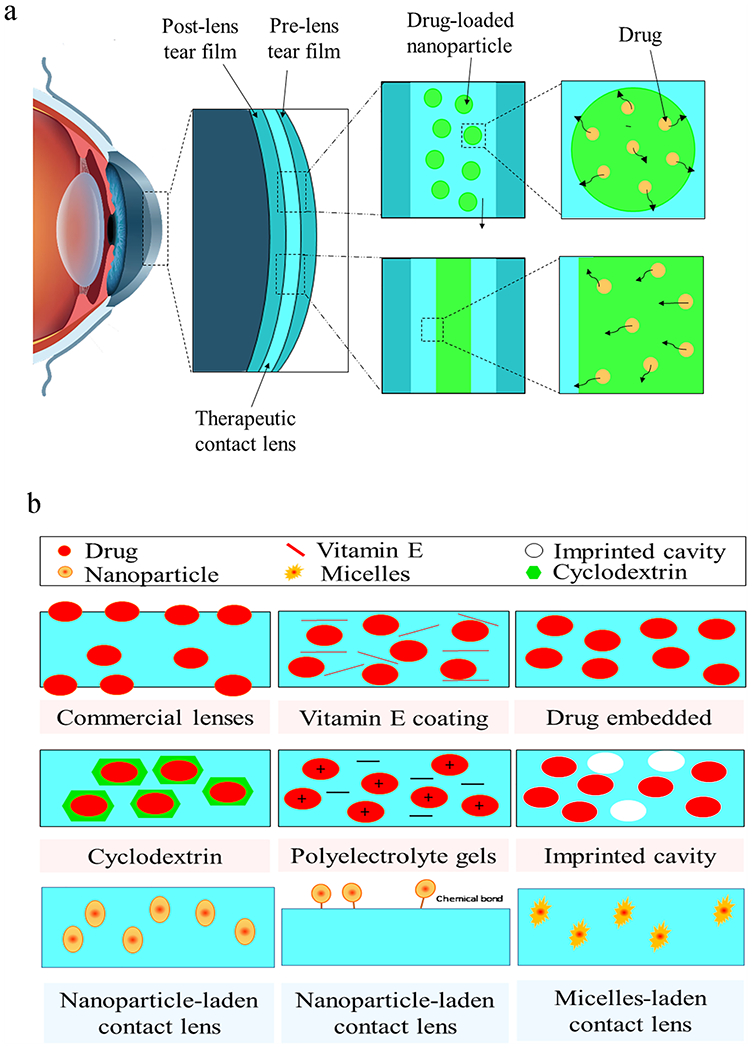
Research in the development of ophthalmic drug formulations and innovative technologies over the past few decades has been directed at improving the penetration of medications delivered to the eye. Currently, approximately 90% of all ophthalmic drug formulations (e.g. liposomes, micelles) are applied as eye drops. The major challenge of topical eye drops is low bioavailability, need for frequent instillation due to the short half-life, poor drug solubility, and potential side effects. Recent research has been focused on improving topical drug delivery devices by increasing ocular residence time, overcoming physiological and anatomical barriers, and developing medical devices and drug formulations to increase the duration of action of the active drugs. Researchers have developed innovative technologies and formulations ranging from sub-micron to macroscopic size such as prodrugs, enhancers, mucus-penetrating particles (MPPs), therapeutic contact lenses, and collagen corneal shields. Another approach towards the development of effective topical drug delivery is embedding therapeutic formulations in microdevices designed for sustained release of the active drugs. The goal is to optimize the delivery of ophthalmic medications by achieving high drug concentration with prolonged duration of action that is convenient for patients to administer.
Keywords: Cornea-conjunctiva barrier; Formulations; Ocular; Ophthalmic drug-delivery.
Copyright © 2021 Elsevier B.V. All rights reserved.
Conflict of interest statement
Declaration of Competing Interest
The authors declare that they have no known competing financial interests or personal relationships that could have appeared to influence the work reported in this paper.
Figures
References
-
- Addo RT (Ed.), 2016. Ocular Drug Delivery: Advances, Challenges and Applications. Springer International Publishing, Cham.
-
- Agarwal R, Iezhitsa I, Agarwal P, Abdul Nasir NA, Razali N, Alyautdin R, Ismail NM, 2016. Liposomes in topical ophthalmic drug delivery: an update. Drug Delivery 23 (4), 1075–1091. - PubMed
-
- Ahadian S, Finbloom JA, Mofidfar M, Diltemiz SE, Nasrollahi F, Davoodi E, Hosseini V, Mylonaki I, Sangabathuni S, Montazerian H, Fetah K, Nasiri R, Dokmeci MR, Stevens MM, Desai TA, Khademhosseini A, 2020. Micro and nanoscale technologies in oral drug delivery. Adv. Drug Deliv. Rev 157, 37–62. - PMC - PubMed
-
- Ahmed I, Gokhale RD, Shah MV, Patton TF, 1987. Physicochemical determinants of drug diffusion across the conjunctiva, sclera, and cornea. J. Pharm. Sci 76 (8), 583–586. - PubMed
Publication types
MeSH terms
Substances
Grants and funding
LinkOut - more resources
Full Text Sources
Miscellaneous
