


Novel approaches in schizophrenia-from risk factors and hypotheses to novel drug targets
- PMID: 34327122
- PMCID: PMC8311514
- DOI: 10.5498/wjp.v11.i7.277
Novel approaches in schizophrenia-from risk factors and hypotheses to novel drug targets
Abstract
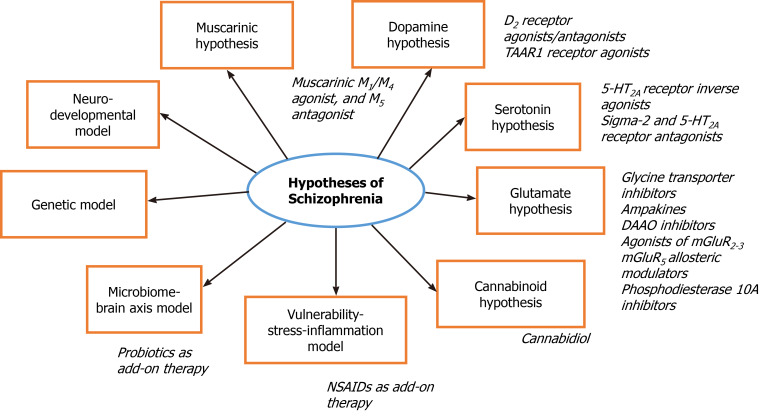
Schizophrenia is a severe psychiatric disorder characterized by emotional, behavioral and cognitive disturbances, and the treatment of schizophrenia is often complicated by noncompliance and pharmacoresistance. The search for the pathophysiological mechanisms underlying schizophrenia has resulted in the proposal of several hypotheses to explain the impacts of environmental, genetic, neurodevelopmental, immune and inflammatory factors on disease onset and progression. This review discusses the newest insights into the pathophysiology of and risk factors for schizophrenia and notes novel approaches in antipsychotic treatment and potential diagnostic and theranostic biomarkers. The current hypotheses focusing on neuromediators (dopamine, glutamate, and serotonin), neuroinflammation, the cannabinoid hypothesis, the gut-brain axis model, and oxidative stress are summarized. Key genetic features, including small nucleotide polymorphisms, copy number variations, microdeletions, mutations and epigenetic changes, are highlighted. Current pharmacotherapy of schizophrenia relies mostly on dopaminergic and serotonergic antagonists/partial agonists, but new findings in the pathophysiology of schizophrenia have allowed the expansion of novel approaches in pharmacotherapy and the establishment of more reliable biomarkers. Substances with promising results in preclinical and clinical studies include lumateperone, pimavanserin, xanomeline, roluperidone, agonists of trace amine-associated receptor 1, inhibitors of glycine transporters, AMPA allosteric modulators, mGLUR2-3 agonists, D-amino acid oxidase inhibitors and cannabidiol. The use of anti-inflammatory agents as an add-on therapy is mentioned.
Keywords: Add-on therapy; Genetics; Immune system; Inflammation; Novel antipsychotics; Schizophrenia.
©The Author(s) 2021. Published by Baishideng Publishing Group Inc. All rights reserved.
Conflict of interest statement
Conflict-of-interest statement: Authors declare that there is no conflict of interest regarding the publication of this article.
Figures
References
-
- Bebawy M, Chetty M. Differential pharmacological regulation of drug efflux and pharmacoresistant schizophrenia. Bioessays . 2008;30:183–188. - PubMed
-
- Nordström AL, Farde L, Wiesel FA, Forslund K, Pauli S, Halldin C, Uppfeldt G. Central D2-dopamine receptor occupancy in relation to antipsychotic drug effects: a double-blind PET study of schizophrenic patients. Biol Psychiatry . 1993;33:227–235. - PubMed
Publication types
LinkOut - more resources
Full Text Sources
