


Jumping into a Healthier Future: Trampolining for Increasing Physical Activity in Children
- PMID: 34328569
- PMCID: PMC8324653
- DOI: 10.1186/s40798-021-00335-5
Jumping into a Healthier Future: Trampolining for Increasing Physical Activity in Children
Abstract
Objectives: Physical activity in children and adolescents has positive effects on cardiopulmonary function in this age group as well as later in life. As poor cardiopulmonary function is associated with higher mortality and morbidity, increasing physical activity especially in children needs to become a priority. Trampoline jumping is widely appreciated in children. The objective was to investigate its use as a possible training modality.
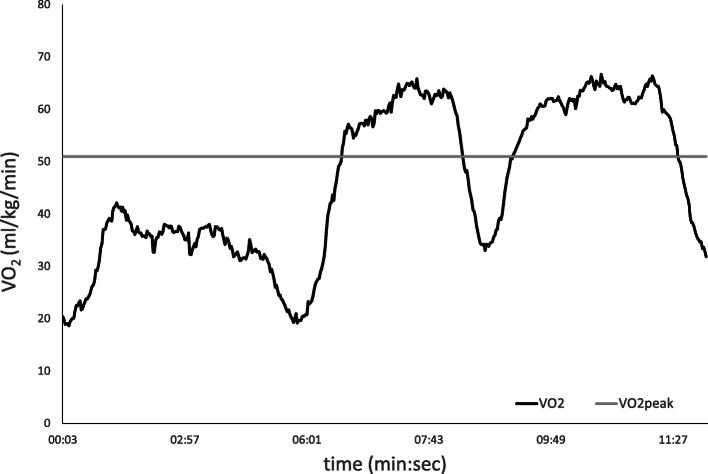
Methods: Fifteen healthy children (10 boys and 5 girls) with a mean age of 8.8 years undertook one outdoor incremental running test using a mobile cardiopulmonary exercise testing unit. After a rest period of at least 2 weeks, a trampoline test using the mobile unit was realized by all participants consisting of a 5-min interval of moderate-intensity jumping and two high-intensity intervals with vigorous jumping for 2 min, interspersed with 1-min rests.
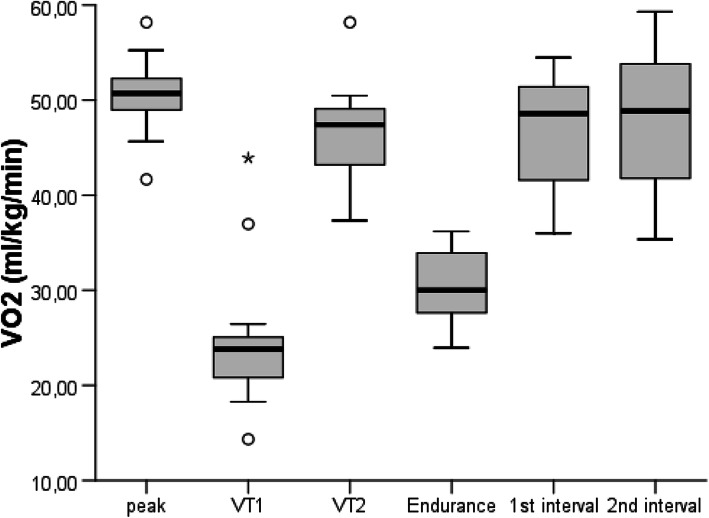
Results: During the interval of moderate intensity, the children achieved [Formula: see text]-values slightly higher than the first ventilatory threshold (VT1) and during the high-intensity interval comparable to the second ventilatory threshold (VT2) of the outdoor incremental running test. They were able to maintain these values for the duration of the respective intervals. The maximum values recorded during the trampoline test were significantly higher than during the outdoor incremental running test.
Conclusion: Trampoline jumping is an adequate tool for implementing high-intensity interval training as well as moderate-intensity continuous training in children. As it is a readily available training device and is greatly enjoyed in this age group, it could be implemented in exercise interventions.
Keywords: Cardiopulmonary function; Children; Exercise testing; Pediatric cardiology; Pediatrics; Physical activity; Rehabilitation; Training; Training modalities.
© 2021. The Author(s).
Conflict of interest statement
The authors, Isabelle Schöffl, Benedikt Ehrlich, Kathrin Rottermann, Annika Weigelt, Sven Dittrich, and Volker Schöffl, declare that they have no competing interests.
Figures
References
-
- Ross R, Blair SN, Arena R, Church TS, Despres JP, Franklin BA, et al. Importance of assessing cardiorespiratory fitness in clinical practice: a case for fitness as a clinical vital sign: a scientific statement from the American Heart Association. Circulation. 2016;134(24):e653–ee99. doi: 10.1161/CIR.0000000000000461. - DOI - PubMed
LinkOut - more resources
Full Text Sources
Research Materials
