Social determinants associated with Zika virus infection in pregnant women
- PMID: 34329305
- PMCID: PMC8323902
- DOI: 10.1371/journal.pntd.0009612
Social determinants associated with Zika virus infection in pregnant women
Abstract
This study aims to describe the sociodemographic determinants associated with exposure to Zika Virus (ZIKV) in pregnant women during the 2015-2016 epidemic in Salvador, Brazil.
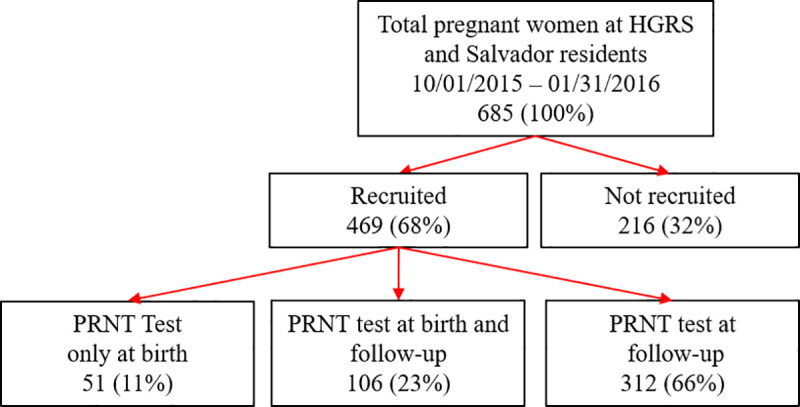
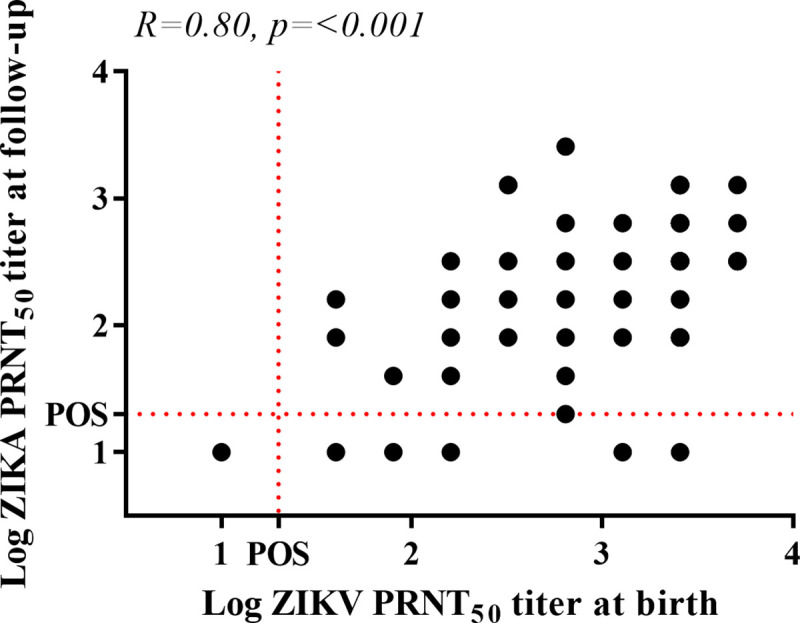
Methods: We recruited women who gave birth between October 2015 and January 2016 to a cross-sectional study at a referral maternity hospital in Salvador, Brazil. We collected information on their demographic, socioeconomic, and clinical characteristics, and evaluated their ZIKV exposure using a plaque reduction neutralization test. Logistic regression was then used to assess the relationship between these social determinants and ZIKV exposure status.
Results: We included 469 pregnant women, of whom 61% had a positive ZIKV result. Multivariate analysis found that lower education (adjusted Prevalence Rate [aPR] 1.21; 95%CI 1.04-1.35) and food insecurity (aPR 1.17; 95%CI 1.01-1.30) were positively associated with ZIKV exposure. Additionally, age was negatively associated with the infection risk (aPR 0.99; 95%CI 0.97-0.998).
Conclusion: Eve after controlling for age, differences in key social determinants, as education and food security, were associated with the risk of ZIKV infection among pregnant women in Brazil. Our findings elucidate risk factors that can be targeted by future interventions to reduce the impact of ZIKV infection in this vulnerable population.
Conflict of interest statement
The authors declare that there is no conflict of interest.
Figures
References
-
- Besnard M, Lastere S, Teissier A, Cao-Lormeau V, Musso D. Evidence of perinatal transmission of Zika virus, French Polynesia, December 2013 and February 2014. Euro Surveill. 2014;19. Available: https://www.ncbi.nlm.nih.gov/pubmed/24721538 - PubMed
-
- Countries and territories with current or previous Zika virus transmission. [cited 28 Oct 2020]. Available: https://www.who.int/emergencies/diseases/zika/countries-with-zika-and-ve...
Publication types
MeSH terms
Grants and funding
LinkOut - more resources
Full Text Sources
Medical
Miscellaneous