


Noninvasive Urine Oxygen Monitoring and the Risk of Acute Kidney Injury in Cardiac Surgery
- PMID: 34329393
- PMCID: PMC8815455
- DOI: 10.1097/ALN.0000000000003663
Noninvasive Urine Oxygen Monitoring and the Risk of Acute Kidney Injury in Cardiac Surgery
Abstract
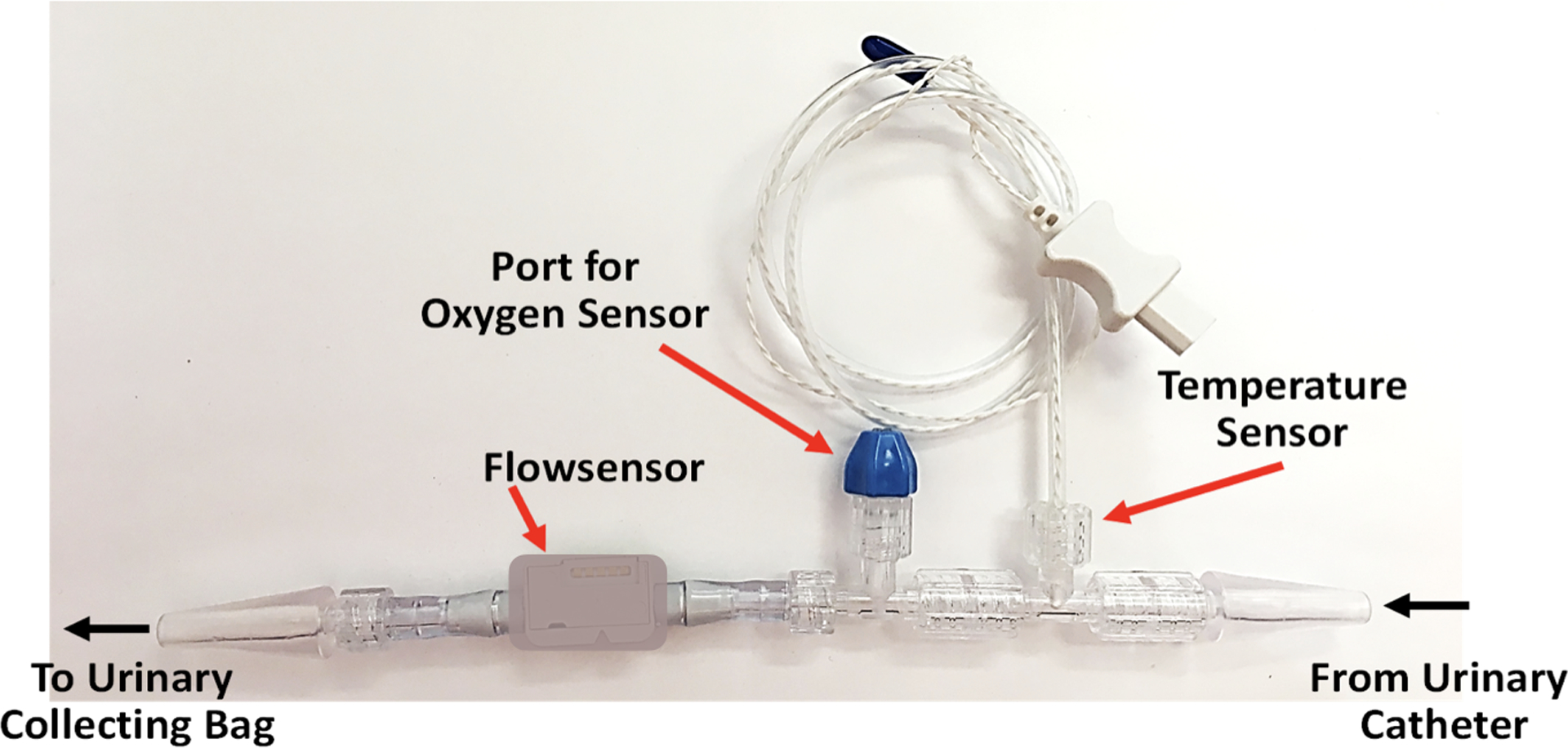
Background: Acute kidney injury (AKI) is a common complication of cardiac surgery. An intraoperative monitor of kidney perfusion is needed to identify patients at risk for AKI. The authors created a noninvasive urinary oximeter that provides continuous measurements of urinary oxygen partial pressure and instantaneous urine flow. They hypothesized that intraoperative urinary oxygen partial pressure measurements are feasible with this prototype device and that low urinary oxygen partial pressure during cardiac surgery is associated with the subsequent development of AKI.
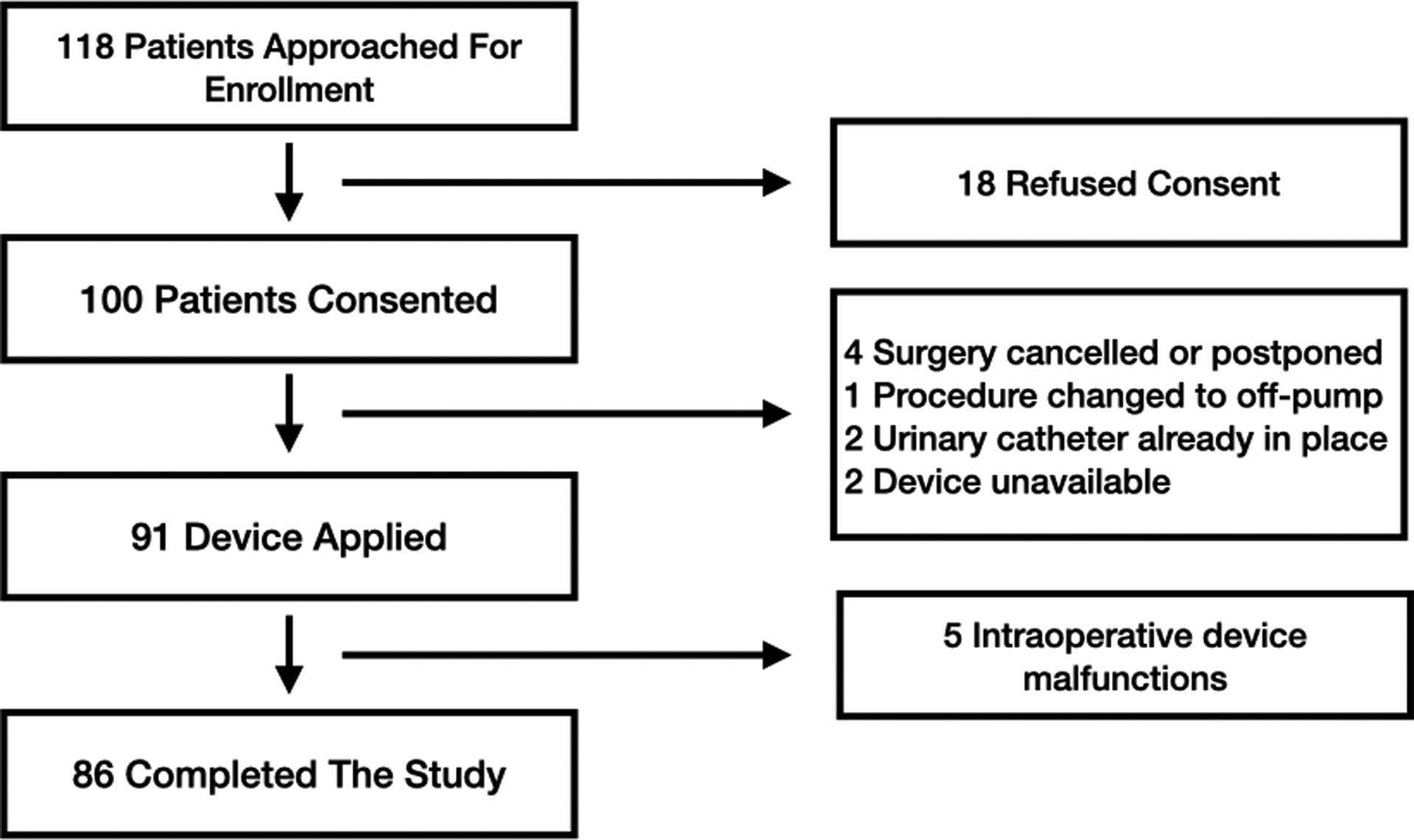
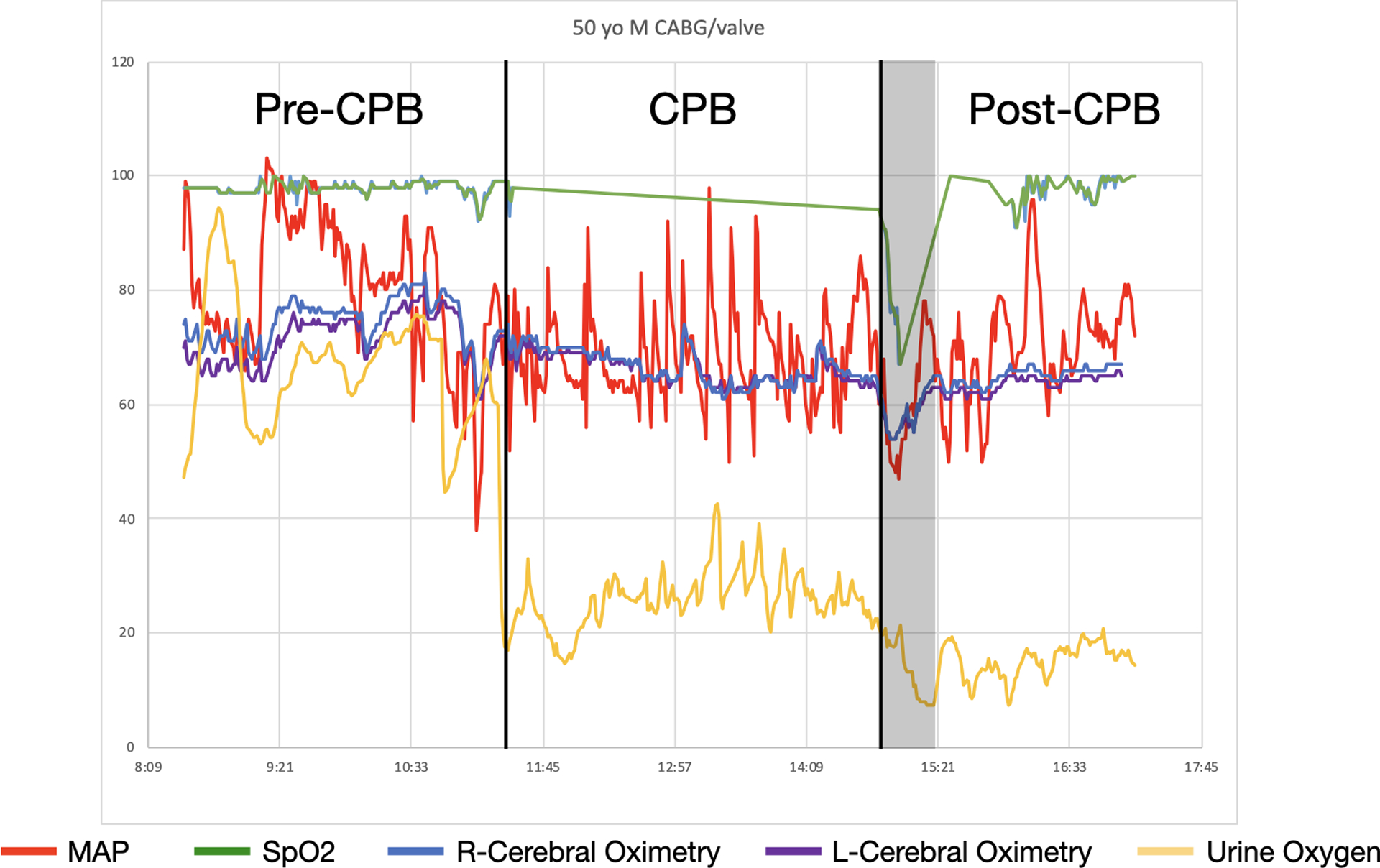
Methods: This was a prospective observational pilot study. Continuous urinary oxygen partial pressure and instantaneous urine flow were measured in 91 patients undergoing cardiac surgery using a novel device placed between the urinary catheter and collecting bag. Data were collected throughout the surgery and for 24 h postoperatively. Clinicians were blinded to the intraoperative urinary oxygen partial pressure and instantaneous flow data. Patients were then followed postoperatively, and the incidence of AKI was compared to urinary oxygen partial pressure measurements.
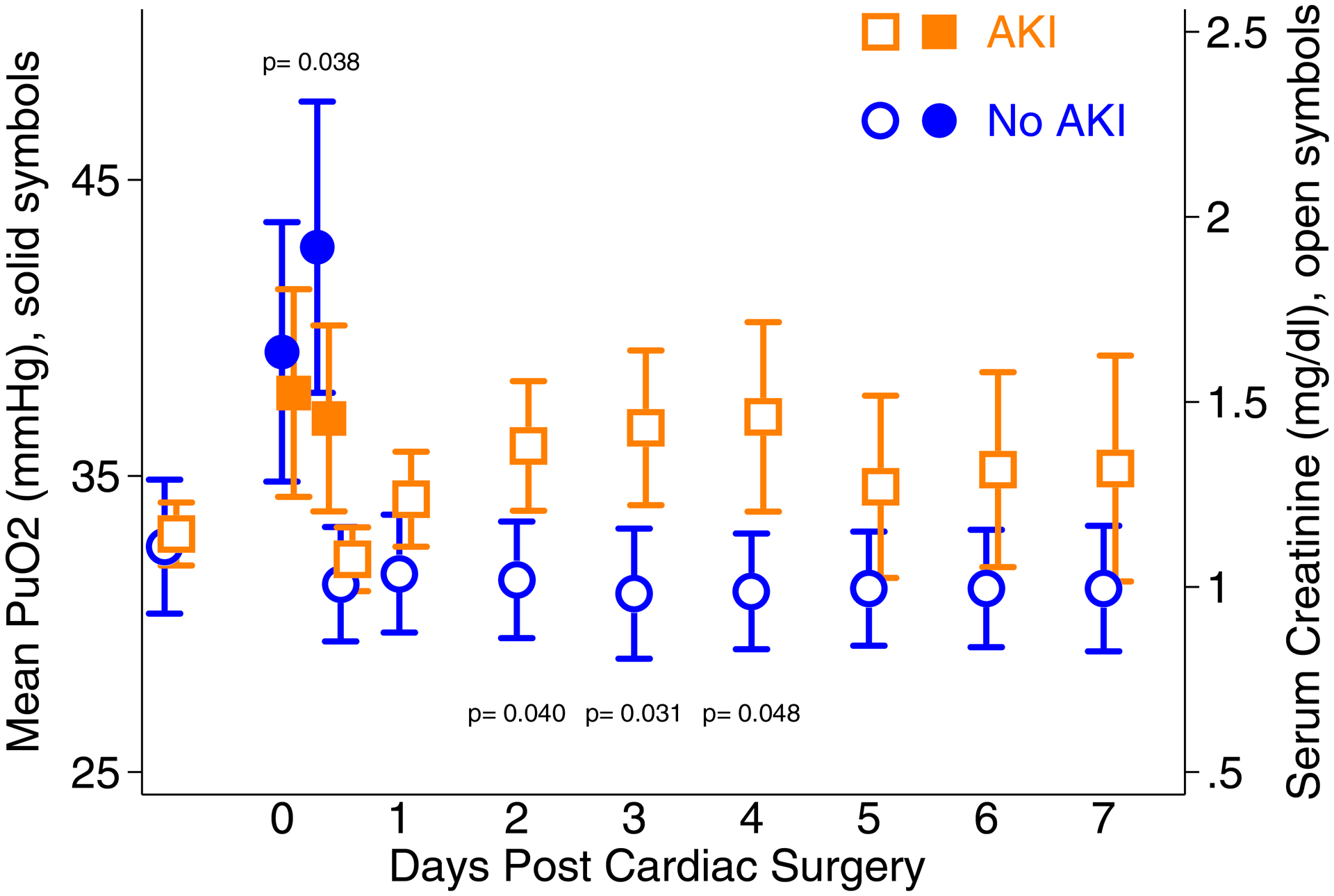
Results: Intraoperative urinary oxygen partial pressure measurements were feasible in 86/91 (95%) of patients. When urinary oxygen partial pressure data were filtered for valid urine flows greater than 0.5 ml · kg-1 · h-1, then 70/86 (81%) and 77/86 (90%) of patients in the cardiopulmonary bypass (CPB) and post-CPB periods, respectively, were included in the analysis. Mean urinary oxygen partial pressure in the post-CPB period was significantly lower in patients who subsequently developed AKI than in those who did not (mean difference, 6 mmHg; 95% CI, 0 to 11; P = 0.038). In a multivariable analysis, mean urinary oxygen partial pressure during the post-CPB period remained an independent risk factor for AKI (relative risk, 0.82; 95% CI, 0.71 to 0.95; P = 0.009 for every 10-mmHg increase in mean urinary oxygen partial pressure).
Conclusions: Low urinary oxygen partial pressures after CPB may be associated with the subsequent development of AKI after cardiac surgery.
Copyright © 2021, the American Society of Anesthesiologists. All Rights Reserved.
Conflict of interest statement
Figures
Comment in
-
Could Trended Oxygen Partial Pressure in the Urine Be the "ST Segment" Kidney Monitor We've Been Looking For?Anesthesiology. 2021 Sep 1;135(3):380-381. doi: 10.1097/ALN.0000000000003869. Anesthesiology. 2021. PMID: 34329391 No abstract available.
-
Urine Oxygen Monitoring in Cardiac Surgery: Reply.Anesthesiology. 2022 Apr 1;136(4):662-663. doi: 10.1097/ALN.0000000000004114. Anesthesiology. 2022. PMID: 35051264 Free PMC article. No abstract available.
-
Urine Oxygen Monitoring in Cardiac Surgery: Comment.Anesthesiology. 2022 Apr 1;136(4):662. doi: 10.1097/ALN.0000000000004113. Anesthesiology. 2022. PMID: 35051282 No abstract available.
References
-
- Reents W, Hilker M, Borgermann J, Albert M, Plotze K, Zacher M, Diegeler A, Boning A: Acute kidney injury after on-pump or off-pump coronary artery bypass grafting in elderly patients. Ann Thorac Surg 2014; 98: 9–14 - PubMed
-
- Gaffney AM, Sladen RN: Acute kidney injury in cardiac surgery. Curr Opin Anaesthesiol 2015; 28: 50–9 - PubMed
-
- Conlon PJ, Stafford-Smith M, White WD, Newman MF, King S, Winn MP, Landolfo K: Acute renal failure following cardiac surgery. Nephrol Dial Transplant 1999; 14: 1158–62 - PubMed
