


Telehealth in US hospitals: State-level reimbursement policies no longer influence adoption rates
- PMID: 34332467
- PMCID: PMC9760418
- DOI: 10.1016/j.ijmedinf.2021.104540
Telehealth in US hospitals: State-level reimbursement policies no longer influence adoption rates
Abstract
Objectives: Prior to COVID-19, levels of adoption of telehealth were low in the U.S., though they exploded during the pandemic. Following the pandemic, it will be critical to identify the characteristics that were associated with adoption of telehealth prior to the pandemic as key drivers of adoption and outside of a public health emergency.
Materials and methods: We examined three data sources: The American Telemedicine Association's 2019 state telehealth analysis, the American Hospital Association's 2018 annual survey of acute care hospitals and its Information Technology Supplement. Telehealth adoption was measured through five telehealth categories. Independent variables included seven hospital characteristics and five reimbursement policies. After bivariate comparisons, we developed a multivariable model using logistic regression to assess characteristics associated with telehealth adoption.
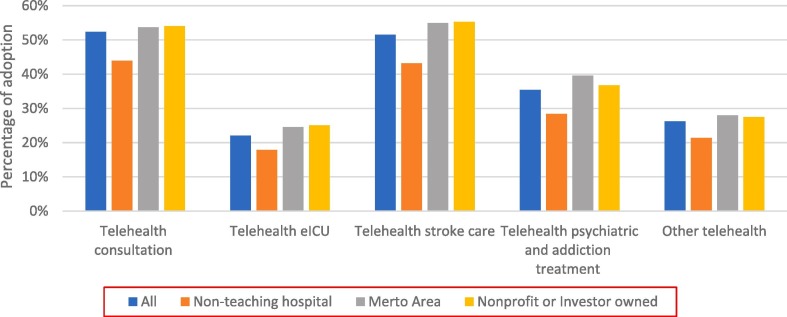
Results: Among 2923 US hospitals, 73% had at least one telehealth capability. More than half of these hospitals invested in telehealth consultation services and stroke care. Non-profit hospitals, affiliated hospitals, major teaching hospitals, and hospitals located in micropolitan areas (those with 10-50,000 people) were more likely to adopt telehealth. In contrast, hospitals that lacked electronic clinical documentation, were unaffiliated with a hospital system, or were investor-owned had lower odds of adopting telehealth. None of the statewide policies were associated with adoption of telehealth.
Conclusions: Telehealth policy requires major revisions soon, and we suggest that these policies should be national rather than at the state level. Further steps as incentivizing rural hospitals for adopting interoperable systems and expanding RPM billing opportunities will help drive adoption, and promote equity.
Keywords: Government regulation; Health policy; Healthcare costs; Medical informatics; Quality of healthcare.
Copyright © 2021 Elsevier B.V. All rights reserved.
Figures
References
-
- Totten AM, Hansen RN, Wagner J, et al. Telehealth for Acute and Chronic Care Consultations. Agency for Healthcare Research and Quality (US), 2019. Accessed October 5, 2020. https://www.ncbi.nlm.nih.gov/sites/books/NBK547239/.
-
- Donelan K., Barreto E., Sossong S., et al. Patient and clinician experiences with telehealth for patient follow-up care. Am. J. Manag. Care. 2019;25:40–44. - PubMed
MeSH terms
LinkOut - more resources
Full Text Sources
Medical
