. 2021 Aug 1;8(1):176.
doi: 10.1038/s41438-021-00613-z.

An ancient whole-genome duplication event and its contribution to flavor compounds in the tea plant (Camellia sinensis)

Affiliations

An ancient whole-genome duplication event and its contribution to flavor compounds in the tea plant (Camellia sinensis)

Ya Wang et al. Hortic Res. .

Abstract

Tea, coffee, and cocoa are the three most popular nonalcoholic beverages in the world and have extremely high economic and cultural value. The genomes of four tea plant varieties have recently been sequenced, but there is some debate regarding the characterization of a whole-genome duplication (WGD) event in tea plants. Whether the WGD in the tea plant is shared with other plants in order Ericales and how it contributed to tea plant evolution remained unanswered. Here we re-analyzed the tea plant genome and provided evidence that tea experienced only WGD event after the core-eudicot whole-genome triplication (WGT) event. This WGD was shared by the Polemonioids-Primuloids-Core Ericales (PPC) sections, encompassing at least 17 families in the order Ericales. In addition, our study identified eight pairs of duplicated genes in the catechins biosynthesis pathway, four pairs of duplicated genes in the theanine biosynthesis pathway, and one pair of genes in the caffeine biosynthesis pathway, which were expanded and retained following this WGD. Nearly all these gene pairs were expressed in tea plants, implying the contribution of the WGD. This study shows that in addition to the role of the recent tandem gene duplication in the accumulation of tea flavor-related genes, the WGD may have been another main factor driving the evolution of tea flavor.


Conflict of interest statement

The authors declare no competing interests.

Figures
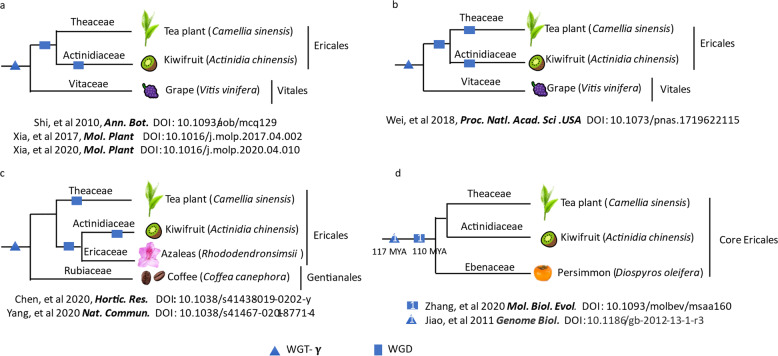
Fig. 1
Fig. 1. Current debates regarding whole-genome duplication in tea plants.
a The tea plant experienced only one WGD after the WGT-γ. b The tea plant experienced two WGD events after the WGT-γ, one shared with kiwifruit (WGD-β, ~90–100 MYA), and one specific to tea plants (WGD-α, ~30–40 MYA). c The tea plant experienced only one WGD event after the WGT-γ and the WGD was tea plant specific. d Zhang et al. reported that the WGD occurred at ~100 MYA. The WGT-γ was reported to occur ~117 MYA
Fig. 2
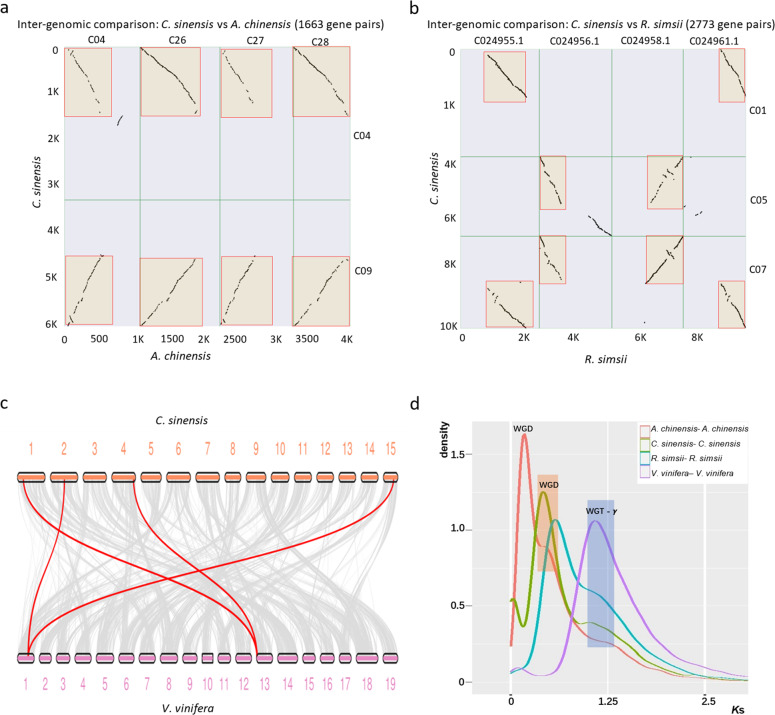
Fig. 2. Syntenic relationships and the Ks distribution suggested an ancient WGD event in the tea plant genome.
a Homologous dot plot between certain tea plant (C. sinensis) and kiwifruit (A. chinensis) chromosomes. b Homologous dot plot between certain tea plant and rhododendron (R. simsii) chromosomes. c Syntenic relationships of tea plant and grape chromosomes. The blocks with syntenic relationships are connected by gray lines and red lines represent two examples in which a block of grape (V. vinifera) has syntenic relationships with two blocks of tea plant. d The distribution of Ks for WGD gene pairs from kiwifruit, tea plant, rhododendron, and grape. The horizontal coordinates are Ks and the ordinates indicate the density of the gene pairs corresponding to Ks
Fig. 3
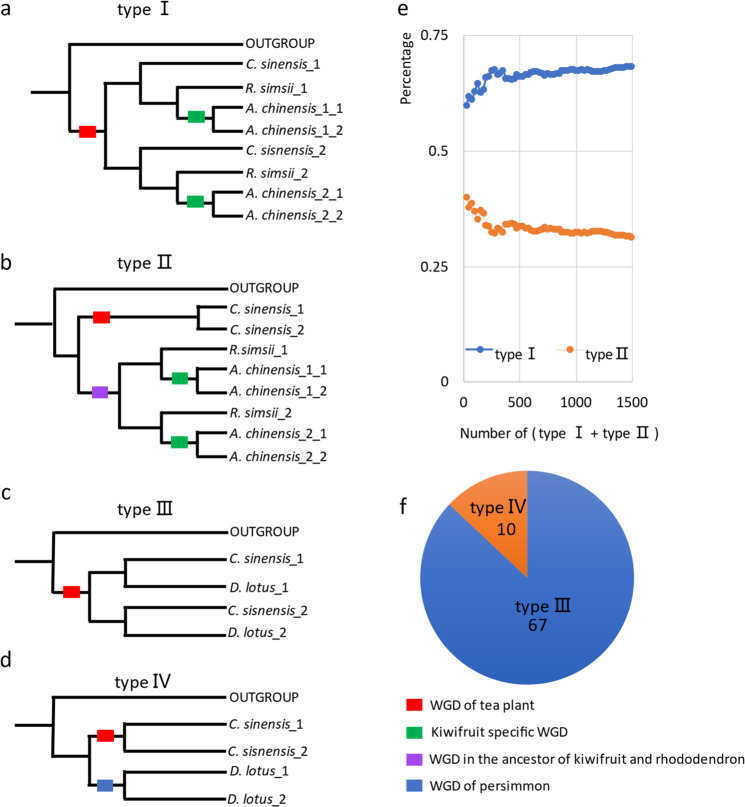
Fig. 3. Phylogenetic trees of syntenic genes showing that the WGD was shared by tea plant, kiwifruit, rhododendron, and persimmon.
a Phylogenetic tree indicating that the tea plant (C. sinensis) shared the WGD with kiwifruit (A. chinensis) and rhododendron (R. simsii) (type I). b Phylogenetic tree indicating that the tea plant (C. sinensis) experienced the WGD independently (type II). c Phylogenetic tree indicating that persimmon (D. lotus) shared the WGD with tea plant (C. sinensis) (type III). d Phylogenetic tree indicating that persimmon (D. lotus) did not share the WGD with tea plant (C. sinensis) (type IV). e Statistics on the proportions of two types of phylogenetic trees (type I and type II). f Statistics on the proportions of two types of phylogenetic trees (type III and type IV)
Fig. 4
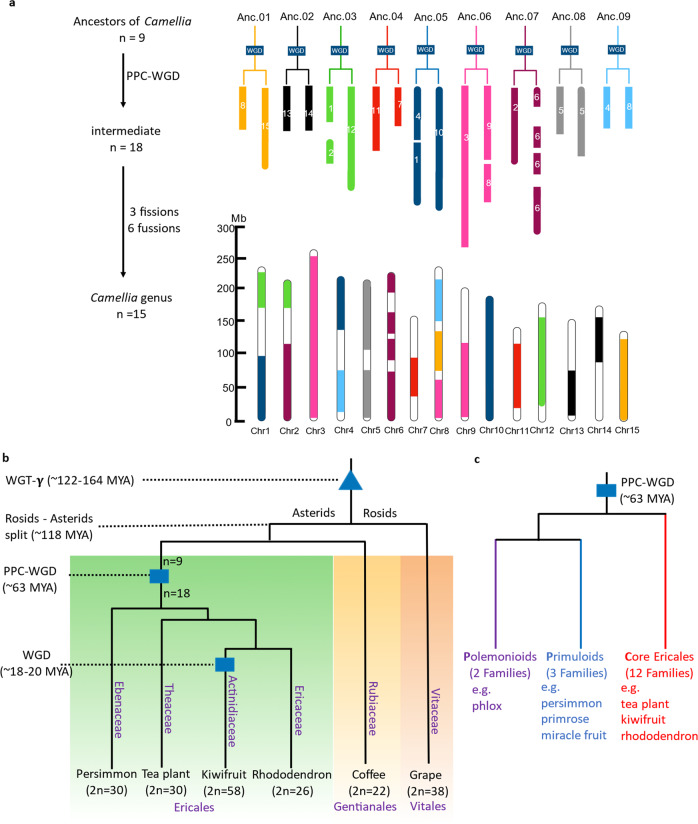
Fig. 4. The PPC-WGD shared by four families within the order Ericales and the evolution of tea plant chromosomes.
a Evolutionary patterns of tea plant chromosomes after WGD. b The species tree of tea plant and related species. The WGT and WGD are labeled triangles and rectangles, respectively. c Polemonioids, Primuloids, and core Ericales shared the PPC-WGD
Fig. 5
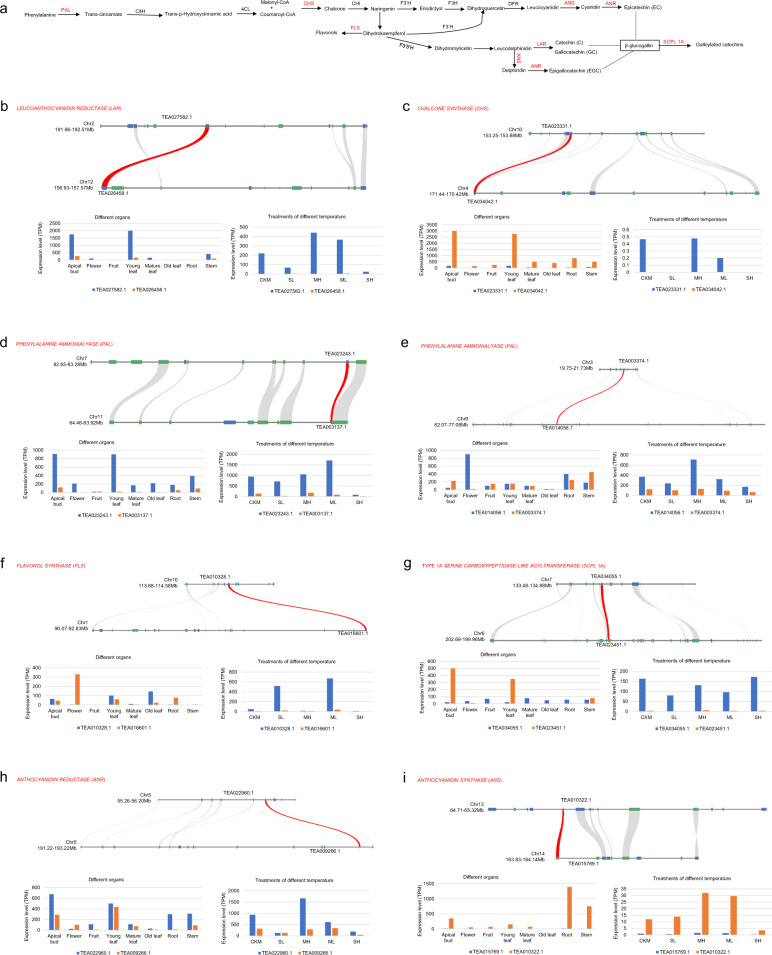
Fig. 5. PPC-WGD contributed to the expansion of genes involved in the biosynthesis of catechins in tea plants.
a The main biosynthesis pathways of catechins in tea plants. bi Microsynteny visualization and expression chart of LAR, PAL, CHS, FLS, SCPL, ANR, and ANS genes in the biosynthesis pathway of catechins. CKM, SL, MH, ML, and SH represent CK, severe low temperature, moderate heat, moderate low temperature, and severe heat, respectively
Fig. 6
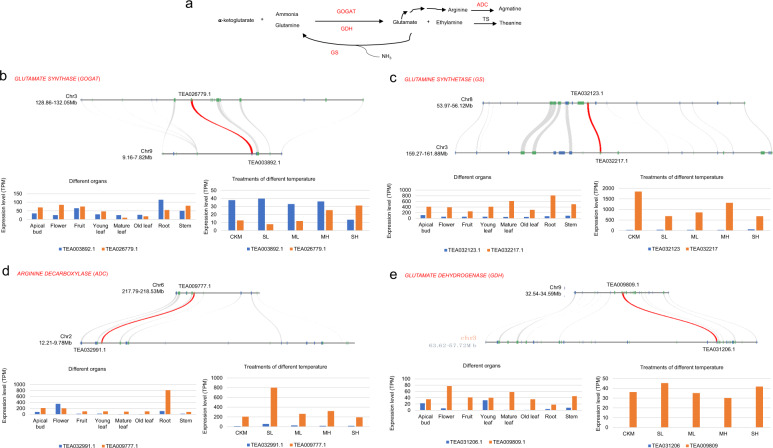
Fig. 6. PPC-WGD contributed to the expansion of genes involved in the biosynthesis of theanine in tea plants.
a The main biosynthesis pathways of theanine in tea plants. b Microsynteny visualization and expression chart of GOGAT genes in the biosynthesis pathway of theanine. c Microsynteny visualization and expression chart of GS genes in the biosynthesis pathway of theanine. d Microsynteny visualization and expression chart of ADC genes in the biosynthesis pathway of theanine. e Microsynteny visualization and expression chart of GDH genes in the biosynthesis pathway of theanine
Fig. 7
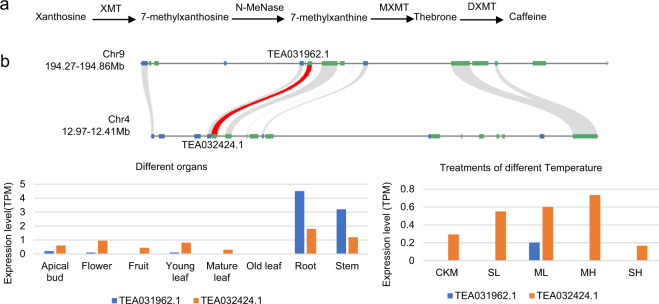
Fig. 7. PPC-WGD contributed to the expansion of genes involved in the biosynthesis of caffeine in tea plants.
a The main biosynthesis pathways of caffeine in tea plants. b Microsynteny visualization and expression of NMT genes in the biosynthesis pathway of caffeine

References

    1. Mondal TK, Bhattacharya A, Laxmikumaran M, Ahuja PS. Recent advances of tea (Camellia sinensis) biotechnology. Plant Cell Tissue Organ Cult. 2004;76:195–254. doi: 10.1023/B:TICU.0000009254.87882.71. - DOI

    1. Chen F, et al. Genome sequences of horticultural plants: past, present, and future. Hortic. Res. 2019;6:112. doi: 10.1038/s41438-019-0195-6. - DOI - PMC - PubMed
    1. Chen F, et al. The sequenced angiosperm genomes and genome databases. Front. Plant Sci. 2018;9:418. doi: 10.3389/fpls.2018.00418. - DOI - PMC - PubMed
    1. Wei C, et al. Draft genome sequence of Camellia sinensis var. sinensis provides insights into the evolution of the tea genome and tea quality. Proc. Natl Acad. Sci. USA. 2018;115:E4151–E4158. doi: 10.1073/pnas.1719622115. - DOI - PMC - PubMed
    1. Chen J-D, et al. The chromosome-scale genome reveals the evolution and diversification after the recent tetraploidization event in tea plant. Hortic. Res. 2020;7:63. doi: 10.1038/s41438-020-0288-2. - DOI - PMC - PubMed